Pet Microchip Singapore Mandatory Rules Cost: 2026 Guide
If you are searching for pet microchip Singapore mandatory rules cost, the key distinction is between cats and dogs. In Singapore, every pet cat must have a microchip before you apply for its licence through PALS. AVS does not publish one fixed implantation fee, so clinics set their own charges.
That leaves three practical questions: does your pet legally need a microchip, what happens during implantation, and what total cost should you plan for? You also need to understand how microchipping connects with licensing, the Pet Ownership Course and PALS applications.
This guide uses the ABCD check: Authority, Body procedure, Cost and Documentation. It also explains what to prepare before visiting a Singapore veterinary clinic.
Is pet microchip Singapore mandatory under 2026 rules?
For cats, yes. AVS requires every pet cat to have a microchip implanted before an owner can apply for an online licence through PALS. AVS also requires all cats and dogs to be licensed for traceability, including during a disease outbreak such as rabies. The available AVS guidance does not state that microchipping itself is a precondition for every dog licence.
Under the Animals and Birds (Licensing and Control of Cats and Dogs) Rules 2024, licensing covers both cats and dogs. However, the microchip requirement in the supplied AVS guidance specifically applies to cats. Therefore, do not assume that a dog and a cat follow identical application steps.
Use this quick distinction:
| Pet | What the supplied AVS guidance confirms |
|---|---|
| Cat | Microchip required before applying for a licence through PALS |
| Dog | Licence required; confirm the current microchip requirement with AVS or your vet |
AVS says microchipping supports traceability. This matters if authorities need to identify animals during a disease outbreak. It also gives PALS the identification number needed for a cat licence application.
Because rules and online processes can change, check the current AVS licensing page before booking. If your situation involves an imported pet, ownership transfer or an unusual record, ask the veterinary clinic to confirm the correct process.
How the microchipping procedure works at a veterinary clinic
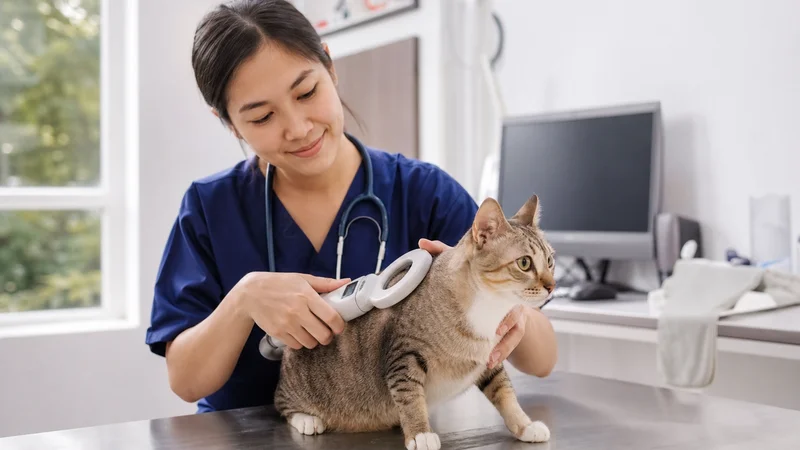
A licensed veterinarian inserts a rice-grain-sized chip beneath the skin in a short procedure that AVS describes as similar to a routine vaccination. The clinic then provides the microchip number, which you should keep with your pet's medical and licensing records.
The chip does not work like a live tracking device. Instead, it stores an identification number that a compatible scanner can read. The number links your pet to the registration information held in the relevant records.
Before the appointment, prepare:
- Your identification and contact details.
- Your cat's existing vaccination or medical records.
- Any previous microchip number or adoption paperwork.
- The PALS information you will need later.
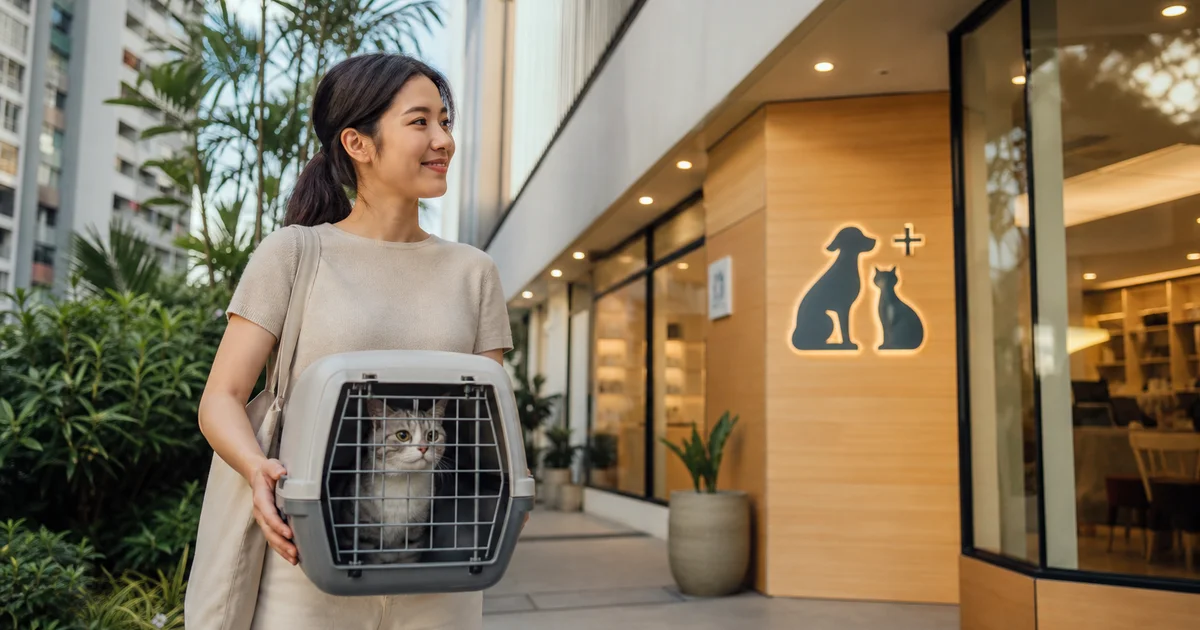
- A secure carrier for the journey home.
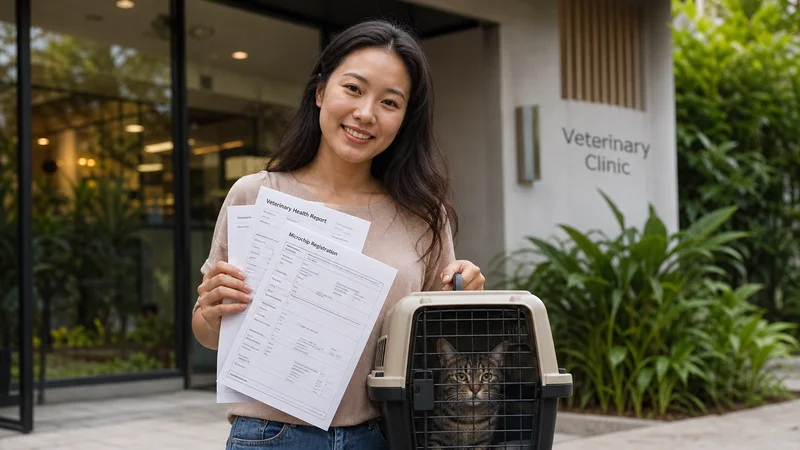
Ask the vet to confirm the number before leaving. Record it exactly, including every digit, and photograph the paperwork as a backup. A common first-time mistake is to assume that implantation alone completes licensing. It does not: cat owners still need the microchip number for the PALS application.
AVS (2026) states that licensed veterinarians perform the procedure. Therefore, choose a veterinary clinic rather than relying on an unverified informal service. Ask whether the clinic will scan the chip after implantation and explain how it records the number.


Pet Health Map App
Turn every worry into your pet’s health record
Download the app to save AI Care reports, build your pet’s medical profile, and keep tracking symptoms and care notes.
Android version coming soon. The web version is available now.
How much does it cost to microchip a dog or cat in Singapore?
Microchipping costs vary between veterinary clinics, and AVS does not provide a single fixed price in the supplied guidance. Therefore, contact your preferred clinic for a current quotation before attending. Ask whether the quoted amount includes the consultation, implantation and any record administration.
AVS states that, from 1 September 2026, it ceased providing free cat microchipping services. Owners should instead visit their preferred veterinary clinic. This means cat owners should budget for a private veterinary appointment rather than expect a complimentary AVS service.
Use this call-ahead checklist:
- Ask for the total microchipping fee in Singapore dollars.
- Confirm whether a consultation fee applies separately.
- Ask whether the clinic supplies written proof of the chip number.
- Confirm whether the vet scans the chip after implantation.
- Ask what you need for the PALS application.
- Check whether your pet needs a separate licence appointment.
Do not choose a clinic solely because it advertises the lowest price. A clear record of the number matters because PALS requires it for licensing. Equally, do not mistake the licence fee for the microchipping fee. They are separate costs.
When navigating pet microchip Singapore mandatory rules cost, the reliable answer is therefore a clinic-specific quotation. AVS (2026) confirms that prices can vary across veterinary clinics, so published estimates should not replace a direct check with the practice.
Microchipping and your PALS pet licence
A cat's microchip number is required when you apply for its licence through the Pet Animal Licensing System, or PALS. You apply online at pals.avs.gov.sg. The microchip therefore forms part of the licensing workflow, rather than acting as a standalone compliance step.
First-time cat and dog licence applicants must complete the online Pet Ownership Course before applying, according to AVS (2026). Plan this step alongside the veterinary appointment, because completing the course and obtaining the chip number help you prepare the application.
The practical sequence looks like this:
- Complete the online Pet Ownership Course if you are a first-time applicant.
- Book a licensed veterinarian for microchipping where required.
- Obtain and verify the chip number.
- Apply online through PALS.
- Keep the licence confirmation and veterinary record together.
Check every digit before submitting the application. A transposed number can create avoidable delays or require clarification. Keep your phone number and email address current, because licensing records depend on accurate owner information.
The supplied AVS guidance confirms the microchip requirement for cats. For dogs, it confirms licensing and the PALS application route, but it does not provide an equivalent statement that microchipping must occur before every dog licence application. If you own a dog — including a scheduled dog under AVS rules — ask AVS or your vet to confirm the current requirement for your specific application.
Cat and dog licence fees after microchipping
Microchipping does not replace the licence fee. For the first three cats or dogs, AVS lists a one-year licence at S$15 for a sterilised pet and S$90 for a non-sterilised pet. Longer licence periods are available for sterilised pets.
The AVS fee schedule supplied for this guide lists:
| Licence period | Sterilised cat or dog |
|---|---|
| One year | S$15 |
| Two years | S$25 |
| Three years | S$35 |
These figures cover the licence fee, not the veterinary microchipping appointment. In other words, your overall outlay may include the clinic charge plus the relevant PALS licence fee.
The one-year fee for a non-sterilised pet is listed as S$90 for the first three cats or dogs. The supplied AVS information does not list equivalent two-year or three-year fees for non-sterilised pets, so check the current schedule before applying.
AVS (2026) provides these licence fees and the first-three-pets condition. Review the official fee page if you own more animals, because the applicable charge may differ. Keep a copy of the payment confirmation with your pet's microchip record.
Where to get your pet microchipped in Singapore
Book with a licensed veterinarian at your preferred veterinary clinic. AVS says licensed veterinarians perform microchipping, and its 2026 cat guidance directs owners to veterinary clinics after free AVS services ceased on 1 September 2026.
When comparing practices, focus on documentation and process rather than distance alone. A suitable clinic should explain the appointment, provide the chip number and help you understand the next PALS step.
Ask these questions when booking:
- Is the veterinarian licensed to implant the microchip?
- What is the complete price in S$?
- Does the appointment include a post-implantation scan?
- Will I receive written confirmation of the number?
- What records should I bring?
- Can the clinic clarify the PALS application process?
Take your pet in a secure carrier and avoid relying on memory for the identification number. Immediately after the appointment, compare the number on the paperwork with the scanner display or the clinic's record, if the practice offers that check.
If your pet already has a chip, ask the veterinarian to scan it before inserting another one. This prevents unnecessary duplication and helps identify an existing record. The supplied AVS sources do not set out a detailed duplicate-chip procedure, so ask the clinic how it handles that situation.
What happens if you skip microchipping or licensing?
Skipping the required step can prevent a cat licence application and leave your pet's licensing status incomplete. AVS requires all cats and dogs to be licensed for traceability, while cats need a microchip before an online PALS licence application.
The supplied sources do not state specific penalties, enforcement deadlines or fine amounts for non-compliance. Therefore, do not rely on figures found on unofficial websites. Instead, contact AVS or a veterinary clinic for the current position if your pet is already overdue, recently adopted or has incomplete records — for example, if you only recently found out your cat can be kept in an HDB flat.
Take action if you have not yet completed the process:
- Arrange a veterinary microchipping appointment for your cat.
- Ask the clinic for the written chip number.
- Complete the Pet Ownership Course if you are a first-time applicant.
- Apply through PALS.
- Save the licence confirmation and veterinary paperwork.
- Contact AVS if the application does not match your pet's records.
This approach also helps with traceability during a disease outbreak. AVS (2026) identifies traceability as the purpose of licensing, including in relation to rabies. However, a microchip only helps when the identification number and owner details remain accurate.
Conclusion: complete the ABCD check before you apply
The practical answer to pet microchip Singapore mandatory rules cost is straightforward: cats must be microchipped before you apply for a licence through PALS, while all cats and dogs must be licensed. A licensed veterinarian performs the procedure, and clinic prices vary. From 1 September 2026, AVS no longer provides free cat microchipping.
Use the ABCD check: confirm the Authority requirement, book the veterinary Body procedure, ask about the Cost, then complete the PALS Documentation. Also complete the online Pet Ownership Course if you are a first-time applicant.
Call a Singapore veterinary clinic for the current microchipping quotation, then check AVS's licensing pages before submitting your application.