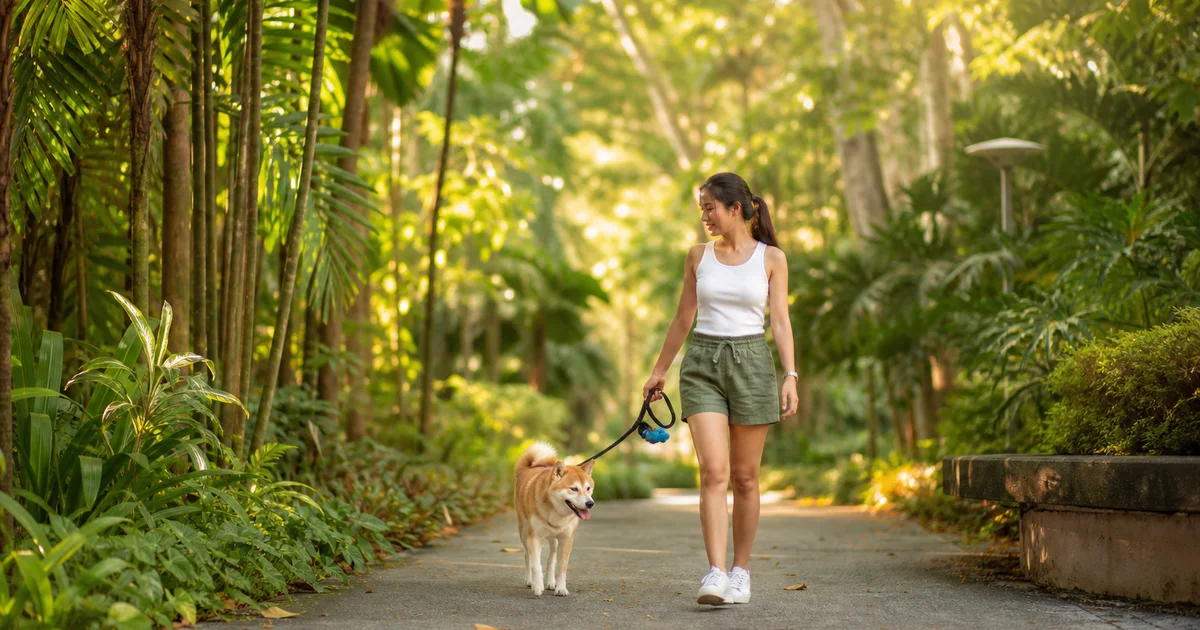
Taking your dog to Singapore parks: NParks rules, leashing and dog runs
Singapore parks can welcome dogs, but public areas do not generally permit off-leash exercise. Keep your dog leashed in public places, then use a designated dog run when your dog needs to run freely. Always clean up afterwards and check the current NParks or AVS guidance before visiting.
Understanding NParks rules, leashing, and dog runs when taking your dog to Singapore parks can feel confusing because a green, open space does not automatically mean dogs may roam freely. The key distinction is between a regular public area and a designated dog run.
This guide explains:
- when your dog must stay on a lead;
- what makes a dog run different from an ordinary park; and
- how to prepare for a safe, considerate off-leash visit.
Singapore park leashing rules: the legal bottom line
Singapore law requires owners to leash dogs in public places. NParks states that an owner who fails to leash a dog in public may receive a fine of up to S$5,000 (NParks, 2026).
That rule applies to ordinary public park spaces unless you enter a place specifically designated for off-leash activity. Therefore, an empty field, quiet pathway or secluded corner does not by itself create permission to remove the lead.
A lead also gives you practical control. You can prevent your dog from approaching children, cyclists, runners or unfamiliar dogs. In addition, you can reduce the chance of your dog running towards roads, drains or other hazards.
| Situation | What to do |
|---|---|
| Regular park path | Keep your dog leashed |
| Open grass beside a path | Keep your dog leashed |
| Designated dog run | Off-leash activity is allowed within the designated area |
| Entering or leaving a dog run | Put the lead on before opening the gate or leaving the boundary |
The fine is a maximum, not a promise that every incident receives the same outcome. However, the safest approach remains simple: keep the lead attached everywhere that is not clearly marked as a dog run.
Taking your dog to Singapore parks: understanding designated dog runs
A designated dog run is a shared space where dogs may go off-leash and interact freely with other dogs. AVS describes dog runs as designated areas created for this purpose, rather than ordinary parts of a park (AVS, 2026).
The boundary matters. Your dog may be allowed off-leash inside the dog run, but that permission does not automatically extend to nearby lawns, paths or adjoining facilities. Consequently, clip the lead on before crossing the entrance and keep it attached until you are safely inside.
Dog runs also differ from private enclosed gardens. Other owners and dogs may share the area, so your dog's behaviour affects everyone. A dog that enjoys running alone may struggle with close interactions, sudden greetings or crowded spaces.
Before unclipping, check:
- whether the gate closes securely;
- how many dogs are already inside;
- whether the surface contains hazards;
- whether your dog appears relaxed and responsive; and
- where you can exit quickly if play becomes tense.
AVS provides a Dog Run Etiquette and User Safety document for owners planning a visit. Read it before your first trip, because local conditions and shared-space expectations require more judgement than simply opening the lead.



Pet Health Map App
Turn every worry into your pet’s health record
Download the app to save AI Care reports, build your pet’s medical profile, and keep tracking symptoms and care notes.
Android version coming soon. The web version is available now.
Dog run etiquette: safe behaviour around other dogs
Good dog run etiquette starts before your dog enters. Watch the group from outside and assess the energy level. Calm, loose movement differs from frantic chasing, repeated cornering or uncomfortable avoidance.
Your dog does not need to greet every dog. In fact, allowing space can prevent tension. Keep moving if your dog becomes overwhelmed, and leave if either dog shows signs that the interaction is no longer comfortable.
AVS publishes guidance on dog run etiquette and user safety, while NParks reminds owners to clean up after their pets at dog runs (AVS, 2026; NParks, 2026). Those two responsibilities support both hygiene and considerate use.
Use this practical LEAD check:
- L — Look: observe dogs, gates and the surface before entering.
- E — Enter slowly: avoid releasing your dog into a crowded rush.
- A — Act early: interrupt chasing or uncomfortable play before it escalates.
- D — Depart cleanly: leash your dog, remove waste and leave calmly.
Bring waste bags and keep them accessible rather than buried in a backpack. Also, avoid distracted phone use while your dog is loose. Active supervision helps you notice changes before another owner has to intervene.
Popular NParks dog runs and nearby park options
NParks lists dedicated dog runs at Parkland Green, Area C, and near Xtreme SkatePark (NParks, 2026). These locations provide recognised options for owners seeking an off-leash space rather than relying on an ordinary park lawn.
However, a listed location still requires preparation. Check the current NParks listing before travelling, because access arrangements, maintenance work or site conditions can change. Also, do not assume that every part of the wider park shares the dog run's off-leash status.
A simple location plan can prevent avoidable problems:
- Confirm the dog run's listed location before leaving home.
- Identify the route from the car park, public transport stop or park entrance.
- Pack the lead for every part of the journey.
- Allow your dog to settle before entering.
- Find the exit and waste facilities before unclipping.
| NParks-listed option | Best planning question |
|---|---|
| Parkland Green, Area C dog run | Where is the designated entrance and boundary? |
| Dog run near Xtreme SkatePark | How will you reach it while keeping your dog leashed? |
The most useful choice is not always the largest or busiest site. Select a place that suits your dog's confidence, recall and tolerance of shared play.
Preparing for your first off-leash park visit
Preparation should focus on control, observation and a quick exit. Before leaving, consider practical details such as your dog's usual exercise duration, reactions to unfamiliar dogs and response when called. These notes help you choose a suitable time and recognise unusual behaviour.
Pack a small park kit:
- a secure lead and collar or harness;
- waste bags;
- water and a portable bowl;
- identification details; and
- a towel if your dog may become wet or muddy.
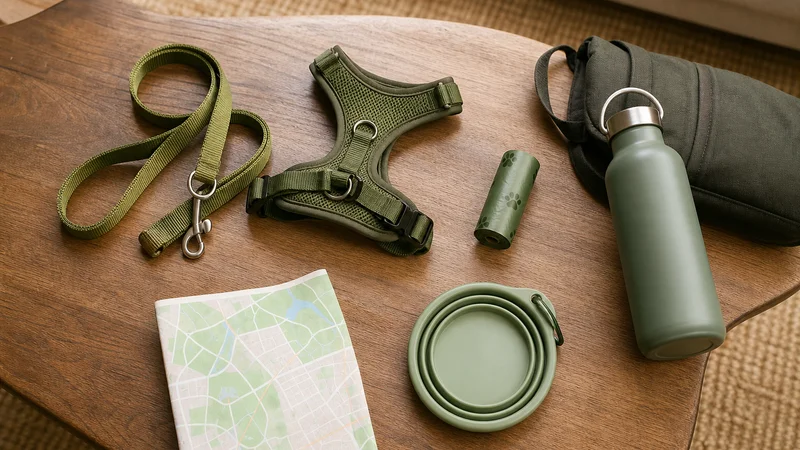
Keep your dog leashed while travelling through ordinary public areas. Then pause outside the dog run instead of rushing through the gate. Watch the dogs already inside and give your dog time to focus on you.
The common first-time mistake is unclipping immediately because the area looks exciting. Instead, wait until you understand the group's energy and your dog remains responsive. If your dog cannot disengage from another dog, the space feels crowded or you feel uncertain, postpone the off-leash session.
After the visit, record what worked: time of day, crowd level, play style and your dog's recovery. That simple log can guide a better next outing without relying on guesswork.
Taking your dog to Singapore parks: a simple decision plan
The safest decision depends on the location, the rules and your dog's behaviour. A regular park can offer a pleasant leashed walk, while a designated dog run provides a controlled opportunity for off-leash activity.
Use this three-step plan:
- Classify the space. Is it an ordinary public area or a clearly designated dog run?
- Control the transition. Keep the lead on until you are inside the dog run's boundary.
- Monitor the session. Supervise actively, clean up and leave if the interaction becomes unsuitable.
NParks and AVS provide the relevant Singapore guidance. Check their current pages before visiting, particularly if you are travelling to a location for the first time. Rules, access and site conditions can change, so a quick review remains sensible.
Taking your dog to Singapore parks: NParks rules, leashing and dog runs becomes much easier when you treat the lead as the default and the dog run as the exception. Plan the transition carefully, supervise throughout and respect the shared space.
Conclusion
Taking your dog to Singapore parks: NParks rules, leashing and dog runs comes down to one clear distinction: keep your dog leashed in public places, and use a designated dog run for off-leash exercise. NParks states that failing to leash a dog in public may attract a fine of up to S$5,000. AVS also provides dog run etiquette and safety guidance.
Before your next visit, check the current NParks or AVS information, pack a lead and waste bags, and observe the area before entering. Start with a short, calm session rather than assuming every dog will enjoy busy group play. Then record what worked and adjust the next visit around your dog's behaviour.