Scheduled Dogs in Singapore: Rules, Insurance & Muzzling
A powerful dog can create legal and practical responsibilities for its owner, especially in public. The terminology can also cause confusion: AVS uses "Specified Dogs" for potentially dangerous breeds covered by Singapore's additional controls. Owners must understand the classification, muzzle requirement, insurance, licence process and training options.
Scheduled (restricted) dogs in Singapore: rules, insurance, muzzling centre on three duties: identify whether the dog falls within AVS's Specified Dog category, meet the mandatory public-muzzling and licensing conditions, and maintain approved insurance of at least S$100,000. Owners also need the Pet Ownership Course and must apply through PALS.
Owners must proactively identify what AVS means by a Specified Dog, understand the exact insurance and licensing steps (including possible fee reductions), and build routines to avoid preventable mistakes during both the PALS application and daily handling.
What counts as a Specified Dog under AVS rules?
The key point is that AVS classifies certain potentially dangerous breeds as Specified Dogs, which brings additional licensing conditions. The legal list appears in the First Schedule of the Animals and Birds (Licensing and Control of Cats and Dogs) Rules 2024.
"Specified Dog" is the term used by Singapore's Animal & Veterinary Service (AVS). Therefore, do not rely only on informal labels such as "restricted dog", "scheduled dog" or "aggressive breed". Check the applicable First Schedule classification and your dog's licensing records.
The classification matters because all dogs already require licensing for disease traceability. A Specified Dog has further obligations, including mandatory muzzling in public to reduce the chance of an attack.
A practical classification check
Before applying for a licence, record:
- your dog's breed or breed description;
- microchip details;
- adoption, purchase or transfer records;
- existing licence information; and
- any correspondence from AVS about the dog.
However, breed appearance alone may not answer every classification question. If your dog's status is unclear, contact AVS or check its current Specified Dogs guidance before arranging insurance or submitting an application.
AVS states that the relevant framework is the 2024 Rules. In other words, the safest approach is to use the official schedule rather than social-media breed lists or advice from an unrelated overseas authority. (Animal & Veterinary Service, National Parks Board, 2024.)
Muzzling and public-handling requirements
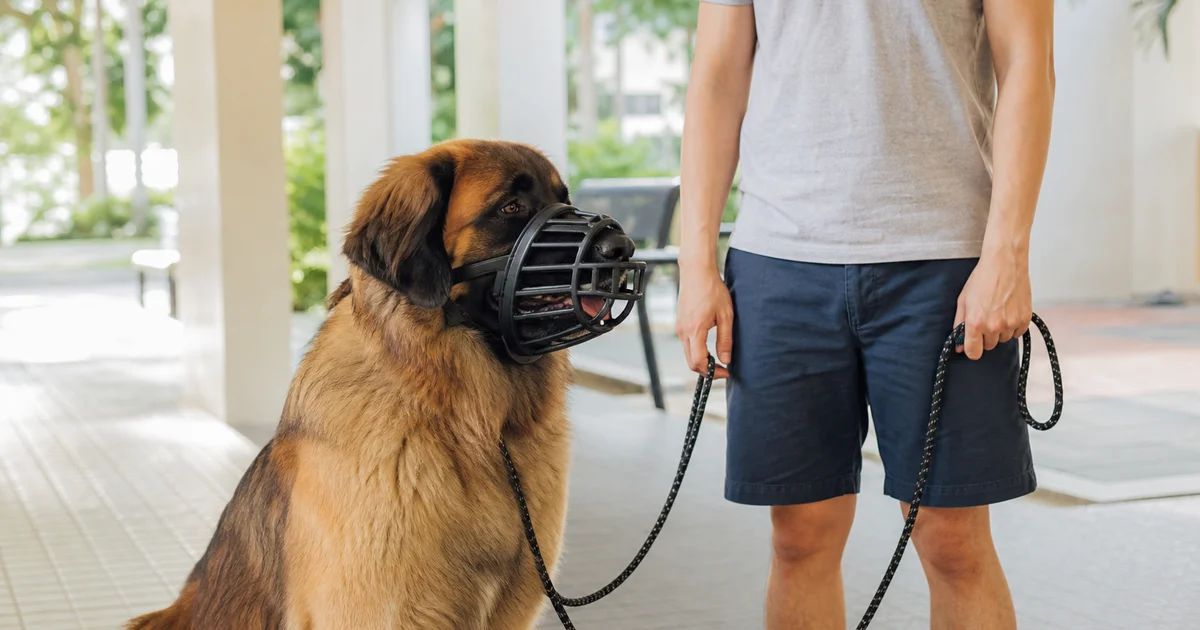
The bottom line for Scheduled (restricted) dogs in Singapore: rules, insurance, muzzling is simple: a Specified Dog must wear a muzzle in public. AVS identifies mandatory public muzzling as an additional licensing condition designed to minimise the chance of an attack.
Prepare the muzzle before going outside
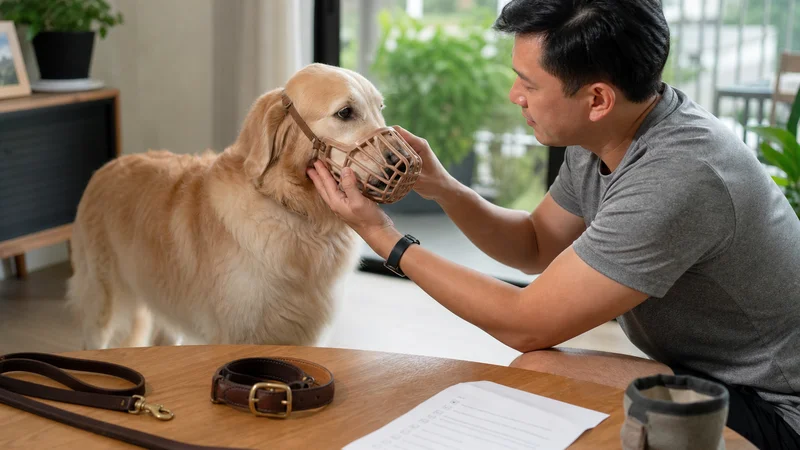
Do not treat the muzzle as equipment to buy only when a licence application asks for it. Your dog needs time to accept it calmly. Introduce it indoors in short sessions, reward relaxed behaviour and check that it does not rub the nose or restrict normal breathing.
Keep a simple handling record:
- note the muzzle model and size;
- record how long your dog wears it comfortably;
- practise fitting it without rushing; and
- inspect the skin after each session.
The official source confirms the public-muzzling requirement, but the supplied AVS facts do not specify every public-leash detail, muzzle design or enforcement scenario. Therefore, check the latest AVS instructions for any additional handling conditions before walking your dog.
Build a repeatable exit routine
Place the muzzle, collar or harness and lead beside the door. Practise the same sequence each time: fit the muzzle, check comfort, attach the lead and confirm your dog remains settled before leaving.
This routine helps prevent the common first-timer mistake of fitting equipment only after the dog becomes excited. It also gives you time to notice missing or damaged equipment before entering a public space.


Pet Health Map App
Turn every worry into your pet’s health record
Download the app to save AI Care reports, build your pet’s medical profile, and keep tracking symptoms and care notes.
Android version coming soon. The web version is available now.
Mandatory S$100,000 insurance for Specified Dogs
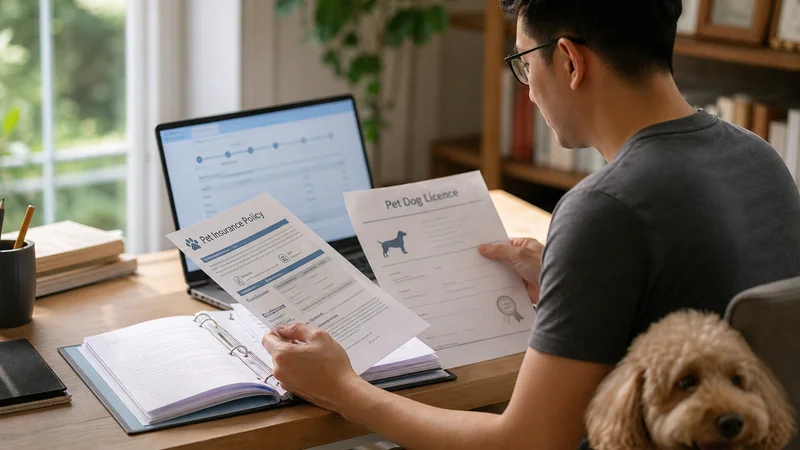
A Specified Dog's licensee must hold an insurance policy approved by the Director-General for at least S$100,000. The policy must cover injury to people or damage to property caused by the dog.
This is a licensing condition, not merely an optional financial safeguard. Consequently, owners should confirm the policy requirements before submitting a new licence application or allowing existing cover to lapse.
Check the policy wording
Ask the insurer to confirm, in writing:
- the insured dog's identity and microchip number;
- the minimum cover of S$100,000;
- cover for injury to persons;
- cover for property damage;
- the policy period; and
- whether the policy is approved for the relevant AVS requirement.
Do not assume that ordinary household contents insurance automatically satisfies this condition. Policies differ, and the supplied AVS information does not identify particular insurers, premiums, exclusions or renewal periods.
Keep evidence accessible
Save the policy schedule, certificate and renewal notices in one digital folder. Also keep a copy available on your phone. If AVS or another relevant party asks you to demonstrate compliance, a clear record reduces avoidable delays.
The key distinction is between having insurance and holding insurance that meets the specified condition. Check the policy against the AVS requirement rather than relying on a product name. (Animal & Veterinary Service, National Parks Board, 2024.)
Licence fees and available training reductions
The current AVS fee guidance lists a S$35 one-time licence for a sterilised dog. Owners with an Obedience Training Certificate may qualify for reduced fees of S$15 for one year, S$25 for two years or S$35 for a one-time licence.
These amounts apply to the fee information supplied by AVS. However, fees and eligibility conditions can change, so confirm the applicable amount in PALS before payment.
Compare the available options
| Licence or qualification | Fee stated by AVS |
|---|---|
| Sterilised dog licence, one-time | S$35 |
| Obedience Training Certificate, one-year licence | S$15 |
| Obedience Training Certificate, two-year licence | S$25 |
| Obedience Training Certificate, one-time licence | S$35 |
The wording matters. An Obedience Training Certificate is not the same as simply saying that your dog attends classes. Keep the certificate and check that it meets AVS's current requirements before selecting a reduced-fee option.
Prepare documents before starting
Have your dog's microchip details, sterilisation information and training certificate ready. In addition, prepare your insurance documents if the dog falls within the Specified Dog category.
AVS's fee page supplies the figures above, while its licensing guidance explains the broader licensing process. Therefore, use the current PALS workflow to confirm which supporting documents the system requests. (Animal & Veterinary Service, National Parks Board, licence-fee guidance; Animals and Birds (Licensing and Control of Cats and Dogs) Rules 2024.)
How to apply through the Pet Ownership Course and PALS
The application route has two main stages: complete the Pet Ownership Course if you are a first-time applicant, then submit the new licence application online through PALS.
AVS states that all cats and dogs in Singapore must be licensed for disease traceability. It also states that first-time cat and dog licence applicants must complete the Pet Ownership Course before applying.
Use this application sequence
- Complete the Pet Ownership Course at the official go.gov.sg/petownershipcourse address.
- Gather your dog's identification and supporting records.
- Arrange the approved insurance required for a Specified Dog.
- Open the Pet Animal Licensing System at pals.avs.gov.sg.
- Submit the new licence application online.
- Check the application for missing information before payment.
Do not begin by guessing the breed category or uploading unrelated documents. Instead, make a short compliance folder first. Include the microchip record, sterilisation evidence, training certificate where relevant and insurance certificate.
Check your records after submission
Save the application confirmation and licence details. Then diarise insurance renewal and any licence-related dates shown in your PALS account.
The supplied AVS guidance confirms the course and PALS requirements, but it does not provide processing times or a complete document checklist. Therefore, check the live system for current instructions rather than relying on an old application screenshot. (Animal & Veterinary Service, National Parks Board, 2024.)
Common owner mistakes and how to avoid a fine
The most preventable problems arise when owners treat one requirement as if it covers all the others. A licence does not replace public muzzling, and insurance does not replace licensing.
Use the "Muzzle–Money–Minding" check
This article's memory hook is the 3M check:
- Muzzle: fit and use the required muzzle in public.
- Money: maintain the approved insurance with at least S$100,000 cover.
- Minding: keep the licence, course records and supporting documents current.
Use the check before every major change, such as moving home, transferring ownership, renewing insurance or replacing equipment.
Avoid these five errors
- Assuming every large dog is automatically a Specified Dog.
- Treating a social-media breed list as the official legal schedule.
- Buying insurance without checking the required cover.
- Applying through PALS before completing the Pet Ownership Course as a first-time applicant.
- Waiting until a public outing to introduce the muzzle.
The supplied sources confirm that Specified Dogs face additional conditions. However, they do not provide a specific fine amount. Therefore, do not rely on an assumed penalty; check the current AVS information or contact AVS if you need clarification about enforcement.
Conclusion: a clear compliance plan for owners
For Scheduled (restricted) dogs in Singapore: rules, insurance, muzzling, the safest approach is to work from AVS's official classification and keep evidence for every obligation. Confirm whether your dog is a Specified Dog, complete the Pet Ownership Course if you are a first-time applicant, apply through PALS and arrange approved insurance of at least S$100,000. Then practise muzzle fitting before public outings and retain your licence, certificate and policy documents together.
Use the 3M check—Muzzle, Money and Minding—whenever you prepare to go out or renew records. Finally, check the live AVS and PALS instructions for any updated requirements before submitting an application.