
Dog Training Singapore Price: Check Trainers in 5 Steps
Finding a suitable dog trainer in Singapore involves more than comparing a package price. You need to check the trainer’s current AVS-ACDT listing, training methods, experience with your dog’s behaviour, and what each session includes.
For dog training Singapore price comparisons, verify the trainer on AVS’s official ACDT list, confirm rewards-based LIMA methods, and clarify the package support. Speak with your veterinarian first if behaviour problems appear. A low quote cannot compensate for unsafe equipment, unclear credentials, or a programme ignoring your dog’s needs.
This guide solves three practical problems: checking whether an accreditation claim is genuine, recognising humane training methods, and comparing commercial quotes without mistaking an advertised price for an official Singapore fee.
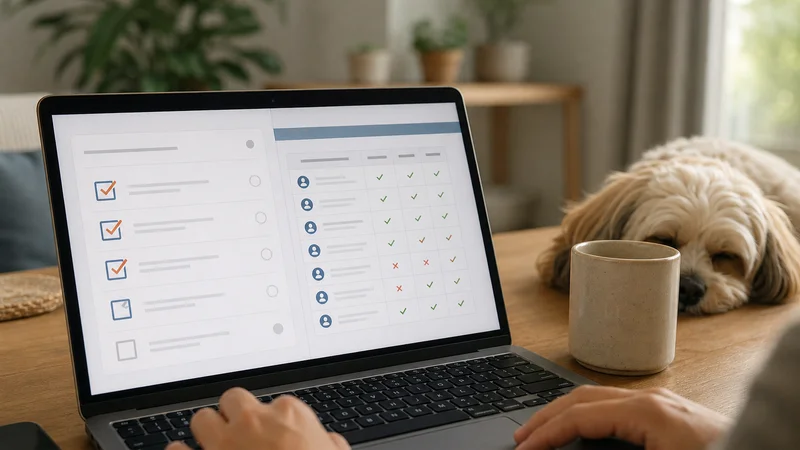
Dog training Singapore price: check these details before booking
The right trainer should be transparent about credentials, methods, session structure and total costs before you pay. Ask for written answers rather than relying only on social media testimonials.
Use this pre-booking checklist:
- Is the trainer’s full name on the current AVS-ACDT list?
- Which independent certification organisation awarded the trainer’s certification?
- Does the trainer use rewards-based training and the Least Intrusive, Minimally Aversive (LIMA) approach?
- Has the trainer handled your dog’s specific issue?
- Does the quoted price include assessment, travel, follow-up advice or written exercises?
- What equipment will the trainer use?
- What happens if your dog becomes fearful, distressed or unsafe during a session?
- Will the trainer work alongside your veterinarian when a medical cause may contribute to the behaviour?
Also record your dog’s age, breed or cross, sex, desexing status, medical history, current medication and the exact behaviour you want to change. Note when the behaviour happens, what occurs immediately beforehand, and what your dog does afterwards.
That record makes the consultation more useful. It also helps you separate a training problem from a potential health or pain issue. AVS recommends working with a veterinarian first when a dog shows behaviour problems, before engaging a trainer or behaviourist (AVS, 2026).

What the AVS-ACDT scheme means
The AVS-Accredited Certified Dog Trainer Scheme provides a recognised competency benchmark, but it does not replace your own suitability check. AVS launched the ACDT Scheme on 10 December 2022 to support effective and humane management of dog aggression and other disamenities (AVS, 2026).
Under the scheme, trainers obtain certification from independent animal behaviour and training organisations recognised by AVS. They can then become listed as AVS-ACDT trainers. Trainers accredited under the earlier PADT scheme may follow a pathway to continue accreditation under ACDT (AVS, 2026).
What accreditation does and does not tell you
An ACDT listing gives you a useful verification point. However, it does not tell you whether the trainer is the best match for:
- puppy socialisation;
- basic obedience;
- lead pulling;
- separation-related problems;
- fear and reactivity;
- aggression;
- handling or grooming difficulties.
Ask the trainer how they assess behaviour and how they measure progress. A responsible plan should identify realistic management steps, training goals and warning signs that require veterinary or behaviour support.
In addition, ask whether the trainer has experience with your dog’s environment. A dog living in an HDB flat may need a different practical plan from a dog with access to a private garden. The trainer should explain how you will practise safely between sessions.


Pet Health Map App
Turn every worry into your pet’s health record
Download the app to save AI Care reports, build your pet’s medical profile, and keep tracking symptoms and care notes.
Android version coming soon. The web version is available now.
How to verify an AVS-ACDT trainer
The official AVS list is the decisive check: only trainers whose names appear there are currently accredited under the ACDT Scheme. AVS’s published list was last updated on 24 September 2026 (AVS, 2026).
Use the trainer’s exact details
Open the official AVS-ACDT list and compare the trainer’s full name. Do not rely on a logo, screenshot, badge or statement such as “AVS approved”. Check spelling carefully, especially where a business uses a brand name that differs from the trainer’s personal name.
Save or record:
- the trainer’s name as shown on the list;
- the date you checked;
- the trainer’s business name and contact details;
- the certification information displayed by the trainer;
- the written quote and proposed training plan.
If you cannot find the name, ask the trainer to explain the discrepancy. Do not treat “application submitted”, “previously accredited” or “trained under an ACDT trainer” as the same as current ACDT listing.
AVS directs owners to the ACDT Scheme list when seeking a qualified professional for training or behaviour modification (AVS, 2026). Therefore, this check should happen before you compare package prices.
Training methods, LIMA and aversive devices
Choose a trainer who can explain rewards-based training in practical terms and who follows the Least Intrusive, Minimally Aversive approach. AVS promotes rewards-based training and LIMA as the preferred standard for dog training in Singapore (AVS, 2026).
A trainer should be able to describe what they will reinforce, how they will manage the environment, and how they will reduce opportunities for unwanted behaviour. They should also explain how they will respond when your dog cannot cope. A plan that relies on escalating corrections deserves careful scrutiny.
Ask about shock and prong collars
AVS and SPCA issued an advisory on 26 July 2025 about aversive dog training devices, specifically electronic shock collars and prong collars. The advisory sets out risks associated with their use and encourages owners to avoid these devices in favour of LIMA (AVS and SPCA, 2025).
Ask direct questions before booking:
| Question | Safer answer to look for |
|---|---|
| What equipment will you use? | Clear explanation of reward-based tools and management |
| What happens if my dog refuses an exercise? | The trainer adjusts the difficulty or environment |
| Will you use a shock or prong collar? | A clear commitment to avoid aversive devices |
| How will you measure progress? | Observable goals, records and regular review |
| What should I do between sessions? | Written, manageable practice instructions |
Also watch the session itself. Your dog may show stress through avoidance, freezing, frantic movement, repeated yawning, lip-licking or attempts to escape. These signs need context, but a trainer should notice them and change the plan rather than push through.
Dog training Singapore price: compare quotes fairly
There is no official AVS or government fee schedule for private dog training. It is a commercial service, so fees vary between trainers and depend on the service, location, session length, behaviour issue and follow-up support.
Therefore, do not treat an online price as a Singapore-wide standard. Instead, request an itemised quote that states:
- the initial assessment fee;
- the cost and duration of each session;
- travel or venue charges;
- package expiry dates;
- cancellation and rescheduling terms;
- between-session support;
- follow-up reports or videos;
- whether another household member can attend;
- what happens if the trainer recommends veterinary assessment.
A group puppy class, a private obedience lesson and a behaviour consultation are different services. Comparing their headline prices can produce a misleading result.
A simple value comparison
| Quote detail | Why it matters |
|---|---|
| Session duration | A cheaper session may provide less contact time |
| Assessment included | Behaviour plans need accurate observation |
| Written homework | Practice continues after the appointment |
| Travel included | The final cost may differ from the advertised rate |
| Follow-up access | Support can affect how confidently you practise |
| Behaviour scope | Aggression and fear may need a more specialised plan |
For a reliable comparison, ask three suitable trainers the same questions. Keep the replies in one document. The best choice may not be the lowest quote; it should be the trainer who offers verified credentials, humane methods, clear boundaries and a plan that fits your dog.
Red flags before you commit
A trainer’s marketing should withstand simple verification. Treat these warning signs seriously:
- the trainer claims AVS-ACDT status but does not appear on the official list;
- the trainer refuses to explain the proposed methods;
- the quote pressures you to buy a large package immediately;
- the trainer promises guaranteed results;
- the trainer dismisses pain, illness or veterinary assessment;
- the trainer cannot explain how they will manage risk around people or dogs;
- the trainer uses fear, intimidation or aversive equipment without a clear welfare explanation;
- the trainer will not provide cancellation or package terms in writing.
A trainer may still be experienced without appearing on the ACDT list. However, they should not present themselves as currently AVS-ACDT accredited if the official list does not show their name. AVS specifically advises caution where a trainer claims ACDT status but does not appear on its list (AVS, 2026).
If your concern involves an incident, public safety or repeated nuisance, keep dated notes, videos where safe, and relevant correspondence. You can also read about dog attack law in Singapore, dog noise complaints in Singapore, or Singapore rules for scheduled dogs.
Book with confidence, not just a low quote
The safest approach to dog training Singapore price research is to verify the person before comparing the package. Check the current AVS-ACDT list, confirm rewards-based LIMA methods, ask about aversive devices, and obtain a written breakdown of every charge. If behaviour changed suddenly, speak with your veterinarian before booking training. Keep your dog’s behaviour log, medical information and videos ready for the consultation. Then choose the trainer who offers clear credentials, humane handling and a realistic plan for your household. Check the official AVS list again on the day you book, because accreditation information can change.