
Veterinary Surgeons Board Singapore: 5 Checks for Pet Owners
If you are searching for a veterinary surgeons board in Singapore, the current position is straightforward: AVS still handles veterinarian licensing and complaints. The Singapore Veterinary Council has been established under the Veterinary Practice Act 2026, but its registration and practising-certificate system has not started yet.
That distinction matters when you choose a clinic. A practice may use professional branding, display qualifications or advertise specialist services, but those details do not replace the legal licence required to treat animals. This guide explains what “licensed” means, which authority currently handles concerns, how to check a vet before booking, and which warning signs deserve attention.
What “licensed” means for a Singapore vet
The bottom line is that any person who treats animals or birds in Singapore must hold an AVS Licence to Treat Animals and Birds. This requirement comes under Section 53 of the Animals and Birds Act, according to the Singapore Veterinary Council’s government service (SVC, 2026).
The requirement applies to the individual veterinarian carrying out treatment. Therefore, do not assume that a clinic’s name, premises or online reputation proves that every person providing veterinary care holds the necessary licence.
A veterinary licence is different from:
- A veterinary degree or professional qualification
- Membership of a professional association
- A clinic’s business registration
- A clinic’s marketing claim
- A future registration or practising certificate under the SVC framework
In practical terms, ask which veterinarian will examine your pet and whether that person holds a current AVS licence. You can also ask the clinic how it verifies the licensing status of locums, visiting veterinarians and new team members.
Keep a written record of the clinic’s response. Note the veterinarian’s full name, the appointment date and any licence information the practice provides. This creates a clear paper trail if you later need to contact AVS about a concern.
The current licensing position does not mean pet owners should avoid veterinary care while the new framework develops. Instead, it means you should check the authority responsible today rather than rely on an anticipated regulatory system.
Veterinary surgeons board Singapore: AVS and the new SVC
The key point is that the Singapore Veterinary Council now exists as the professional regulatory body under the Veterinary Practice Act 2026, but AVS remains the active contact for licensing and complaints at this stage.
AVS, part of the National Parks Board, states that the SVC has been established under the new Act. However, SVC is not yet accepting applications for registration, practising certificates or complaints. AVS continues to manage veterinarian licensing and complaint matters until further notice (AVS, 2026).
This creates a transition period. The phrase “veterinary surgeons board Singapore” may lead you to search for an active board register, but the official position does not yet support treating the SVC as a live replacement for AVS.
| Pet-owner question | Current answer |
|---|---|
| Who licences vets now? | AVS |
| Who currently handles complaints? | AVS |
| Has the SVC been established? | Yes, under the Veterinary Practice Act 2026 |
| Is the SVC accepting registrations and practising-certificate applications? | Not at this stage |
| Should you contact SVC or AVS about a present licensing concern? | AVS |
Therefore, use official AVS or NParks information when checking the current process. The SVC’s related-links page identifies NParks and AVS as the official public bodies for animal and veterinary matters in Singapore (SVC, 2026).



Pet Health Map App
Turn every worry into your pet’s health record
Download the app to save AI Care reports, build your pet’s medical profile, and keep tracking symptoms and care notes.
Android version coming soon. The web version is available now.
How to check a vet’s licence before booking
The safest approach is a simple NAME–NOW–NOTE check: confirm the veterinarian’s name, ask about their current AVS licence, and note the answer before treatment begins.
Singapore’s official information supplied for this guide does not state that a public online licence register is currently available. Therefore, do not rely on a search result, social-media profile or an unofficial directory as proof of current licensing.
Use these practical steps:
- Identify the treating vet. Ask for the full name of the veterinarian who will examine your pet. If the practice cannot confirm the clinician before the appointment, ask when it can provide that information.
- Ask about the current AVS licence. Explain that you want to confirm the vet holds a valid Licence to Treat Animals and Birds.
- Record the response. Save an email, message or booking note. Also record the appointment date and the name of the person who answered.
- Check the timing. A vet may practise while holding a valid AVS licence and complying with its licensing conditions, according to SVC guidance (SVC, 2026).
- Contact AVS if uncertainty remains. Ask AVS how it wants you to verify the position or raise a concern. Use official AVS contact information rather than a number copied from an unverified website.
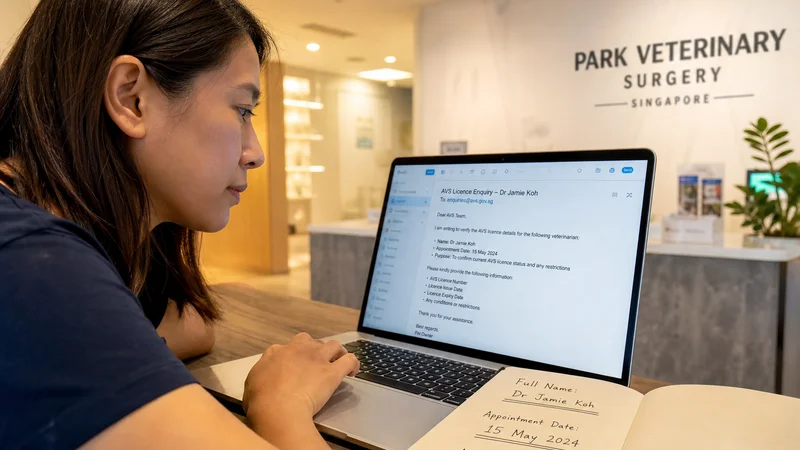
For urgent treatment, do not delay necessary care while trying to complete administrative checks. Instead, ask the clinic to clarify the treating veterinarian’s status as soon as practicable. After the visit, keep the invoice, clinical notes and correspondence together.
You can also ask who will provide follow-up care. This matters when a different veterinarian handles surgery, emergency work or medication reviews.
Red flags around a vet or clinic’s licensing
The bottom line is that evasive answers deserve clarification, although they do not automatically prove unlawful practice. A concern becomes more serious when a clinic refuses to identify the treating veterinarian or dismisses reasonable questions about AVS licensing.
Watch for these warning signs:
- The practice will not provide the treating vet’s full name.
- Staff say a licence is unnecessary because the person has a veterinary qualification.
- The clinic tells you to contact SVC for a current complaint, despite the transition guidance.
- Advertising uses official-sounding regulatory language without identifying the responsible veterinarian.
- The practice refuses to explain who will perform a procedure.
- Documents use different names for the veterinarian, clinic and invoice without explanation.
- Staff discourage you from contacting AVS about a licensing question.
However, avoid making public allegations based only on a confusing website or a poor customer-service response. Ask a precise written question and allow the clinic to clarify its position.
Prepare the following information before contacting AVS:
- Clinic name and address
- Treating veterinarian’s full name
- Appointment or treatment date
- Description of the service provided
- Copies of invoices, messages and advertisements
- A short timeline of what happened
The SVC’s official guidance directs pet owners with concerns about a vet or clinic to the relevant official bodies, including NParks and AVS (SVC, 2026). Therefore, use those channels rather than relying on informal online discussion.
What the Veterinary Practice Act changes for owners
The practical conclusion is that the Veterinary Practice Act 2026 establishes a future regulatory framework, but it does not remove the need to use AVS for current licensing questions.
The SVC has been established under NParks as the professional regulatory body for veterinarians. Its registration framework, practising certificates and related processes will commence later, with further details expected closer to implementation (AVS, 2026; SVC, 2026).
For pet owners, the change creates two separate questions:
- What applies now? The veterinarian must hold a valid AVS Licence to Treat Animals and Birds and follow the relevant licensing conditions.
- What will apply later? The SVC registration and practising-certificate framework will begin when the implementation stage opens.
That difference prevents a common mistake: assuming that the new council already operates every function named in the legislation. At the time of writing, the official sources say it does not accept registration, practising-certificate or complaint applications.
Recheck official AVS and SVC information before making a future appointment, especially if the clinic refers to “SVC registration” as though the system is already active. Regulatory arrangements can change as implementation progresses.
For now, store the clinic’s contact details, the treating vet’s name and your written licensing enquiry. Those records help you ask a focused question if the framework changes or a dispute arises.
Conclusion: use the current AVS route
Searching for a veterinary surgeons board in Singapore can be confusing because the SVC has been established, while AVS still performs the active licensing and complaints functions. The current rule remains clear: anyone treating animals or birds must hold a valid AVS Licence to Treat Animals and Birds.
Before booking, identify the veterinarian, ask about their AVS licence and save the response. If the clinic avoids the question or you remain concerned, gather your records and contact AVS through its official channels. Do not assume that a professional title, clinic branding or future SVC process proves current authorisation.
Check the latest AVS and SVC guidance before your pet’s appointment, particularly as the Veterinary Practice Act 2026 framework moves towards implementation.