Moving house can unsettle pets, but the paperwork should be straightforward if you handle it before unpacking. The key tasks involve confirming that your new property allows your dog or cat, updating the official licence record, and making the new home secure.
When you update pet licence address Singapore records, check your new home’s pet rules before moving, then use the AVS Pet Animal Licensing System (PALS) to update the licensed address. Also confirm your pet’s microchip and veterinary records show the new details.
Before settling in, verify whether your new HDB flat or private property allows your pet, navigate the correct route for a pals change address request, and set up your new home to reduce the risk of a pet escaping.
Use the four-part MOVE check: Meet housing rules, Open PALS, Verify records, and Ease the transition.
Step 1: Check your new home’s pet rules
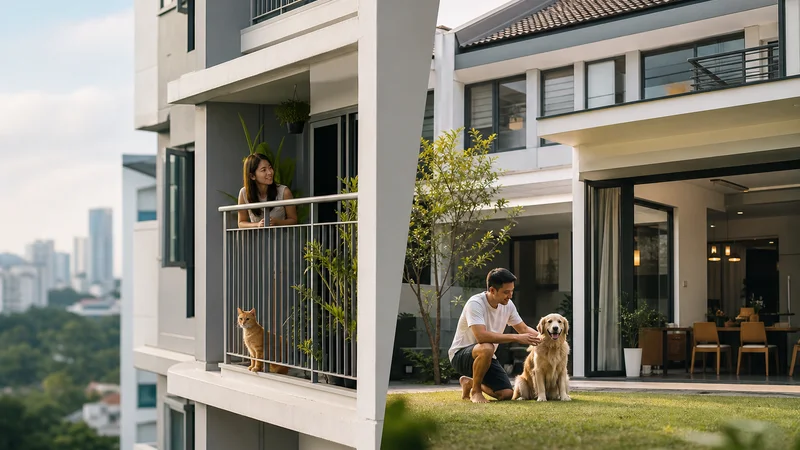
The bottom line is simple: confirm the property’s pet limits before signing a lease or completing the purchase. A licence does not remove housing restrictions, so moving from one type of property to another can change what you may keep.
HDB flats and approved dogs
In an HDB flat, the usual framework allows one dog from the HDB-approved breed list per flat. Therefore, do not assume that a dog accepted at your current private property will automatically be accepted in an HDB unit.
If you are moving into an HDB flat with a dog outside the approved list, contact HDB or AVS before committing to the move. Grandfathering or other exceptions should not be assumed because individual circumstances may affect the outcome.
Cats and private property
Singapore’s cat ownership and licensing framework also considers the type of residential property. Private property generally operates under different ownership limits from HDB housing. However, dogs and cats still require the relevant AVS licence.
Ask the landlord, managing agent or relevant authority for written confirmation where the position is unclear. Keep that confirmation with your tenancy or moving documents.
| Before signing | What to confirm |
|---|---|
| HDB flat | Dog breed eligibility and applicable dog or cat limits |
| Private property | Property rules, tenancy terms and AVS licensing |
| Multiple pets | Whether the total number is allowed at the new address |
| Unusual situation | Direct guidance from HDB or AVS |
Source: Animal & Veterinary Service (AVS), National Parks Board, Government of Singapore, 2026.
Step 2: Update your pet licence address on PALS
Once the new home is confirmed, use PALS to update the licence record rather than treating the move as a new licence application. PALS is the official AVS portal for viewing pet licences and completing licence-related e-transactions.
How to start a pals change address request
Go to pals.avs.gov.sg and sign in with Singpass. Look for the relevant licence update or e-transaction function linked to your dog’s or cat’s record.
The exact self-service wording for an address-only change was not visible in the official page material reviewed for this guide. Therefore, if you cannot find the correct option, contact AVS through its official helpline rather than submitting an unrelated transaction.
Prepare these details:
- your Singpass access;
- the pet licence information;
- the new residential address;
- your pet’s microchip details; and
- the move-in date, if the system requests it.
Do not create a duplicate record simply because the address has changed. Instead, ask AVS whether the existing licence record can be amended.
Check the confirmation
After submitting the change, save the confirmation screen, reference number or email. Then sign in again later to check that the new address appears against the correct pet.
This gives you a practical audit trail if you need to clarify the record with AVS. It also helps you identify an error before your pet settles into the new property.
Source: Animal & Veterinary Service (AVS), Government of Singapore, PALS, 2026.


Pet Health Map App
Turn every worry into your pet’s health record
Download the app to save AI Care reports, build your pet’s medical profile, and keep tracking symptoms and care notes.
Android version coming soon. The web version is available now.
Step 3: Review the licence and microchip record
Updating the address is also a useful time to check the rest of your pet’s official information. Singapore requires dogs and cats to hold the relevant AVS licence, and AVS’s licensing process includes microchipping requirements.
Confirm the essential details
Compare the PALS record with your own documents. Check the pet’s name, species, sex, microchip number and owner information. If the microchip number looks wrong, ask AVS or your veterinary practice how to correct the record.
Cats became part of the mandatory microchipping and licensing framework under AVS’s licensing arrangements. Consequently, cat owners should not treat a move as relevant only to dog paperwork.
The AVS application process also refers to completing an online Pet Ownership Course and microchipping. If you are applying for a licence or correcting an incomplete record, check the current requirements in PALS.
Tell your veterinary practice
Ask your veterinary practice to update its client file with the new address and a current telephone number. This is separate from the government licence record, so changing one does not necessarily change the other.
Also, check the current licence fee shown in PALS before paying. Fees can vary according to factors such as sterilisation and the applicable licence category. Always check the AVS portal for the most up-to-date fee before submitting your payment.
| Record | Action |
|---|---|
| AVS licence | Update the address through PALS |
| Microchip | Confirm the number matches your documents |
| Veterinary file | Provide the new address and contact number |
| Personal records | Keep confirmation and licence details together |
Sources: AVS, National Parks Board, Government of Singapore, 2026; AVS, Applying for Dog and Cat Licences, 2026.
Step 4: Make the new home safe on moving day
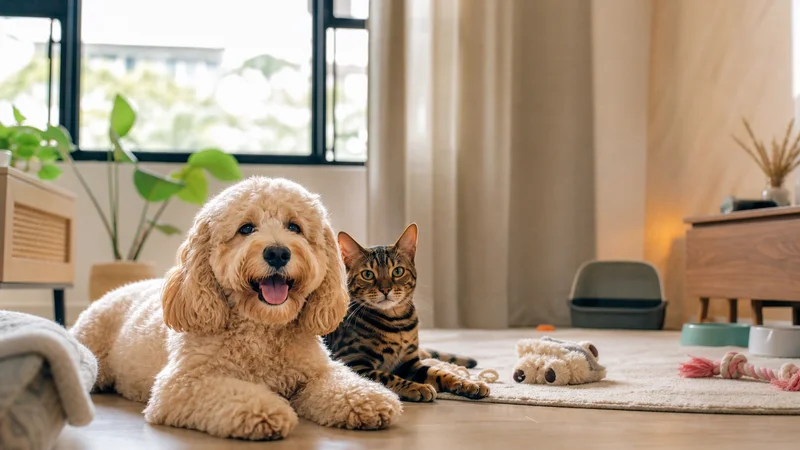
The paperwork matters, but moving-day control prevents many practical problems. Set up one quiet, enclosed room before your pet arrives, and keep the door closed while movers carry furniture through the property.
Place familiar bedding, water, food, medication and toys in that room. For cats, add a clean litter tray. For dogs, keep the lead attached before opening an external door, even if your dog normally responds reliably indoors.
Protect windows and balconies
Inspect windows, balcony doors and grilles before allowing your pet to explore. AVS caring-for-a-pet guidance highlights housing and enrichment considerations, which makes the new layout worth checking from your pet’s height.
Secure gaps and keep balcony access closed until you know the barriers are reliable. Never rely on a pet’s previous behaviour to assess an unfamiliar space.
Keep routines predictable
Keep meal times, toilet breaks and medication schedules as consistent as possible during the first week. Introduce the home one area at a time, especially if your pet becomes anxious around unfamiliar sounds or smells.
Use this moving-day checklist:
- Prepare a closed safe room.
- Put food, water and litter or toilet supplies inside.
- Photograph the pet’s microchip and licence details.
- Keep doors and gates secured.
- Update the address after the move and save confirmation.
- Tell your veterinary practice about the new location.
Source: AVS, National Parks Board, Government of Singapore, 2026.
What happens if you do not update the address?
The practical risk is losing an accurate link between your pet, your household and its current home. If your pet goes missing, outdated contact information can make it harder for the relevant authorities, veterinary practice or a finder to reach you.
Keep the official record current
Treat the address as an important licence detail, not an optional note. If you are unsure whether the change has been recorded, sign in to PALS and check the licence information. Contact AVS if the record remains unclear.
Do not rely solely on a collar tag. Tags can fall off, and your pet may be found without one. A readable microchip record provides another route to identification, provided your contact details remain current.
Avoid assumptions about enforcement
Fines and penalties are subject to change, so owners should ask AVS directly about enforcement questions or any uncertainty about the licence record.
A short administrative check can also prevent problems later. Keep a folder containing the PALS confirmation, licence information, microchip number, vaccination records and your veterinary practice’s contact details.
Your Singapore moving checklist
The best time to deal with the licence address is before the move becomes chaotic. Confirm the new property’s rules, then update the record as soon as you have the correct address and access to PALS.
Use the MOVE check as your final review:
- Meet HDB, private-property and tenancy rules.
- Open PALS through Singpass.
- Verify the licence, microchip and veterinary records.
- Ease your pet into a secure, familiar room.
If you cannot find the address-update function, do not guess which transaction to submit. Contact AVS and ask for the correct process. Taking the time to update pet licence address Singapore records properly helps keep your pet’s official records accurate and gives you better protection if your dog or cat becomes lost after moving.