
Keeping Rabbits, Hamsters and Small Mammals in Singapore: AVS and HDB Rules
Choosing a small pet in Singapore involves more than selecting a suitable cage. You need to check whether AVS recognises the species, whether licensing applies, and how your housing arrangement affects noise, hygiene and neighbour relations.
Rabbits, mice, hamsters, guinea pigs, gerbils and chinchillas are approved pet animals in Singapore. AVS licensing applies to dogs and cats, not these small mammals. However, HDB-specific conditions and neighbour concerns still require checking before you bring an animal home.
This guide solves three practical problems: identifying approved species, separating AVS licensing from housing rules, and preparing a safe plan if your preferred animal is not clearly covered.
Which small pets are actually approved by AVS?
AVS approves rabbits, mice, hamsters, guinea pigs, gerbils and chinchillas as pet animals in Singapore. Therefore, these species provide the clearest starting point for a prospective owner.
The key distinction is between an animal appearing on AVS’s approved pet list and an animal being suitable for every housing situation. Approval answers one regulatory question: whether AVS recognises that species as a pet animal. It does not replace sensible planning around space, ventilation, cleaning, escape prevention or household agreement.
Animal & Veterinary Service (AVS) guidance also distinguishes certain other animals. For example, poultry such as chickens, ducks and peacocks are allowed only on private properties, with a limit of 10 birds per household. That rule does not describe rabbits, hamsters or the other small mammals listed above, so do not transfer poultry conditions to them.
The SAFE species check
Use this simple memory aid before paying a breeder, shop or online seller:
- S — Species: write down the exact animal, not just “small pet”.
- A — AVS list: compare it with the current approved-animal guidance.
- F — Flat or property: identify whether your home is an HDB flat or private property.
- E — Evidence: save the current AVS page and ask for written clarification when the species is unclear.
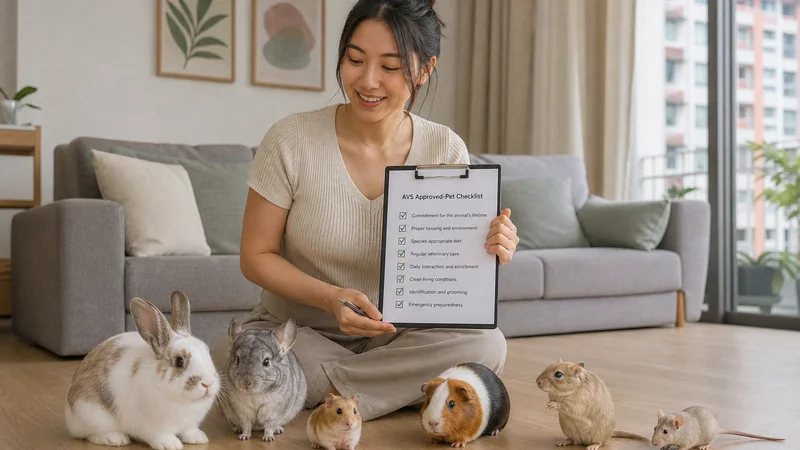
If a seller describes an animal as “similar to” an approved species, pause. A similar appearance does not prove that the same rules apply. Check the scientific or commonly accepted species name, then contact AVS if uncertainty remains.
Do rabbits and hamsters need a licence like dogs and cats?
No AVS licence requirement is listed for rabbits, hamsters, guinea pigs or other approved small mammals. AVS’s pet-licensing page specifically covers dog and cat licences, so do not assume that every companion animal needs the same permit.
That distinction matters because owners often use “registered”, “approved” and “licensed” as if they mean the same thing. They do not. An approved pet appears within the recognised category of animals that may be kept as pets. A licence is a separate administrative requirement that applies to particular animal groups.
What the AVS licensing page covers
AVS states that its pet-licensing requirements apply only to dogs and cats. The same page covers dog and cat licences specifically. Therefore, a rabbit or hamster owner should not apply dog or cat licensing steps to a small mammal unless AVS gives different, case-specific instructions.
This does not mean you should ignore records. Keep:
- the seller’s receipt or adoption paperwork;
- the animal’s species and sex;
- any health information supplied at purchase;
- vaccination or treatment records, if applicable;
- the date the animal entered your household.
Those records help a veterinary practice understand the animal’s history. They also help you explain exactly what you keep if a housing or regulatory question arises.
Avoid confusing licensing with veterinary care
A licence question and a health question require different answers. If your rabbit stops eating, your hamster becomes unusually quiet, or your guinea pig develops breathing difficulty, contact a veterinary practice promptly. Do not delay care while trying to resolve an administrative query.
For current licensing information, consult the AVS dog-and-cat licensing page directly. AVS guidance can change, so a page saved years ago should not outrank current official information.


Pet Health Map App
Turn every worry into your pet’s health record
Download the app to save AI Care reports, build your pet’s medical profile, and keep tracking symptoms and care notes.
Android version coming soon. The web version is available now.
Keeping rabbits, hamsters and small mammals in Singapore: HDB reality
AVS approval does not, by itself, prove every HDB or tenancy question has been answered. The available AVS sources confirm approved species and licensing scope, but they do not set out a complete HDB rulebook for each small mammal.
That means owners should separate three checks:
| Question | What the available AVS guidance answers |
|---|---|
| Is the species approved as a pet? | Yes, for rabbits, mice, hamsters, guinea pigs, gerbils and chinchillas |
| Does the AVS licensing page require a licence? | It lists licensing for dogs and cats |
| Does your HDB or tenancy arrangement impose an additional condition? | Check the relevant housing authority, landlord or tenancy documents |
Check your own housing position
Before bringing the animal home, review your tenancy agreement if you rent. If you live in an HDB flat, ask the relevant housing authority for the current position rather than relying on a neighbour’s experience or an old social-media post.
Also check whether your household has extra restrictions. A landlord, condominium management body or accommodation provider may have written conditions that differ from AVS’s pet-approval information. Do not present those private conditions as AVS rules.
Keep proof of what you checked
Create a small digital folder containing:
- the current AVS approved-animal page;
- the current AVS licensing page;
- your tenancy or housing correspondence;
- purchase or adoption documents;
- your veterinary records.
This preparation costs little and prevents confusion if someone asks what species you keep or why you believe no AVS licence applies.
Housing, hygiene and noise: staying on the right side of neighbours
Good small-mammal care depends on a clean, secure and quiet setup, even when no AVS licence is required. Regulatory approval does not remove your responsibility to control odour, escaped bedding, chewing damage or repetitive noise.
Rabbits and rodents also create different practical demands. A rabbit needs a secure area that prevents chewing and escape. Hamsters and gerbils may create noise when using exercise equipment at night. Guinea pigs can produce regular bedding waste. Chinchillas require careful environmental planning because their dense coat changes how owners manage heat and ventilation.
Use a three-part home audit
Before arrival, inspect:
- Containment: doors, latches, mesh gaps and escape routes;
- Cleaning: waste storage, washable surfaces and a realistic cleaning schedule;
- Consideration: placement away from shared walls where repetitive noise may disturb neighbours.
Measure the available floor area rather than guessing from the cage’s packaging. Record the enclosure dimensions, room temperature readings and cleaning frequency. These notes also help a veterinary practice assess the animal’s environment if a health problem develops.
Solve problems before they become complaints
Do not wait for odour or noise to attract attention. Test the setup for several days with the equipment running. Check whether wheels, bottles or doors rattle against the enclosure. Store used bedding in a sealed container and keep cleaning products away from the animal.
If you share walls, tell household members how to handle the animal safely. A small mammal that escapes can enter corridors, service areas or neighbouring homes. Prevention is easier than recovering an animal from an unfamiliar environment.
What happens if you keep an unapproved species?
Do not buy an animal until you have confirmed its status with AVS. The provided AVS guidance identifies approved small mammals, but it does not supply a universal penalty schedule for every unapproved species.
Therefore, avoid guessing about fines, seizure powers, deadlines or surrender arrangements. Those are regulatory claims and require current, species-specific official confirmation. A seller’s assurance cannot replace that confirmation.
Treat unclear species as a stop signal
Pause the purchase if:
- the seller cannot name the species clearly;
- the animal is marketed as an unusual hybrid;
- the listing says “legal everywhere” without an official reference;
- the seller tells you that approval is “basically the same” as another animal;
- the animal does not appear clearly on the AVS approved list.
Ask AVS what applies before making payment. Save the question and response. If you already keep the animal, explain the situation accurately and ask what action the relevant authority requires.
Do not release or rehome impulsively
An uncertain regulatory position does not justify releasing an animal outdoors. It may also be unsafe to pass the animal to another household without disclosing its species, history and any official advice received.
Instead, keep the animal secure while you obtain instructions. Prepare its identification details, purchase records, photographs and housing information. This gives AVS or a veterinary practice the practical information needed to advise you.
Where to get help if something goes wrong
Use AVS for species and licensing questions, and use a veterinary practice for illness or injury. Keeping those routes separate produces faster, clearer decisions.
For regulatory questions, start with the current AVS pages on approved pet animals and pet licensing. AVS identifies rabbits, mice, hamsters, guinea pigs, gerbils and chinchillas as approved pet animals. It also states that its licensing requirements apply to dogs and cats.
For health concerns, contact a veterinary practice. Prepare a concise record before calling:
- species and approximate age;
- when the problem began;
- eating, drinking and toileting changes;
- recent changes to food, bedding or enclosure;
- photographs or short videos;
- current medication or treatment history.
When urgent help matters
Seek prompt veterinary advice when the animal has a marked change in behaviour, stops eating, struggles to breathe, suffers an injury or cannot move normally. Do not wait for a licensing answer before addressing a health emergency.
You can also ask the veterinary team how to transport the animal safely. Use a secure carrier, stable bedding and enough ventilation. Avoid making sudden food or temperature changes during transport.
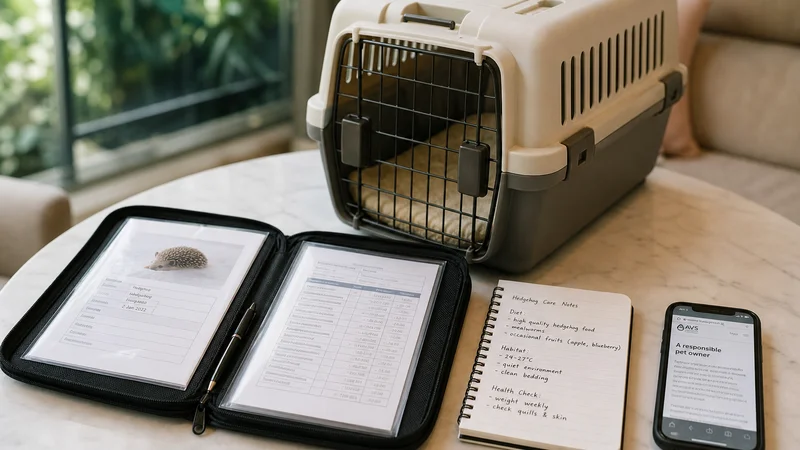
Conclusion: use the SAFE check before bringing one home
Keeping rabbits, hamsters and small mammals in Singapore is simplest when you confirm the species before purchase, separate AVS approval from licensing, and check your own HDB or tenancy position. AVS approves rabbits, mice, hamsters, guinea pigs, gerbils and chinchillas as pet animals. Its licensing guidance covers dogs and cats, not these small mammals.
Use the SAFE check: Species, AVS list, Flat or property, and Evidence. Then prepare a secure, quiet and hygienic enclosure, with records ready for a veterinary practice. If the animal is unusual or unclear, pause and ask AVS rather than relying on a seller’s claim. Check the current official pages today before committing to a new pet.