
Understanding the roaming dog rules NZ enforces is essential, as a dog that leaves your property without effective control can create legal and safety problems. Owners must manage registration, containment and public risk, while people who find a roaming dog should contact the local council rather than take ownership into their own hands.
Under the Dog Control Act 1996, letting your dog roam unsupervised away from your property can breach your owner duties. A council may seize and impound the dog, issue infringement penalties and recover fees. Repeated or serious offending can lead to prosecution or disqualification from owning a dog for up to five years.
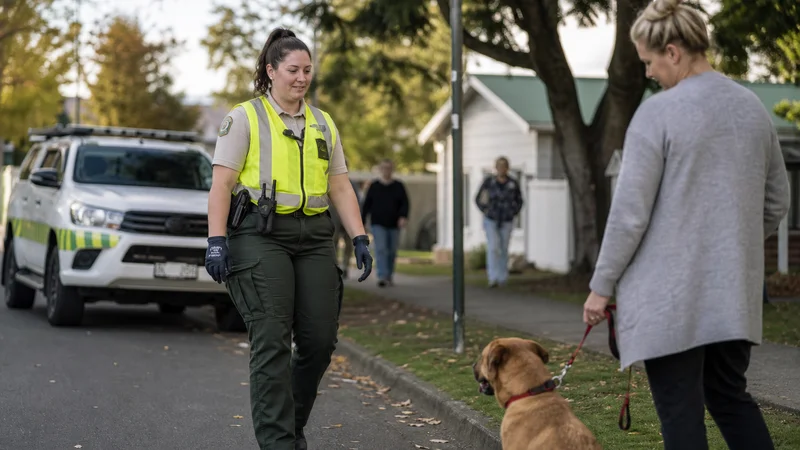
This guide explains three practical issues: what councils may treat as a roaming dog, what happens after a report, and how to reduce the risk of escape. It also covers rural concerns, registration and the steps to take if you find a dog at large.
What counts as a roaming dog under NZ law?
The bottom line is simple: owners must keep their dogs under control and prevent them from causing harm, fear or distress. A dog wandering beyond its owner's property without direct control may therefore attract council attention, even if it has not attacked anyone.
Section 5 of the Dog Control Act 1996 sets out core owner responsibilities. These include registering the dog, preventing it from injuring or endangering people, and ensuring it does not intimidate or distress anyone. Owners must also provide proper food, water and shelter. Fencible Law’s explainer summarises these duties.
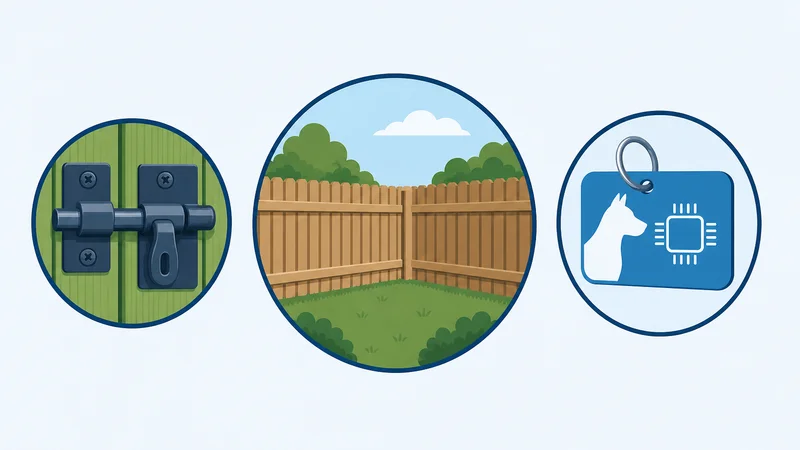
In practical terms, a dog does not need to bite someone before its owner faces consequences. A dog that repeatedly slips through a gate, runs along a road or approaches strangers can still create a control issue.
The useful test is the ABCD check:
- A — Access: Can the dog get through, under or over the boundary?
- B — Behaviour: Does it chase, threaten, intimidate or distress people or animals?
- C — Control: Can the owner stop and recall it promptly?
- D — Details: Are registration and microchip records current?
This check helps identify weak points before a complaint occurs. It also gives owners specific information to discuss with a council officer or veterinarian.
What happens when a roaming dog is reported?
Once someone reports a roaming dog, the local council’s animal management or dog control service normally becomes the relevant contact. Officers may investigate, seize the dog, impound it and issue written notice to the owner.
The response can depend on the dog’s behaviour, location and immediate risk. A dog near traffic, children, livestock or another animal may require a faster response than a dog contained safely by a member of the public. However, owners should not assume that an apparently harmless escape will be ignored.
Auckland’s figures show why councils treat roaming reports seriously. RNZ reported in 2026 that Auckland Council received more than 20,000 roaming-dog reports during the previous year. RNZ also reported that dog attacks had risen 76% over six years. Separately, Inside Government NZ reported around 15,000 roaming-dog reports each year, with approximately 1,200 attacks on people and a similar number involving other animals.
These figures relate to Auckland and should not be treated as a national average. Nevertheless, they show how repeated roaming can connect with wider public-safety concerns.
If your dog escapes, prepare these details before contacting the council:
- Registration number and microchip details
- The dog’s colour, breed type, sex and distinctive markings
- The time and location of the escape
- Whether the dog has shown aggression, fear or chasing behaviour
- Your current telephone number and address
Accurate information helps officers identify the dog and contact you quickly.


Pet Health Map App
Turn every worry into your pet’s health record
Download the app to save AI Care reports, build your pet’s medical profile, and keep tracking symptoms and care notes.
Android version coming soon. The web version is available now.
Penalties for roaming and unregistered dogs
The consequences can extend beyond a single return fee. Depending on the conduct, an owner may face impoundment, infringement action, prosecution or restrictions on future dog ownership.
Failing to register a dog is an offence under section 42. Fencible Law’s explainer states that this offence can carry a fine of up to NZ$3,000. That penalty is separate from any impoundment or sustenance costs that a council may charge. Fees vary by council, so owners should ask the relevant animal management service for the current amount and payment deadline.
Section 25 also provides a route to owner disqualification. According to Fencible Law’s explainer, a local authority may disqualify a person from owning a dog for up to five years after at least three unrelated infringement offences within 24 months, or after a conviction under specified relevant legislation.
A council may instead classify someone as a probationary owner. This can involve dog education or obedience-course requirements.
| Situation | Possible consequence |
|---|---|
| Dog is seized after roaming | Impoundment and possible sustenance fees |
| Dog is not registered | Infringement or prosecution, with a maximum NZ$3,000 fine stated by Fencible Law |
| Repeated unrelated infringements | Possible disqualification for up to five years |
| Serious attack or injury | Prosecution and additional court-imposed consequences may follow |
RNZ reported in 2026 that Auckland Council had prosecuted 611 dog owners over five years for bites, maulings and other attacks. It also reported a New Lynn case involving a rottweiler that seriously injured a pedestrian. The owner received 70 hours of community service and NZ$500 reparation.
Rural, farm and livestock concerns
For rural owners, roaming creates a separate stock-worrying risk. A dog that chases, harasses or attacks livestock can cause harm even without biting a person. Therefore, rural containment needs to account for paddock boundaries, gates, vehicle access and nearby stock.
Working and farm dogs may have different registration categories or exemptions. However, owners should confirm the applicable category with their local council rather than assume that describing a dog as a working dog removes ordinary control duties. Council processes can differ, so always verify the exact requirements and potential exemptions with your local authority.
A practical rural inspection should include:
- Walk the entire boundary and look for gaps, loose wire and damaged gates.
- Check whether the dog can push through a stock gate or follow a vehicle.
- Inspect areas where the dog has previously dug, climbed or squeezed through.
- Keep a record of escape times, locations and triggers.
- Separate dogs from livestock during repairs or periods of heightened excitement.
Do not rely on a collar alone. A collar can help identify a dog, but it does not prevent roaming or replace secure containment. Registration and microchipping also support identification after an escape, yet they do not excuse a failure to control the animal.
For council-by-council registration categories, owners can consult the guide to working and farm dogs in New Zealand.
How to stop your dog roaming
The strongest prevention plan combines physical security, identification and behaviour management. Desexing, secure fencing, current registration and microchipping appear consistently in council prevention campaigns, while updated contact details help reunite a lost dog with its owner.
Start with the escape route, not the dog’s intentions. Owners often focus on recall training but overlook a gate that remains open during deliveries or a fence gap hidden by vegetation. Walk the boundary at the dog’s eye level. Measure gaps, photograph damaged points and repair them promptly.
Use this short prevention checklist:
- Secure gates with a latch the dog cannot lift or push open.
- Remove objects that help a dog climb a fence.
- Check fencing after storms, landscaping or farm work.
- Keep registration information current.
- Update telephone details on the NZCAR microchip record.
- Practise recall in a secure area before using it in open spaces.
- Supervise dogs during visitors, deliveries and property repairs.
Microchipping is useful only when the record contains accurate contact details. Therefore, check the recorded telephone number after changing address or replacing a mobile number. You can also keep a recent photograph and a written description ready for the council.
For registration and microchipping information, see this guide to dog registration and microchipping in New Zealand.
What to do if you find a roaming dog
If you find a roaming dog, contact your local council’s animal management service instead of assuming ownership. Outside normal hours, follow the council’s published after-hours instructions. Avoid approaching a frightened or aggressive dog, especially if children, livestock or traffic are nearby.
Keep your actions focused on safety:
- Move people and pets away from the dog if you can do so safely.
- Do not chase the dog into traffic or corner it.
- Note the exact location and direction of travel.
- Photograph the dog only from a safe distance.
- Call the council and provide the dog’s description.
- Follow instructions about containment, collection or handover.
If the dog has caused an immediate threat or injury, contact the appropriate emergency service as well as the council. Do not attempt to investigate an attack yourself.
When a council impounds a dog, the owner may face release, impoundment and sustenance fees. Notice periods and release requirements can vary, so act promptly after receiving written notice. The New Zealand impounded dog release fee guide explains the practical steps owners should check.
A roaming report does not automatically prove that a dog attacked someone. Nevertheless, an escape still deserves prompt attention because repeated incidents can build an enforcement history.
Conclusion: prevent a roaming dog report before it starts
The key to roaming dog rules NZ owners need to remember is control: secure the property, maintain registration and microchip details, and respond quickly when a dog escapes. Councils may impound roaming dogs, issue penalties and take stronger action after repeated or serious offending.
Use the ABCD check each month: access, behaviour, control and details. If your dog has already been reported or impounded, contact the council promptly and ask about the notice, fees and release requirements. If you find a dog, call animal management rather than keeping it yourself. A short boundary inspection today can prevent a costly and stressful incident later.