
Export Pet From New Zealand: 5 Key MPI Steps
Moving a pet overseas can involve more than an airline booking. The importing country sets the entry conditions, while New Zealand’s Ministry for Primary Industries (MPI) manages export certification and may require an Animal Welfare Export Certificate. Your pet may need destination-specific documents, official veterinary sign-off and an approved transport arrangement.
To export a pet from New Zealand, check the importing country’s rules first, then arrange the required MPI export certificate, veterinary approvals and any Animal Welfare Export Certificate (AWEC). Some airlines also require bookings through a registered pet exporter. Documents must travel with your pet.
That process solves three common problems: identifying the correct regulator, avoiding incomplete certificates and deciding whether professional help makes sense. Requirements vary by destination, so a checklist for Australia may not apply elsewhere. Start with the rules for the country your pet will enter rather than relying on a generic relocation guide.
The short answer: export pet from New Zealand safely
The safest approach is to treat the move as an import into the destination country, supported by New Zealand export documents. The New Zealand Customs Service states that every pet leaving New Zealand must meet the importing country’s requirements. MPI has negotiated export requirements and certificates for many animals, and an official veterinarian must complete and sign off the relevant certification. (New Zealand Customs Service, undated)
In practical terms, organise the move around these five checkpoints:
- Identify the destination country and its current import conditions.
- Find the applicable MPI export certification documents.
- Ask your veterinarian which examinations, treatments or records the destination rules require.
- Check whether MPI requires an AWEC for your pet’s journey.
- Confirm the airline’s booking process and document requirements.
Do not assume that a vaccination record alone proves eligibility. It may form part of your evidence, but the destination country can require a particular certificate or declaration — your pet's existing dog registration and microchipping records are a useful starting point when compiling identification evidence. Also, do not leave document checks until the travel date. If an official veterinarian must sign a certificate, allow time for the veterinary appointment and administrative steps.
The three-document check
Use this simple memory hook: the 3-D check — Destination, Documents, Departure.
- Destination: What does the importing country require?
- Documents: Which MPI certificate, owner declaration or AWEC applies?
- Departure: Will the airline accept your booking and paperwork?
This check helps you separate government requirements from airline procedures. Those systems overlap, but they are not interchangeable.
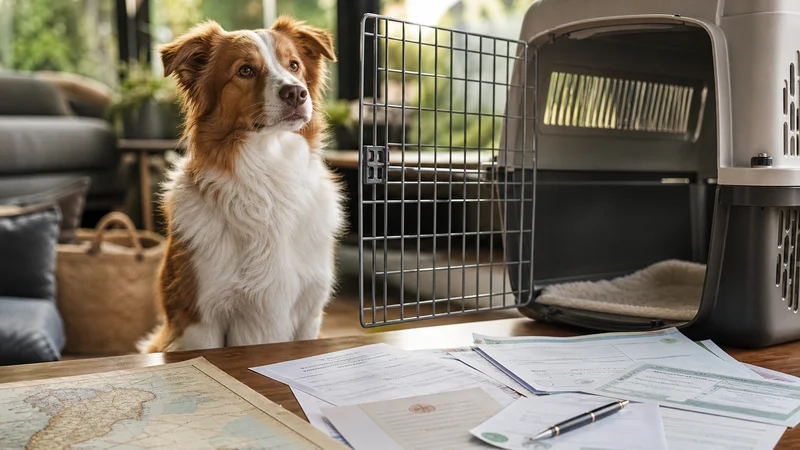
Who regulates an export pet from New Zealand?
MPI is the key New Zealand authority for export certification and animal welfare export requirements, while the destination country controls entry. That division matters because satisfying one side does not automatically satisfy the other.
The New Zealand Customs Service explains that MPI has negotiated export requirements and certificates for most animals. These certificates must be completed and signed by an official veterinarian, then travel with the pet. Customs also notes that pets leaving New Zealand may need an AWEC, which helps ensure the animal travels and arrives in good health. (New Zealand Customs Service, undated)
Meanwhile, the importing country decides what it will accept at the border. Its conditions can determine which veterinary records, declarations and certificates you need. Therefore, the correct starting point is the destination country’s official import guidance, followed by the relevant MPI export documents.
What an official veterinarian does
An official veterinarian provides the formal sign-off required for the export certificate. Your ordinary veterinary practice may help prepare your pet and records, but you should confirm who can complete the official certification.
Ask the practice these questions before booking:
- Can you prepare the documents for my destination country?
- Which records should I bring?
- When should the official certification appointment take place?
- Does MPI require any additional welfare certificate for this journey?
The answers depend on the destination and the documents involved. Keep written instructions, because different forms may have different timing and signature requirements.
What Customs information adds
Customs guidance provides the broad framework: the destination’s rules apply, MPI manages negotiated export requirements, and airline arrangements may affect how you book. It does not replace destination-specific instructions.
In other words, read the guidance as a decision map rather than a universal pet passport. If a requirement is unclear, contact the relevant authority or your veterinarian before paying for transport. Moving the other way instead? The rules differ — see our guide to bringing a dog or cat into New Zealand.


Pet Health Map App
Turn every worry into your pet’s health record
Download the app to save AI Care reports, build your pet’s medical profile, and keep tracking symptoms and care notes.
Android version coming soon. The web version is available now.
Certificates you will need: export certificate and AWEC
The required paperwork depends on the destination, but an MPI export certificate and an AWEC are separate considerations. The export certificate supports compliance with the importing country’s conditions, while the AWEC addresses animal welfare during export where MPI requires it.
The New Zealand Customs Service says certificates must be completed and signed off by an official veterinarian and must travel with the pet. It also says pets may need an AWEC from MPI. The certificate helps confirm that the animal travels and arrives in good health. (New Zealand Customs Service, undated)
MPI export certification
MPI publishes destination-specific export certification documents through its Overseas Market Access Requirements, or OMAR, system. For cats and dogs travelling to Australia, MPI provides a dedicated Owner Statutory Declaration form to support export certification. (Ministry for Primary Industries, undated)
That detail illustrates why you should not download a generic form and assume it applies. A declaration may support the certificate, but it does not necessarily replace the certificate itself.
Owner Statutory Declaration
An Owner Statutory Declaration, or OSD, is a formal owner-supplied document used within the export certification process for some destinations. MPI identifies an OSD form specifically for cats and dogs travelling to Australia. (Ministry for Primary Industries, undated)
Read every declaration carefully before signing. If you cannot confirm a statement from your pet’s records, ask your veterinarian or MPI for clarification. Keep copies of everything submitted, including signed forms and supporting evidence.
Animal Welfare Export Certificate
An AWEC is not simply another airline form. MPI uses it to address the welfare of animals travelling out of New Zealand. Whether your pet needs one depends on the journey and applicable MPI requirements.
Because the source guidance says pets may need an AWEC, do not assume that every journey has the same requirement. Confirm the current position for your animal, destination and transport arrangement.
| Document or approval | Main purpose | Who to confirm it with |
|---|---|---|
| Destination import conditions | Sets the entry rules | Destination authority |
| MPI export certificate | Supports compliance with negotiated export requirements | MPI and official veterinarian |
| Owner Statutory Declaration | Supports certification for specified destinations, including Australia | MPI and official veterinarian |
| AWEC | Addresses welfare during export where required | MPI |
| Airline booking approval | Confirms the carrier will accept the transport arrangement | Airline or registered pet exporter |
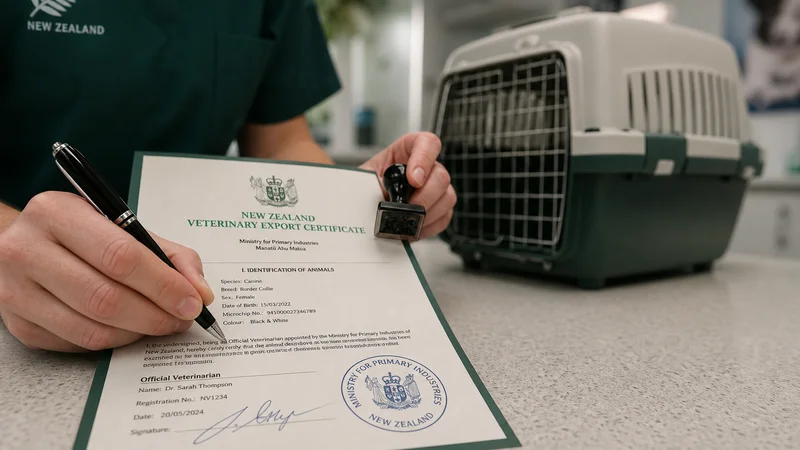
Why requirements differ by destination country
Destination rules differ because each importing country sets its own entry conditions. Therefore, a successful move depends on matching your pet’s documents to the exact country of arrival, not merely completing New Zealand departure paperwork.
The New Zealand Customs Service states that all pets exported from New Zealand must meet the importing country’s requirements. MPI’s destination-specific OMAR documents reinforce that point. For example, MPI publishes a dedicated OSD form for cats and dogs travelling to Australia. (New Zealand Customs Service, undated; Ministry for Primary Industries, undated)
Compare the destination, not the pet breed
Owners often focus on the animal’s breed, age or size. Those details may matter to a destination authority or airline, but the first administrative question remains: where will the pet enter?
Create a destination file containing:
- The official import guidance for the country.
- The relevant MPI OMAR documents.
- Your veterinarian’s instructions.
- Copies of declarations and certificates.
- Airline correspondence and booking details.
This file gives you one place to check when requirements change or different parties provide conflicting advice. However, do not treat an old form as current without confirming it.
Australia as an example
Australia demonstrates the importance of destination-specific paperwork. MPI provides an OSD form for owners supporting export certification for cats and dogs travelling there. That does not mean the same declaration applies to every destination or every animal. (Ministry for Primary Industries, undated)
Accordingly, use Australia-specific MPI material for an Australian journey. For another country, locate that destination’s own MPI certification pathway instead. If you cannot identify the correct document, pause the booking and seek confirmation.
Should you use a registered pet exporter?
A registered pet exporter can be useful when the airline requires professional booking support or when the paperwork feels difficult to coordinate. However, professional assistance does not remove your responsibility to check the destination’s entry rules.
The New Zealand Customs Service notes that some airlines will only deal with animal bookings through a registered pet exporter, rather than directly with the public. (New Zealand Customs Service, undated) That makes the exporter question partly practical and airline-specific.
When professional help may suit you
Consider contacting a registered exporter when:
- Your airline will not accept a direct public booking.
- The journey involves multiple transport stages.
- You are unsure which documents need official veterinary sign-off.
- You need help coordinating the crate, flight and paperwork.
- You want one provider to manage communication with the carrier.
Ask the exporter to explain what it will handle and what remains your responsibility. Also request a written list of documents, appointments and deadlines. Do not rely on verbal assurances that “everything is covered”.
Questions to ask before appointing one
Use this short screening list:
- Will you confirm the destination-country requirements?
- Which MPI documents will you prepare or submit?
- Who arranges official veterinary certification?
- Does the airline require your service for this booking?
- Which original documents will travel with my pet?
- What should I keep as copies?
Fees vary by provider and journey, so obtain a written quotation rather than relying on a general estimate. The sources available here do not establish a standard New Zealand fee, but you can benchmark the veterinary side of the bill against our guide to vet costs and pet insurance in New Zealand.
Your practical export checklist
The best final check is a document-and-journey review completed before the flight is confirmed. This catches gaps that a last-minute crate or airline booking cannot solve.
Record the following in one folder:
- Destination country and arrival airport.
- Applicable MPI OMAR documents.
- Official veterinarian appointment details.
- Any OSD or other owner declaration.
- AWEC status.
- Airline booking instructions.
- Original documents travelling with your pet.
- Scanned copies stored securely.
Then ask your veterinarian to review the records against the destination pathway. Keep the conversation specific: “Which document proves this requirement?” is more useful than “Is my pet ready?”
Finally, confirm who holds each original document on travel day. MPI-related certificates must travel with the pet, according to Customs guidance. (New Zealand Customs Service, undated) If an airline or exporter handles the paperwork, ask when and how you will receive copies.
Conclusion: export pet from New Zealand with a document-first plan
To export pet from New Zealand successfully, begin with the importing country’s rules, then match them to MPI’s destination-specific certification pathway. Confirm whether an official veterinarian must sign the certificate, whether an AWEC applies and whether the airline requires a registered pet exporter. Australia-bound cats and dogs may also need MPI’s destination-specific OSD support form.
Use the 3-D check — Destination, Documents, Departure — and keep a complete copy of every form. Requirements and airline procedures can change, so confirm the current position before committing to travel. If you are unsure, contact MPI, the destination authority, your veterinarian or a registered exporter. That small verification step can prevent a paperwork problem from disrupting your pet’s journey.