
Working and farm dogs in New Zealand: fees and rules
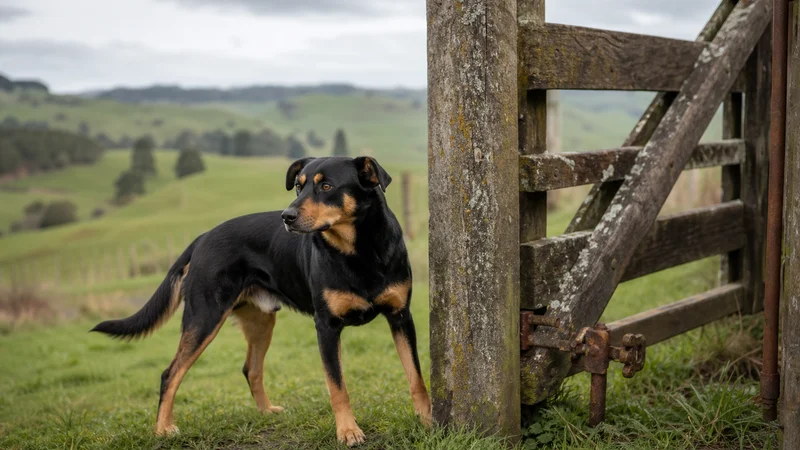
A working dog in New Zealand is generally a dog with a defined job, rather than one kept mainly as a pet. However, councils set their own registration fees and may apply slightly different criteria. Farm dogs used for stock control can qualify for a microchipping exemption, but owners still need to register them and confirm local requirements.
For rural owners, three questions usually matter most:
- Does your dog genuinely fit the council’s working-dog definition?
- Which registration fee applies in your district?
- What must you do to keep the dog compliant throughout the year?
The practical way to avoid mistakes is the Job–Tag–Council check: record the dog’s working role, confirm its identification and registration position, then check the current rules with your territorial authority.
What counts as a working dog under council rules?
The bottom line is that a working dog needs a specific job or role, rather than simply living on a rural property. Central Hawke’s Bay District Council defines a working dog in these terms and lists several recognised categories (Central Hawke’s Bay District Council, 2026).
A rural address alone does not automatically make a dog a working dog. For example, a dog kept as a household companion on a lifestyle block may fall under a rural pet-dog category instead. Therefore, describe what the dog actually does when you apply or ask the council for guidance.
Recognised working roles in the Central Hawke’s Bay example include:
- Farm dogs primarily used for herding or stock control
- Disability assistance dogs
- Conservation dogs supporting Department of Conservation operations
- Pest-control dogs in approved management programmes
- Security dogs used by licensed property guards
- Dogs working for government agencies in official duties
Those government roles include Police, Customs, Defence, Corrections, biosecurity, aviation security and Civil Defence work. However, the exact interpretation can vary between New Zealand’s territorial authorities.
Prepare a short written description before contacting your council. Include the dog’s main task, the animals or property involved, how often it works and whether it works under a recognised organisation or programme.
Working and farm dogs in New Zealand: comparing registration fees
The bottom line is that working-dog registration may cost less than rural or town-dog registration, but there is no single national fee table. New Zealand has around 67 territorial authorities, and each council sets its own fees and detailed criteria within the Dog Control Act 1996 framework (Central Hawke’s Bay District Council, 2026).
Central Hawke’s Bay District Council provides a useful 2026 example:
| Dog category | 2026 registration fee |
|---|---|
| Working dog | NZ$61 |
| Rural dog | NZ$65 |
| Town dog | NZ$130 |
These figures apply to that council’s 2026 season. They do not create a national New Zealand rate. Therefore, treat them as an illustration of how councils may separate working, rural and town categories.
The council also reported that rural pet-dog fees increased by NZ$4 per dog, while the working-dog fee remained unchanged for the 2026 season (Central Hawke’s Bay District Council, 2026). That distinction matters because a dog can live rurally without qualifying as a working dog.
Before paying, ask your council:
- Which category applies to each dog?
- Does the council require evidence of the dog’s work?
- Is the quoted fee for the full registration season?
- Do Gold Card or responsible-owner discounts apply?
Fees vary by council, so check the current rate on your own council’s website or contact its dog-control team.

Pet Health Map App
Turn every worry into your pet’s health record
Download the app to save AI Care reports, build your pet’s medical profile, and keep tracking symptoms and care notes.
Android version coming soon. The web version is available now.
Microchipping: the working farm dog exemption
The bottom line is narrow: working farm dogs used for stock control can be exempt from microchipping requirements in the Central Hawke’s Bay guidance. This exemption does not remove the need to register the dog or confirm its status with the relevant council (Central Hawke’s Bay District Council, 2026).
The wording matters. The exemption applies to working farm dogs used for stock control, not automatically to every dog described as working. A security dog, conservation dog or pest-control dog may have a different position, so do not assume that the same exemption applies.
Central Hawke’s Bay states that all other dogs over three months must be microchipped and registered (Central Hawke’s Bay District Council, 2026). Therefore, owners should separate two compliance questions:
- Does the dog need a registration?
- Does the dog qualify for a microchipping exemption?
Keep a record of the dog’s working purpose and any council confirmation. If the dog’s role changes, contact the council again. For example, a farm dog that retires from stock work and becomes mainly a companion may no longer fit the same category.
Do not remove or ignore a microchip simply because the dog lives on a farm. Instead, confirm the exemption with the council and retain any written advice with the dog’s registration documents.
How to apply for working-dog status
The bottom line is to apply using the dog’s actual daily role and ask the council to confirm the category before relying on a reduced fee or exemption. The process can differ between territorial authorities, so the council’s current instructions take priority.
Use this Job–Tag–Council check:
Job: describe the work
Write a concise description such as “primarily used for stock control on a working farm”. Avoid vague wording such as “farm dog” if the dog mainly lives indoors or accompanies the family.
Also record:
- The dog’s name, age and breed or type
- Its main working task
- The property or operation where it works
- Whether it performs stock control, conservation, pest control or another listed role
Tag: gather identification details
Have the dog’s existing registration information available. If the dog has a microchip, keep its number and registration records together. If you believe the dog qualifies for the farm-dog microchipping exemption, note the basis for that belief.
Council: confirm the category
Contact your territorial authority through its official website or dog-control service. Ask for the current working-dog application process, supporting evidence and fee.
The most common first-time mistake is assuming that a rural address proves working status. It does not. The council needs to assess the dog’s role under its own rules.
Gold Card and responsible-owner discounts
The bottom line is that eligible owners may receive a registration discount, but the discount conditions and application method must be confirmed with the local council. Central Hawke’s Bay District Council identifies Gold Card holders and participants in its Responsible Dog Owner scheme as eligible for fee discounts (Central Hawke’s Bay District Council, 2026).
A discount is separate from the working-dog classification. In other words, a dog might qualify as a working dog, while the owner may also qualify for a separate reduction. Ask whether the discounts can be combined, because the available treatment may depend on the council’s policy.
Before submitting the registration, check:
| Question | What to confirm |
|---|---|
| Gold Card | Whether the cardholder qualifies and what proof is required |
| Responsible-owner scheme | Whether the dog and owner meet the scheme conditions |
| Working category | Whether the dog’s role is accepted as working |
| Payment | Whether the discount must be claimed before payment |
| Renewal | Whether eligibility must be confirmed each season |
Keep copies of approval emails, receipts and scheme evidence. This creates a simple paper trail if the category or fee is questioned later.
Because councils set their own fees and processes, do not assume that a discount available in Central Hawke’s Bay applies elsewhere. Check your own council’s current guidance before renewing.
Keeping your working dog compliant year-round
The bottom line is that registration status should match the dog’s real role throughout the year. A dog may change from active stock work to retirement, breeding, injury recovery or household companionship. When that happens, review its council category rather than carrying the old assumption forward.
Use a seasonal compliance check:
- Confirm the registration expiry or renewal period.
- Check that the council has the correct owner and address.
- Review whether the dog still performs its stated working role.
- Keep payment receipts and approval messages.
- Confirm the microchipping position if the dog’s role has changed.
- Contact the council before adding a new dog to the property.
Also, keep practical records. Note the dog’s main duties, the date you contacted the council and the name of any council officer who provided guidance. Written confirmation is particularly useful when you rely on a specific exemption.
Working status does not mean the owner can ignore general dog-control responsibilities. Registration remains important, and the council’s local rules still apply. If you move to another district, check the new council’s requirements rather than transferring the old classification automatically.
This approach protects against the two costly assumptions: “every farm dog is a working dog” and “a working-dog exemption covers every requirement”.
Conclusion: confirm your council’s current position
Working and farm dogs in New Zealand do not follow one nationwide fee schedule. A dog generally needs a defined job, and each territorial authority sets its own fees and detailed criteria. Central Hawke’s Bay’s 2026 example lists NZ$61 for working dogs, NZ$65 for rural dogs and NZ$130 for town dogs, while recognising a microchipping exemption for working farm dogs used for stock control (Central Hawke’s Bay District Council, 2026).
Use the Job–Tag–Council check before renewing: describe the work, gather identification details and confirm the category with your council. Then ask about Gold Card and Responsible Dog Owner discounts. Contact your local territorial authority now for its current fee, application process and exemption requirements.