Impounded Dog Release Fee NZ: Act Within 7 Days
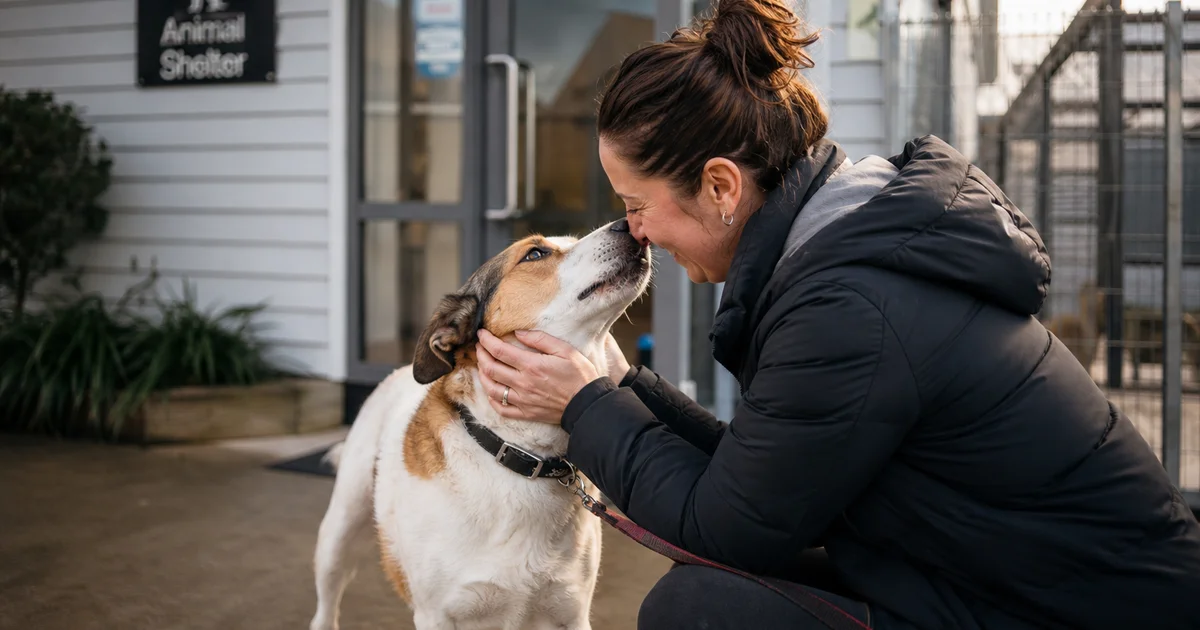
Finding your dog at a council pound is stressful, but quick action can improve your chances of getting them home. The process depends on your territorial authority, your dog’s registration status, the reason for impounding and how long the dog has been held.
An impounded dog release fee in NZ varies by council, but you may pay an impoundment fee, daily sustenance and other required charges. Check the seizure or section 71 notice immediately. Some councils give owners seven days to make contact and pay before the dog may be rehomed or euthanised.
This guide explains three urgent issues: why councils seize dogs, how the seven-day claim period works and what to do before daily charges increase. It also compares published council fees without treating any one schedule as a national price.
Impounded dog release fee NZ: what to expect
The bottom line is that you should contact the council pound on the day you discover your dog is missing. Fees vary between territorial authorities, and daily sustenance may continue until release.
A typical release process may involve:
- An impoundment fee based on the number of previous impounds
- A daily sustenance charge for each day in care
- Proof of ownership
- Evidence of current registration
- Microchip or ownership details
- Payment before the council releases the dog
Palmerston North City Council lists fees effective from 1 July 2026 to 30 June 2027. Its schedule gives examples of NZ$148 for a first impound, NZ$222 for a second impound within 12 months and NZ$298 for a third or subsequent impound. It also lists daily sustenance of NZ$24 per dog per day (Palmerston North City Council, 2026).
Auckland Council’s published information gives different figures. It lists NZ$96 for a first offence and NZ$178 for a second offence for a registered dog, plus NZ$25 daily sustenance. Auckland also advises owners to confirm current figures because fees are reviewed annually (Auckland Council, 2026).
| Council example | First impound or offence | Second impound or offence | Daily sustenance |
|---|---|---|---|
| Palmerston North | NZ$148 | NZ$222 | NZ$24 |
| Auckland, registered dog | NZ$96 | NZ$178 | NZ$25 |
These examples show why you should not rely on a national fixed price. Ask the council for the complete amount, payment methods and any steps needed before travelling to the pound.
Why councils impound roaming and unregistered dogs
Councils commonly impound dogs found roaming, dogs without the required registration and dogs connected with an incident. The legal framework comes from the Dog Control Act 1996, while councils manage local procedures and fee schedules.
A dog can reach the pound after:
- Escaping from a property or damaged fence
- Roaming without effective supervision
- Being found without reliable identification
- Remaining unregistered
- Becoming involved in a threatening, rushing or attacking incident
- Being seized under local animal-control procedures
The reason for seizure matters. A roaming dog may follow a routine release process, while an incident-related seizure — such as one linked to a menacing dog classification — may require additional assessment or council action. If your dog keeps escaping into a restricted area, it's worth checking your council's dog prohibited areas rules as well. Therefore, read the notice carefully instead of assuming that paying the fee will resolve every issue.
The Dog Control Act 1996 provides the national framework under which territorial authorities can seize, impound and dispose of dogs. However, the Act does not create one nationwide pound price. Councils publish their own charges and operational instructions (New Zealand Legislation, Parliamentary Counsel Office, 2026).
If your dog has disappeared, search your local council’s animal-control page promptly. SPCA New Zealand recommends contacting the council because a stray or wandering dog may already be impounded. It also recommends checking the national Animal Register lost-pet register and keeping microchip details current (SPCA New Zealand, 2026).


Pet Health Map App
Turn every worry into your pet’s health record
Download the app to save AI Care reports, build your pet’s medical profile, and keep tracking symptoms and care notes.
Android version coming soon. The web version is available now.
Section 71 notice and what happens at the pound
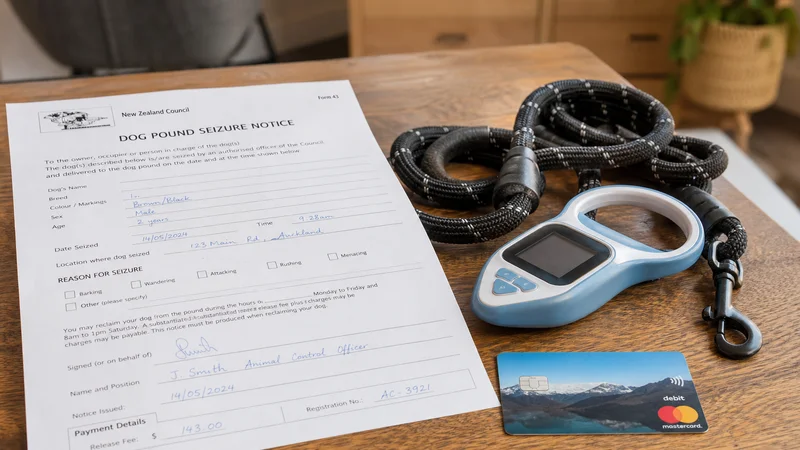
The council normally records the seizure and sends or issues information explaining what you need to do. In some areas, that information refers to a section 71 letter under the Dog Control Act 1996.
The notice may identify:
- The date council seized the dog
- Where the dog is being held
- The reason for impounding
- The date by which you must contact council
- Fees payable for release
- Identification or registration requirements
- Possible consequences if you do not claim the dog
A section 71 reference does not replace the need to read your council’s instructions. Waikato District Council explains that its seizure process uses a section 71 letter. It also states that dogs unclaimed after seven days can become council property and may be adopted out or put down (Waikato District Council, 2026).
Keep the letter, email and any voicemail. If you believe the notice contains an error, ask the council officer to explain the correction process. Do not assume that a phone call alone extends the deadline. Ask the officer to confirm the next required action in writing.
The seven-day claim deadline
The seven-day period is urgent because an unclaimed dog may not remain available indefinitely. However, the exact trigger can depend on the council’s notice and local procedure.
Waitomo District Council states that owners have seven days from the date of the notice letter to contact the council and pay the fees to release the dog. It also explains that unclaimed dogs may be rehomed or euthanised under specific council-listed conditions (Waitomo District Council, 2026).
That wording makes the notice date important. Record these details as soon as you receive the document:
- The date printed on the notice
- The date you actually received it
- The council contact details
- The release deadline
- The total balance quoted
- Any registration or compliance requirement
If you cannot pay immediately, contact the council before the deadline. Ask whether it offers an approved payment arrangement or another formal option. Do not rely on an informal promise, and do not wait while trying to raise the money privately.
Missing the claim period can have serious consequences. Waikato District Council says an unclaimed dog becomes council property after seven days, with adoption or euthanasia possible. Waitomo lists rehoming and euthanasia as possible outcomes under its stated conditions. Therefore, treat the seven-day date as a hard action point.
Impounded dog release fee NZ: a practical release checklist
The fastest route home is a prepared call followed by prompt payment and collection. Before contacting the pound, gather evidence that helps staff identify you and the dog.
Prepare:
- Your full name, address and contact number
- The dog’s name, breed or type, sex, age and markings
- Registration number, if available
- Microchip number, if available
- A recent photograph
- Proof of ownership, such as adoption or purchase records
- The seizure notice or reference number
- A secure lead, collar and suitable vehicle restraint
Then follow this sequence:
- Call the council animal-control team. Confirm that the dog is in its care and ask for the collection deadline.
- Ask for the full balance. Request a breakdown of impoundment and daily sustenance charges.
- Confirm release conditions. Ask whether registration, microchip details or another document must be updated first.
- Pay using an approved method. Keep the receipt and payment reference.
- Collect the dog safely. Bring suitable transport and follow staff instructions.
- Ask what happens next. Clarify any infringement, incident investigation or containment requirement.
A common first-timer mistake is travelling to the pound without confirming opening hours, payment options or the required documents. Another is assuming the daily charge stops when the owner makes contact. Ask when the council considers the dog formally released.
For related preparation, see our guide to dog registration and microchipping in New Zealand, which covers the national law and how council fees differ.
Preventing another impoundment
The best way to avoid another impounded dog release fee in NZ is to remove the escape route and keep identification current. Registration, microchipping and secure containment work together rather than replacing one another.
Use this named SAFE check every month:
- S — Secure: inspect gates, latches, fencing and low gaps.
- A — Accountable: keep registration and contact details current.
- F — Findable: check the microchip record and collar information.
- E — Emergency-ready: keep a recent photograph and a missing-pet plan.
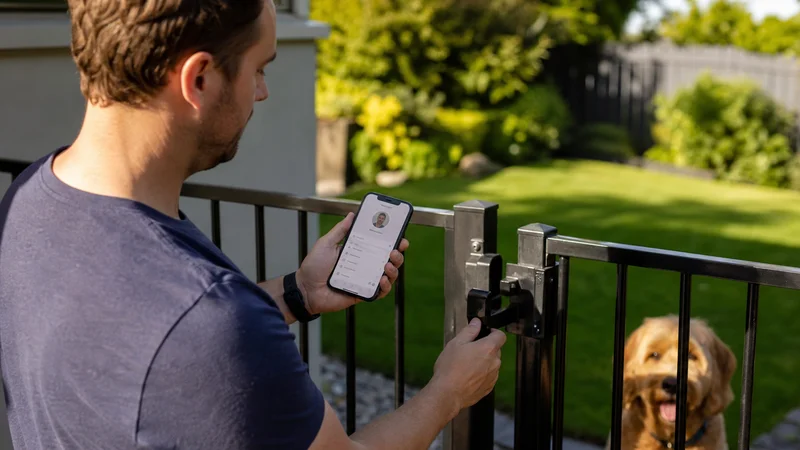
Walk around the boundary at your dog’s eye level. Look for dug-out corners, loose boards and gates that do not self-close. Also check whether visitors, delivery workers or children can open the gate accidentally.
Keep your dog’s microchip details current after moving house or changing telephone numbers. SPCA New Zealand specifically recommends maintaining current microchip information and checking Animal Register resources when a pet goes missing (SPCA New Zealand, 2026).
If your dog has shown repeated escape behaviour, discuss practical options with a veterinary practice or qualified behaviour professional. Separation distress, noise fear and poor recall can contribute to roaming. A secure harness, supervised outdoor time and reward-based recall training may reduce risk, but choose equipment that fits the individual dog.
What to do today
If your dog is missing, contact your local council now rather than waiting for a neighbour’s call. Ask whether the animal-control team has impounded the dog, then record the notice date, deadline, fees and release conditions.
The impounded dog release fee NZ pet owners pay depends on the local council and the dog’s impound history. Published examples range from Auckland’s listed charges to Palmerston North’s higher repeat-impound fees, with daily sustenance added separately. Treat every amount as council-specific and confirm the current total directly.
Once your dog comes home, repair the escape point, update registration and check the microchip record. If the dog was involved in an incident, follow the council’s written instructions and seek veterinary or behaviour support where appropriate.