
If you live in an HDB flat, you can keep one dog, and it has to come from AVS's approved breed list — a set of small, calm breeds sized for high-density living (check AVS's current list for the specifics on your breed, since this article deliberately doesn't reproduce an unverified list — see the note below). Larger working and guard breeds generally sit outside that list, and a handful of breeds — including German Shepherds, which fall under AVS's separately-documented Specified Dogs rules — are excluded from HDB entirely, or in some cases banned outright from being kept anywhere in Singapore.
Here's how the system actually works, including two lesser-known routes to legally keeping a dog in an HDB flat that isn't on the standard list.
The approved list, and why it's narrower than you'd think
Under the Housing and Development (Animals) Rules 2024, HDB flats may keep one dog from AVS's approved breed list — a set of small breeds chosen for size and temperament suited to high-density living. Crossbreeds are also allowed if the dog visibly resembles an approved parent breed.
A note on the exact list: this article deliberately doesn't reproduce a full breed-by-breed table. AVS and HDB maintain the authoritative list, and this round we weren't able to reach that primary page directly (see verification log above) — several third-party pet sites cite "around 62 breeds" and differing size cut-offs (some say roughly 40cm/10kg, others describe a 55cm shoulder-height rule that, per AVS's own Project ADORE page, actually applies to a different scheme, not the standard approved-breed list). Given that mismatch between secondary sources, the responsible thing to do is send you to check your specific breed against AVS's current list directly, rather than repeat a number we can't verify.

Two other legal routes if your dog isn't on the standard list
Most articles on this topic stop at "check the list." There are two additional, AVS-confirmed pathways worth knowing about:
Project ADORE (for local mixed-breed dogs, i.e. "Singapore Specials"): dogs adopted through one of six accredited partners (including SPCA and SOSD) can be kept in HDB flats up to 55cm at the shoulder, with no weight limit — the earlier 15kg cap has since been removed. Dogs must be licensed, microchipped, vaccinated, sterilised, and complete a mandatory obedience course with an AVS-accredited or ADORE trainer.
The K-9 sub-scheme (part of Project ADORE): allows HDB residents to adopt retired police or military sniffer dogs — specifically Labradors, English Springer Spaniels, Cocker Spaniels and Pointers — with the same obedience-training requirement. This started as a pilot in 2017 and was made permanent in 2018.
Neither of these is a loophole for "any dog you like" — both come with mandatory sterilisation, microchipping and training obligations that the standard approved-breed pathway doesn't require.


Pet Health Map App
Turn every worry into your pet’s health record
Download the app to save AI Care reports, build your pet’s medical profile, and keep tracking symptoms and care notes.
Android version coming soon. The web version is available now.
Specified Dogs: banned regardless of housing type
Separately from HDB's list, AVS maintains a "Specified Dogs" classification that applies nationwide, not just to HDB flats:
- Part 1 breeds — including Pit Bull–type breeds, Akita, Neapolitan Mastiff, Tosa, Dogo Argentino, Fila Brasileiro, Boerboel, Perro De Presa Canario, and their crosses — are currently barred from import into Singapore altogether.
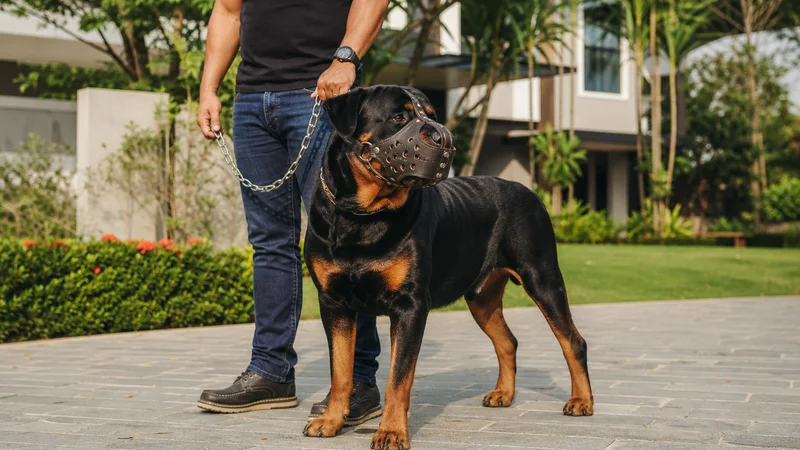
- Part 2 breeds — Rottweiler, Doberman, German Shepherd (and related shepherd breeds), Bull Terrier, and several Mastiff-type breeds — can be kept, but only with a leash-and-muzzle requirement in public, a minimum SGD 100,000 insurance policy, and a banker's guarantee.
Specified Dogs of either part cannot be kept in HDB flats at all, regardless of size.
Licence ≠ HDB approval — these are two separate things
This trips up a lot of new owners. AVS is explicit that getting a dog licence "is not an approval to keep the [dog]" — the licence and your HDB eligibility are handled separately, and it's the owner's responsibility to confirm both. You can technically hold a valid dog licence for a breed that still isn't allowed in your specific flat.
What happens if you get it wrong
Flat owners found keeping a non-approved breed can be fined up to SGD 4,000 and may be required to rehome the dog (AVS, Limits of ownership page, official, verified 2026-08-24). This is a separate penalty track from the Specified Dogs fines, which run up to SGD 5,000 under different rules (AVS, Specified Dogs page, official, verified 2026-08-24) — worth knowing the two aren't interchangeable if you're trying to understand which rule applies to your situation.
Before you commit to a breed
- Confirm your specific breed (or the parent breeds of a mix) against AVS's current approved list — don't rely solely on a blog's breed table, including this one
- If you're drawn to a breed that isn't approved, Project ADORE is worth a look before ruling out dog ownership in your flat entirely
- Budget beyond the dog itself — licensing, microchipping and first-year vet visits add up; see our guide to vet visit costs in Singapore for real numbers
- Once you've confirmed eligibility, the next step is licensing — see our PALS licensing walkthrough
- Microchipping has to happen at a licensed vet before you can apply for a licence — you can find one on the PetHealthMap Singapore clinic directory
If you're set on a short-muzzled breed that isn't on the approved list anyway (many brachycephalic breeds aren't), it's also worth reading up on brachycephalic airway syndrome before you commit elsewhere — Singapore's climate is genuinely tougher on these breeds.
Also planning for a cat in the same flat? See our guide to cats in HDB flats — the rules changed significantly in 2024 and are handled separately from dog rules.
This article summarises publicly available regulatory information for general planning purposes. It is not a substitute for checking the current AVS/HDB approved breed list directly, and it has not yet been reviewed by a Singapore-licensed veterinarian — PetHealthMap is working on establishing local veterinary review for SG-market content.