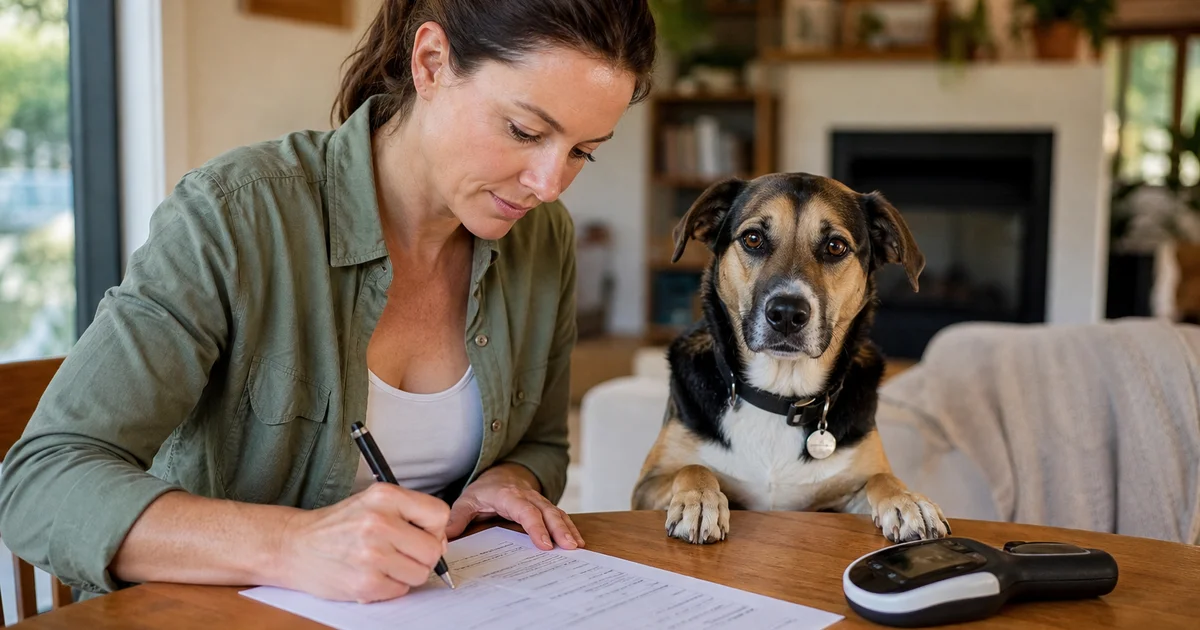
Selling or rehoming a dog in New Zealand requires two separate updates: notify the relevant council about the ownership change and update the dog’s microchip record with the NZCAR. Both parties must provide written notice within 14 days. If the dog moves councils, notify both councils and check any restrictions.
(New to registration? See our dog registration and microchipping guide first — this article assumes the dog is already registered.) This process protects the dog, the previous owner and the new owner. It also prevents council records from pointing to the wrong person if the dog goes missing, causes an incident or needs urgent medical care. The key challenges are understanding the 14-day deadline, completing the council transfer correctly and updating the microchip record separately. Use the ABCD check: Agreement, Both councils or parties, Chip record, Documents.
Transfer dog registration NZ: the 14-day legal deadline
The previous owner and new owner must each notify the territorial authority in writing within 14 days of the ownership change. Section 48 of the Dog Control Act 1996 requires this notice, and both parties must consent to the change (Christchurch City Council, 2026).
This duty applies whether you sell, give away or rehome the dog — a verbal handover does not replace written notification.
Start the transfer as soon as the dog changes hands; waiting risks one party forgetting or losing contact before the 14 days are up.
Prepare these details before starting:
- Current owner’s name and contact details
- New owner’s name and contact details
- Dog’s name, breed, date of birth, colour and sex
- Desexed status
- Microchip number
- Registration tag or owner ID
- Dog ID shown on the registration invoice, where requested
Providing false or misleading information breaches the Dog Control Act 1996. Complete a separate form for each dog when transferring multiple animals (Christchurch City Council, 2026).
Council ownership forms and registration records
Use the council's change-of-ownership process and get confirmation after submission — councils may accept an online form, email, post, phone or in-person request, depending on the area.
For example, Whangārei District Council accepts online uploads, email, post or in-person submissions. Upper Hutt City Council lists online, email, phone and post as available notification methods. Therefore, check the current process with the council holding the dog’s registration rather than assuming every council uses the same form (Whangārei District Council, 2026; Upper Hutt City Council, 2026).
Both parties must participate. They can usually sign the same form or provide signed written notice, but the council may request specific evidence. The previous owner should supply the Dog ID from the registration invoice when the council asks for it.
| Transfer task | Person responsible | What to check |
|---|---|---|
| Notify the council | Previous and new owner | Written notice within 14 days |
| Identify the dog | Usually previous owner supplies records | Dog ID, tag number and microchip number |
| Confirm consent | Both parties | Names and signatures match |
| Check the outcome | New owner or both parties | Council confirmation and updated details |
Keep a copy of the submitted form, email or receipt. Whangārei District Council states that it verifies the information, updates its records and sends confirmation by email (Whangārei District Council, 2026).


Pet Health Map App
Turn every worry into your pet’s health record
Download the app to save AI Care reports, build your pet’s medical profile, and keep tracking symptoms and care notes.
Android version coming soon. The web version is available now.
NZCAR microchip transfer after rehoming
Council registration and microchip registration are separate records. Updating one does not automatically update the other, so the new owner should transfer the NZCAR record as soon as possible.
The New Zealand Companion Animal Register allows account holders to update contact details, add medical notes, transfer ownership during rehoming and mark an animal as deceased. Owners can manage records through animalregister.co.nz, contact NZCAR on 0508 LOSTPET (567873) or email [email protected] (New Zealand Companion Animal Register, 2026).
Ask the previous owner for the microchip number and any NZCAR transfer information. Then confirm that the new owner’s phone number, email address and physical address appear correctly. These details matter because the register helps lost pets return to their families.
Use this handover checklist:
- Scan or read the microchip number and compare it with the paperwork.
- Ask the previous owner to initiate or approve the NZCAR transfer.
- Add the new owner’s current contact details.
- Add relevant medical notes and supporting records.
- Check that the transfer has saved successfully.
- Keep confirmation with the dog’s council documents.
NZCAR says updating contact details is free. However, contact the register directly if the ownership transfer does not appear, the chip number does not match or the previous owner cannot complete their part.
Selling puppies in New Zealand: records to provide
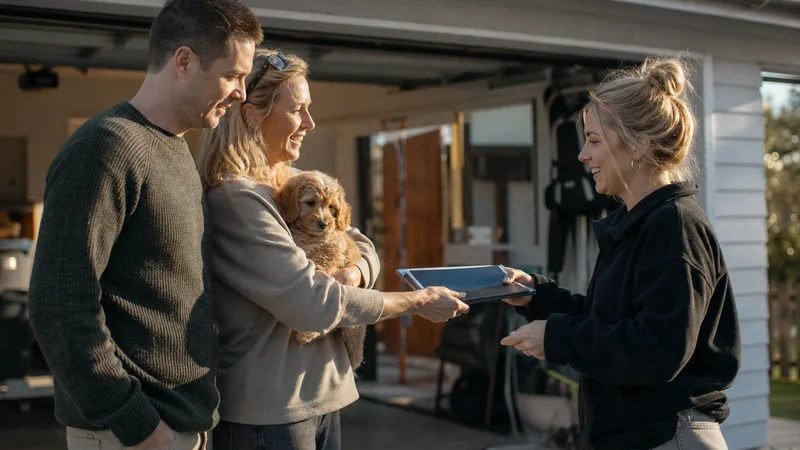
When selling a puppy, provide a complete handover pack rather than only a receipt. SPCA New Zealand recommends medical and behavioural records, including vaccination and parasite-treatment details. It also recommends microchipping records for puppies over 12 weeks of age and supplying three to four days of the puppy’s current food (SPCA New Zealand, 2026).
New Zealand currently has no licensing system for dog breeders and no restrictions on who can sell puppies, including third-party sales through pet shops and online platforms. SPCA is campaigning for breeder licensing and an updated Code of Welfare for Dogs (SPCA New Zealand, 2026).
That absence of a licensing system does not remove the value of careful documentation. Clear records help the buyer understand what the puppy has received and what information still needs confirmation.
A useful puppy handover pack includes:
- Vaccination and parasite-treatment records
- Microchip information, where applicable
- Behavioural and care notes
- Feeding instructions
- Three to four days of the current food
- Seller and buyer contact details
- Written confirmation of the handover date
Avoid describing a puppy as fully protected or medically clear unless a qualified veterinary professional has documented that conclusion. Instead, give the buyer the actual records and recommend that they discuss ongoing care with their veterinary practice.
Moving between council areas and restricted dogs
If the dog moves to a different council area, contact both councils within 14 days. The current council needs to update its outgoing record, while the new council needs to register the dog at its new address.
Tauranga City Council states that failing to notify both councils can lead to prosecution. It also says the new council issues a new registration disc or label at no charge after the transfer. The registration still expires on 30 June, which remains the national renewal date (Tauranga City Council, 2026).
Ownership transfer and address change are different tasks — update the address if the same owner simply moves, or report an ownership change if a new person takes over.
Restricted dogs require additional care (see what counts as a menacing or restricted dog if unsure). A dog classified as dangerous or restricted cannot transfer to another person without consent from the council where the dog will live (Tauranga City Council, 2026). Contact that council before completing the handover, not after the dog arrives.
Record these details before moving:
- Old and new residential addresses
- Current and new council names
- Date the dog moves
- Registration number and dog ID
- Any dangerous or restricted classification
- Written council approval, where required
Common transfer mistakes and a safer handover
An outdated record also matters if a dog is ever impounded — see impounded dog release fees and deadlines. Most delays come from treating the council record and microchip record as one system. They are not. A second common mistake involves missing consent from one party or entering a microchip number incorrectly.
Use the ABCD check before the dog changes hands:
- Agreement: both parties consent and provide written notice.
- Both councils or parties: notify both owners and both councils when required.
- Chip record: transfer the NZCAR record and check the number.
- Documents: retain registration, medical, behavioural and food information.
Do not submit one form for several dogs — Christchurch City Council requires a separate form per dog. Do not guess missing information; check the registration invoice, microchip paperwork or council record instead.
If the other party will not cooperate, contact the relevant council and explain the situation — it can advise how it wants the matter documented. Keep copies of every message and submission.
Conclusion: complete the transfer before the deadline
To transfer dog registration NZ records safely, treat the handover as two linked jobs: update the council registration and update the NZCAR microchip record. Both the previous and new owners must provide written notice within 14 days, while a move between council areas requires contact with both councils.
Before handing over the dog, check the ABCD list: agreement, both parties or councils, chip record and documents. Provide the new owner with medical, behavioural, vaccination, parasite-treatment and feeding information, especially when selling a puppy. Start today by locating the dog ID, microchip number and current council record, then request confirmation after each update.