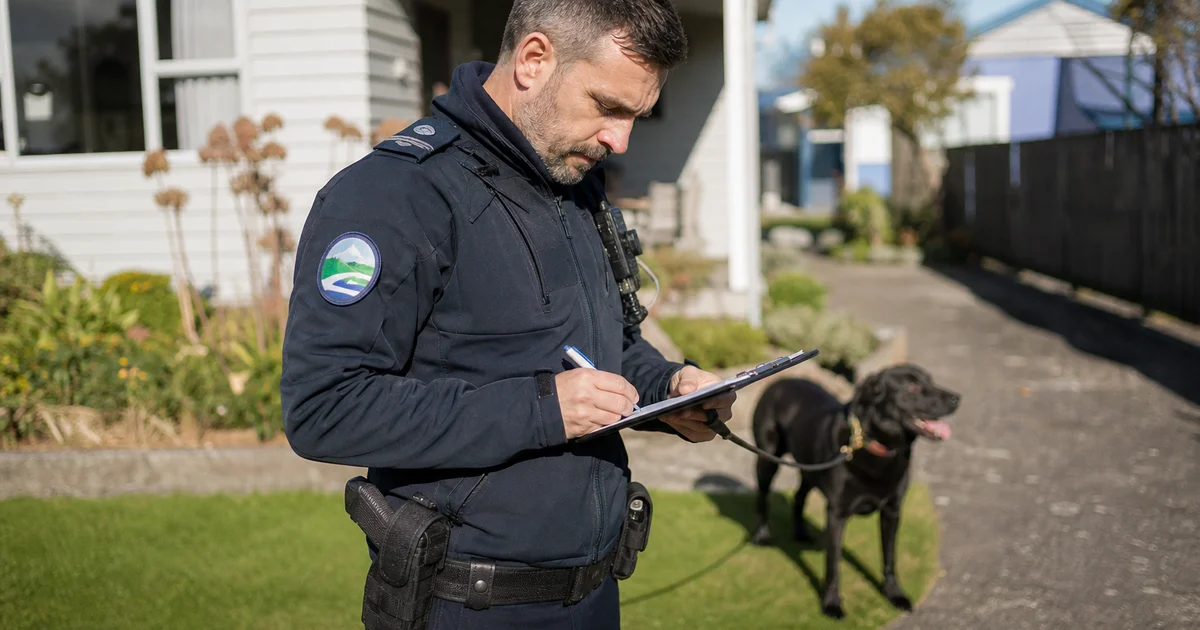
Dog Attacks in New Zealand: Council, Seizure and Orders
A dog attack can quickly become a council investigation, with possible impounding, classification, fines or a destruction application. Owners need to understand what officers can do, how costs accumulate, and which records may help explain the incident. Acting calmly and obtaining legal advice early can protect both people and animals.
Dog attacks in New Zealand can lead to immediate council action. A dog control officer or ranger may seize and impound a dog while the council investigates. Depending on the facts, the dog may be classified as menacing or dangerous, and a serious attack may result in a destruction order.
This guide explains three practical issues:
- what usually happens after a report;
- when seizure, classification or destruction may arise; and
- what an owner should record and do immediately.
What happens immediately after a dog attack is reported
The immediate priority is safety, evidence and lawful control of the dog. Under the Dog Control Act 1996, a dog control officer or dog ranger may seize and impound a dog. Councils also expect owners to keep dogs under control and prevent them harming or distressing people, animals or protected wildlife.
A report may lead to questions about:
- where the dog was;
- whether it was registered and under control;
- who was injured or affected;
- whether another animal, stock, poultry or wildlife was involved; and
- what happened immediately before and after the incident.
The council may contact the owner, witnesses and the person who reported the attack. However, the exact investigation process can vary between councils and incidents. Avoid guessing about what happened. Instead, write a factual timeline while your memory remains clear.
The ABCD incident record
Use this named angle to organise your notes:
- A — Account: record the date, time, location and sequence of events.
- B — Bodies: note people, dogs, livestock, pets or wildlife involved.
- C — Control: record fencing, leads, gates, supervision and how the dog was contained.
- D — Documents: save photographs, messages, veterinary records and council correspondence.
Do not approach an injured person or another animal to argue about the report. Keep communication polite and factual. If the dog remains at home, prevent further contact with visitors, children and other animals while you await instructions.
Dog attacks in New Zealand: when can a council seize your dog?
A council can seize and impound a dog where a dog control officer or ranger considers intervention necessary under the Dog Control Act 1996. Community Law New Zealand also states that an officer or ranger may remove a dog that is out of control. Therefore, seizure does not itself prove the final outcome of the investigation.
The council may take account of the incident’s seriousness, the risk of another event, the dog’s control, and any previous history. Auckland Council says serious cases may involve seizure and impounding, classification as menacing or dangerous, or restrictions on the owner keeping dogs.
What seizure means in practice
Impounding usually means the dog is held at a council facility or another authorised location. The owner should ask the council for:
- the incident or reference number;
- the location of the dog;
- the reason for seizure;
- the documents required for release, if release remains possible;
- the daily care or sustenance charges; and
- the deadline for responding to any notice.
Do not assume that paying an impounding fee ends the matter. The council may still investigate, issue an infringement notice, classify the dog or pursue a destruction order. Equally, do not assume seizure guarantees destruction.
New Zealand Legislation states that councils must set a graduated scale of fees for repeated impounding of registered and unregistered dogs. The precise amount depends on the council and the dog’s impounding history.


Pet Health Map App
Turn every worry into your pet’s health record
Download the app to save AI Care reports, build your pet’s medical profile, and keep tracking symptoms and care notes.
Android version coming soon. The web version is available now.
Impounding fees and daily costs across New Zealand councils
Impounding costs vary by council, so owners should request a written, current breakdown rather than rely on figures from another district. Wellington City Council provides one published example: NZ$120 for a first impounding, NZ$192.50 for a second in the same registration year, and NZ$256.50 for a third or later impounding — see our impounded dog release fee guide for the notice deadlines that usually come with these charges. It also lists a NZ$22 daily sustenance fee.
| Cost issue | What to check |
|---|---|
| Initial impounding | Whether this is the first, second or later impounding in the registration year |
| Daily sustenance | The council’s current daily rate and when charging starts |
| Registration status | Whether registered and unregistered dogs attract different fees |
| Release conditions | Identification, registration, payment or other council requirements |
| Ongoing action | Whether separate fines, notices or legal costs may arise |
These charges can continue while the dog remains impounded. Therefore, ask the council how the daily amount is calculated and whether weekends or partial days count. Do not delay a response simply because you are disputing the incident.
Prepare before speaking to the council
Keep copies of every email, notice and receipt. Record the name of each officer, the date of each conversation and any response deadline. If the council gives instructions by phone, request confirmation in writing.
The Dog Control Act requires councils to set fee scales, but it does not create one nationwide price for every impoundment. Wellington’s published fees should not be treated as Auckland, Christchurch, Hamilton or another council’s rates. Call the relevant council to confirm the current amount.

Dangerous versus menacing dog classifications
The classification depends on the evidence and the statutory criteria, not simply on an owner’s description of the dog. Companion Animals New Zealand explains that a dog may be classified as dangerous where there is reason to believe it poses a threat to a person, stock, poultry, another animal or protected wildlife. A conviction involving the dog rushing at a person, animal or vehicle can also be relevant.
A menacing classification is a separate council action. Auckland Council identifies menacing and dangerous classifications among the possible outcomes in serious cases. However, the available sources do not establish one universal decision rule for every incident or council.
Why the label matters
A classification can affect how the dog must be managed and whether the owner can keep dogs. Auckland Council states that serious cases may lead to restrictions on an owner keeping dogs. Ask for the written decision, the reasons given and the specific obligations that follow.
| Classification issue | Sensible owner response |
|---|---|
| Council raises a proposed classification | Read the notice carefully and note every deadline |
| The incident description appears wrong | Gather photographs, witness details and records that address each disputed point |
| The dog has medical or behavioural history | Obtain relevant veterinary records and keep copies |
| You do not understand the notice | Seek independent legal advice promptly |
The Dog Control Act 1996 is under government review, according to Companion Animals New Zealand, because councils and sector groups consider the framework outdated. That review does not remove current obligations. Follow the council’s present notice unless a lawyer advises otherwise.
Destruction orders: when they apply and how owners can respond
A serious attack can create a risk of destruction, but owners should not treat every reported incident as an automatic destruction order. Queen City Law states that a dog involved in a serious attack must be destroyed unless the owner can show exceptional circumstances. The precise legal position depends on the facts, evidence and decision-making process.
This is the point to obtain legal advice quickly. A destruction outcome cannot be sensibly challenged through informal arguments on social media or by repeatedly telephoning the council.
Build an evidence bundle
Prepare a dated folder containing:
- the council’s notices and correspondence;
- your ABCD incident record;
- photographs of the location, fencing, gates and warning signs;
- veterinary or behavioural records;
- registration and ownership documents;
- witness names and contact details; and
- evidence of steps taken to prevent another incident.
Do not edit photographs or delete messages. Preserve the original files and note when you obtained them. Also, avoid making admissions that you do not understand. Give accurate information, but ask a lawyer how to respond to formal allegations.
A lawyer can explain the applicable notice, response and hearing process. The supplied sources do not confirm one nationwide timetable or one universal appeal route, so owners should not rely on deadlines found on another council’s website.
Fines and other legal consequences for owners
Allowing a dog to remain out of control can carry a fine of up to NZ$1,500, according to Community Law New Zealand. A dog attack causing injury can carry a fine of up to NZ$3,000, plus possible liability for damages and a criminal record, according to Queen City Law.
These outcomes are separate from impounding charges. Auckland Council may issue an infringement notice and fee for breaches of the Dog Control Act 1996 or a council bylaw. In serious cases, the council may also seize the dog, classify it, or restrict the owner from keeping dogs.
Keep the consequences separate
The owner may face several distinct issues:
- council impounding and daily sustenance charges;
- an infringement notice or fine;
- a classification decision;
- a claim for injury or property damage; and
- possible criminal proceedings or a destruction order.
Do not assume that paying one amount resolves every issue. Read each document carefully and identify the issuing body, allegation, amount and response date. If an injured person seeks compensation, send the correspondence to your insurer or lawyer rather than arguing directly.
Citizens Advice Bureau New Zealand states that owners must keep dogs under control at all times and ensure they do not harm or cause distress to people, farm animals, pets or protected wildlife — the same underlying obligation that applies to barking dog nuisance complaints. That broad responsibility makes prevention and documented control measures important after an incident.

What to do if your dog is involved in an attack
The safest response combines immediate containment, accurate records and prompt advice. Do not move the dog between homes or release it to a friend without checking the council’s instructions. A change of location can create further concerns about control or compliance.
A practical 24-hour checklist
- Secure the dog away from people and animals.
- Obtain urgent medical or veterinary help where needed.
- Contact the relevant council if an officer has not already contacted you.
- Write the ABCD timeline.
- Photograph the location without disturbing evidence.
- Preserve messages, videos and original photographs.
- Ask for written details of seizure, fees or allegations.
- Contact a lawyer if the council raises classification or destruction.
Be cooperative without speculating. Say what you observed, identify what you do not know, and correct factual errors promptly in writing. Also, ask the council how you may communicate about the dog while it is impounded.
Conclusion: act early when facing dog attacks in New Zealand
Dog attacks in New Zealand can trigger several separate consequences: seizure, impounding fees, classification, fines, compensation claims and, in serious cases, a destruction order. The outcome depends on the incident, the evidence and the council’s action under the Dog Control Act 1996.
Use the ABCD record, preserve original evidence and request every important instruction in writing. Fees vary between councils, so confirm current charges directly rather than relying on another district’s schedule. If the council mentions dangerous or menacing classification, destruction or restrictions on keeping dogs, contact a New Zealand lawyer promptly. Early, accurate preparation gives you the clearest chance to respond responsibly.