Pet Transfer Ownership Canada: 7 Steps to Rehome Safely
When a pet changes hands, update three records: the sale or adoption paperwork, the municipal licence and the microchip or registry account. Requirements differ across Canada. Some cities cancel the previous licence and issue a new one, while registry providers may accept an online transfer, signed form or proof of ownership.
That makes pet transfer ownership Canada procedures easy to mishandle. A verbal agreement may not update the records that help identify the animal, prove ownership or support a liability dispute. This guide explains how to:
- document the handover clearly;
- check municipal and provincial requirements; and
- avoid common problems when selling or rehoming a puppy, kitten, dog or cat.
Pet transfer ownership Canada: record the handover
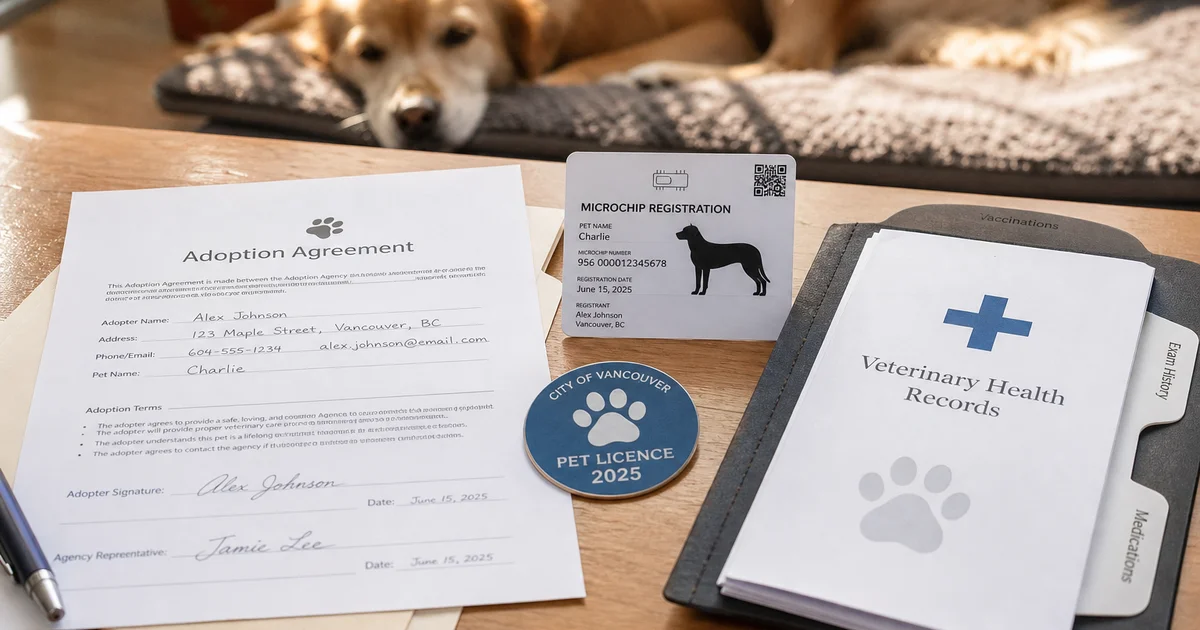
The safest approach is to create a written ownership trail before the pet leaves. Include the animal’s name, species, breed or description, sex, colour, date of birth if known, microchip number and the date of transfer.
Also record the full names and contact details of both parties. State whether the arrangement is a sale, adoption, gift or return. In addition, identify any included items, such as vaccination records, medication, registration papers or a desexing certificate.
A basic handover file should contain:
- a signed bill of sale or adoption agreement;
- a receipt showing the amount paid, if applicable;
- the pet’s microchip number;
- municipal licence details;
- veterinary records and current medication instructions; and
- written information about known health or behaviour concerns.
Avoid describing the animal as “healthy” unless a veterinarian has recently assessed it and the wording accurately reflects that assessment. Instead, list known diagnoses, treatments, allergies and ongoing monitoring.
The new owner should receive copies, not just verbal explanations. Keep the signed original securely. If a dispute arises, accurate records provide stronger evidence than text messages or an informal promise.
Why microchips and licences matter
Updating identification records helps a lost pet return to the correct household. It also creates a clearer record if ownership, medical consent or responsibility becomes disputed.
A microchip does not automatically prove that the current keeper owns the animal. The relevant registry must hold accurate contact details and, where available, transfer evidence. Therefore, both parties should check the registry after the handover rather than assume the change happened.
Municipal licensing serves a separate purpose. A city may issue a tag, collect local information or require a new registration under the incoming owner’s name. The rules can differ even between large Canadian cities.
Before transferring the pet, record:
- the microchip number and registry provider;
- the existing licence number and municipality;
- the date the pet changes homes;
- the new owner’s telephone number and email address; and
- the name of the veterinary practice holding the clinical records.
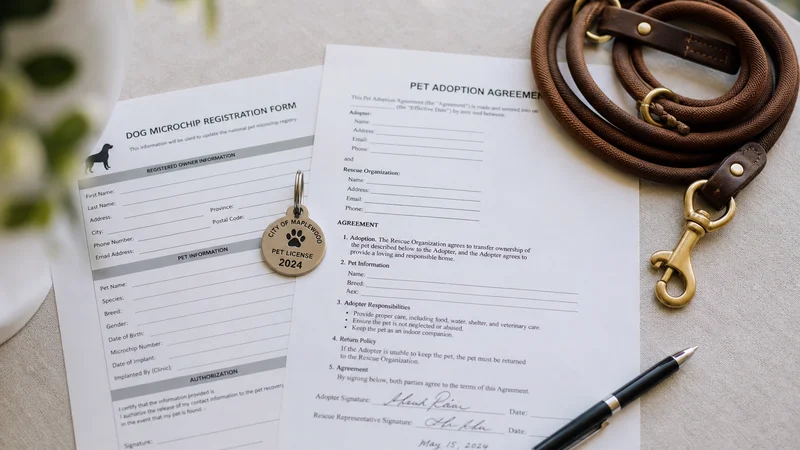
Contact the registry and municipality promptly. Ask what evidence they require, whether the old record closes automatically and whether the new owner must pay for a replacement tag or registration.


Pet Health Map App
Turn every worry into your pet’s health record
Download the app to save AI Care reports, build your pet’s medical profile, and keep tracking symptoms and care notes.
Android version coming soon. The web version is available now.
Municipal pet licence rules by city
Municipal licences usually do not follow the pet automatically. Check the city where the new owner lives, because local rules can require cancellation, re-registration or a replacement tag. Canada has no national licensing law — see our city-by-city dog and cat licensing comparison for how Toronto, Montreal, Calgary and Vancouver differ.
Calgary states that its pet licence cannot transfer to a new owner. The existing licence is cancelled, and the incoming owner must buy a new one. Calgary also says cats and dogs aged three months or older require a city licence. Its published 2025 fees include C$70 for an unaltered dog, C$44 for a spayed or neutered dog and C$43 for an unaltered cat. Fees can change, so confirm the current amount with the City of Calgary. (City of Calgary, accessed 2026.) For a closer look at feline-specific rules, see our Calgary and Toronto cat licensing guide.
Ottawa takes a similar practical approach. Its identification tag is not transferable between owners. The new owner must register the animal under their own name, and the previous owner does not need to provide written permission. Ottawa offers online, in-person and telephone registration, then issues a new tag number. (City of Ottawa, accessed 2026.)
| Situation | Action to take |
|---|---|
| Calgary pet changes owner | Cancel the existing licence and obtain a new one |
| Ottawa pet changes owner | Register under the new owner’s name and obtain a new tag |
| Another municipality | Check the local animal services or licensing office |
Do not rely on the seller’s existing tag. Ask the municipality how to close the old record and establish the new one.
Updating microchip and provincial registry records
Microchip updates depend on the registry provider, not just the municipality. The new owner should contact the registry with the chip number, transfer date and their own contact details.
BC Pet Registry allows an owner to transfer a pet online by logging into the account and selecting “Transfer Pet”. The process requires the incoming owner’s email address. Alternatively, both parties can sign a paper transfer form and email it to the registry. (BC Pet Registry, accessed 2026.)
If the previous owner cannot sign, BC Pet Registry lists alternative evidence. This can include a bill of sale showing the microchip number, a veterinarian’s letter on practice letterhead, an adoption agreement in the new owner’s name or documentation relating to the previous owner’s death. (BC Pet Registry, accessed 2026.)
This evidence-based approach is useful when a rescue, estate or urgent rehoming makes a joint signature impractical. However, requirements differ between registries. Therefore, ask the provider which documents it accepts before sending sensitive information.
The incoming owner should also ask the veterinary practice to update its client file. Clinics may require the new owner to provide identification or consent before releasing records. Keep the original vaccination history and medication instructions, especially if the pet has a chronic condition.
Selling puppies or kittens: breeder paperwork
Selling an animal involves more than handing over a pet and payment. Breeders should provide accurate records, explain known health information and check the legal requirements that apply to their province and municipality.
For a dog sold as purebred in Canada, the Canadian Kennel Club states that the breeder must register the dog under the Animal Pedigree Act and provide the new owner with the registration certificate within six months of the sale date. CKC member breeders must also follow the organisation’s Code of Practice for Member Breeders. (Canadian Kennel Club, accessed 2026.)
Do not promise registration unless the breeder can explain the process and provide the relevant paperwork. A buyer should ask for:
- the written contract and receipt;
- vaccination and parasite-control records;
- the microchip number, if implanted;
- registration or transfer documents, where applicable;
- veterinary examination records; and
- details of known hereditary or ongoing health concerns.
Provincial and municipal obligations may add further requirements. In British Columbia, there is no province-wide mandatory breeder licensing or registration regime, but requirements can vary by municipality. BC SPCA also identifies Canadian Veterinary Medical Association kennel and cattery codes as the generally accepted management standard under the provincial animal welfare framework. (BC SPCA, accessed 2026.) If the breed involved is subject to local restrictions, check our breed-specific legislation guide before advertising or completing a sale.
Private rehoming or shelter adoption
A shelter or rescue may provide a more structured transfer, but the new owner still needs to confirm what records will change. Ask who currently controls the microchip account, whether the municipality receives an ownership update and which documents accompany the adoption. If a stray or surrendered pet has been impounded, see our reclaim and animal services fee guide for typical release costs.
Private rehoming can work well when both parties cooperate. However, it places more responsibility on the people involved. Use a signed agreement, verify the chip number and arrange the registry update immediately after collection.
A practical comparison helps:
| Route | Strength | Check before handover |
|---|---|---|
| Shelter or rescue adoption | Formal agreement and established process | Microchip ownership, medical records and return conditions |
| Private rehoming | Direct communication with the previous keeper | Written terms, known health issues and registry update |
| Sale by breeder | May include pedigree and breeding records | Registration, contract and applicable local requirements |
The animal’s welfare remains central. BC’s cited management standards call for prompt veterinary care for sick, injured or suffering animals, regular cleaning and suitable housing. (BC SPCA, accessed 2026.) If the pet appears neglected or unwell, seek veterinary advice and contact the appropriate provincial animal welfare authority rather than completing a rushed transaction.
Provincial animal welfare and disclosure checks
Animal welfare rules can affect both the conditions in which animals are kept and the way commercial breeding operates. They do not create one simple Canada-wide transfer process.
Ontario’s Preventing Unethical Puppy Sales Act, 2024, prohibits practices including inbreeding, breeding a female dog more than three times within two years and breeding a female dog younger than one year. The same summary identifies penalties for operating a puppy mill and requirements under the Provincial Animal Welfare Services Act concerning food, water, medical attention and shelter. (LegalLine, accessed 2026.)
The same source states that Toronto requires a commercial pet shop licence. Requirements therefore depend on the activity, location and local bylaw, not merely on whether money changes hands.
Before advertising or accepting payment, check:
- the provincial animal welfare legislation;
- municipal breeder, pet-shop and business rules;
- any species or breed-specific restrictions;
- required sales, adoption or registration documents; and
- the current process for reporting welfare concerns.
Do not describe a pet as free from disease, suitable for breeding or legally registered without supporting records. Where the rules are unclear, contact the relevant provincial regulator, municipality or licensed veterinarian. Legal requirements can change, and this article does not replace individual legal advice.
A practical 3-step handover checklist
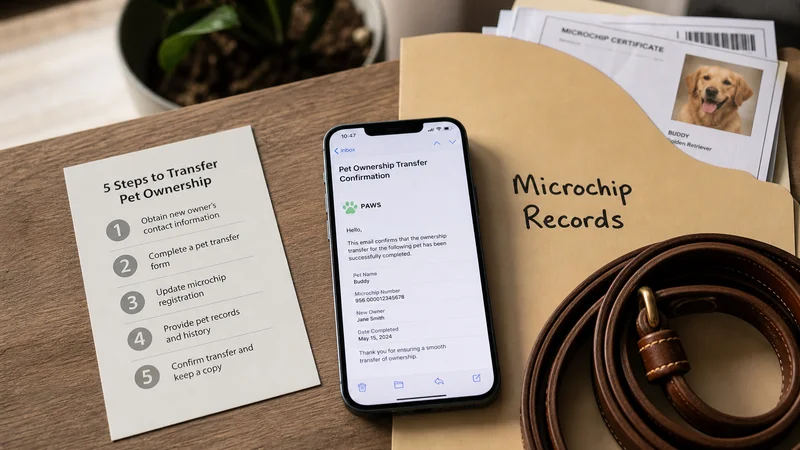
The simplest memory hook is TRACE: Transfer, Records, Authority, Confirmation, Evidence. Use it before and after the pet moves.
Transfer: Sign a bill of sale, adoption agreement or written rehoming document. Record the exact handover date.
Records: Copy the microchip number, licence details, veterinary history, medication instructions and registration documents.
Authority: Contact the municipality and registry provider. Ask which party must start the update and whether the old record closes.
Confirmation: Save confirmation emails, new tag numbers and registry receipts. Do not rely on an unverified verbal update.
Evidence: Keep the signed agreement, receipt and identity details securely. If a signature is unavailable, ask what alternative proof the registry accepts.
This process reduces preventable errors. It also helps the new owner act quickly if the pet escapes, needs urgent treatment or requires proof of lawful ownership.
Conclusion: complete the transfer before the pet leaves
A safe pet transfer ownership Canada process combines a written agreement, updated municipal licensing, accurate microchip details and complete veterinary records. The exact steps vary by city, registry and province, so avoid assuming that one Canadian procedure applies everywhere.
Use the TRACE checklist: transfer the agreement, record the details, contact the relevant authority, confirm each update and retain evidence. If you are selling puppies or kittens, check breeder, pedigree, welfare and municipal requirements before advertising. For a current local answer, contact your municipality and registry provider with the pet’s licence and microchip numbers ready.