
There is no federal or provincial law in Canada that sets a single national standard for dog and cat licensing.
Registration, fees and microchip/spay-neuter requirements are set city by city, by municipal bylaw — which means what's required (and what it costs) in Toronto has almost nothing in common with what's required in Montreal, Calgary or Vancouver.
Quebec is the one partial exception: it reportedly layered a provincial regulation on top of municipal bylaws starting in March 2020, with the stricter of the two rules applying — but even there, the city-level bylaw still does most of the actual work. This Quebec detail is based on cross-referenced legal-summary sources, not independently verified against Quebec's official regulation text this round, so treat it as a useful heads-up rather than a confirmed statute reference. For everyone else, this is entirely a municipal matter, spread across several thousand local governments across the country.
That fragmentation matters in practice, not just on paper. If you move from one Canadian city to another with a dog or cat, you can't assume anything about your old city's requirements — or fees — carries over. A dog that was fully compliant and cheaply licensed in one municipality can suddenly need a microchip, a spay/neuter certificate, or a much higher fee simply because the local bylaw is different, with no province-wide baseline to fall back on. This article compares four of Canada's largest cities to show how differently that plays out in practice: Toronto, Montreal, Calgary and Vancouver.
Toronto: mandatory registration, fines up to CAD 5,000, income-based discounts
According to the City of Toronto's official Pet Licensing page, all dogs and cats in the city must be licensed annually, and the maximum penalty for failing to do so can reach CAD 5,000, with individual tickets typically issued around CAD 240. Toronto's fee structure is tiered by species and by spay/neuter status — third-party sources citing Toronto's official rate table put the annual fee at roughly CAD 25 for a spayed/neutered dog and CAD 15 for a spayed/neutered cat, versus CAD 60 for an unaltered dog and CAD 50 for an unaltered cat. Residents aged 65 and older reportedly qualify for a 50% discount, and households with income below CAD 50,000 can apply for a reduced or waived fee. These exact dollar figures were not scraped verbatim from Toronto's live rate table (it renders as a dynamic component) — treat them as directionally accurate and confirm current numbers before budgeting around them.
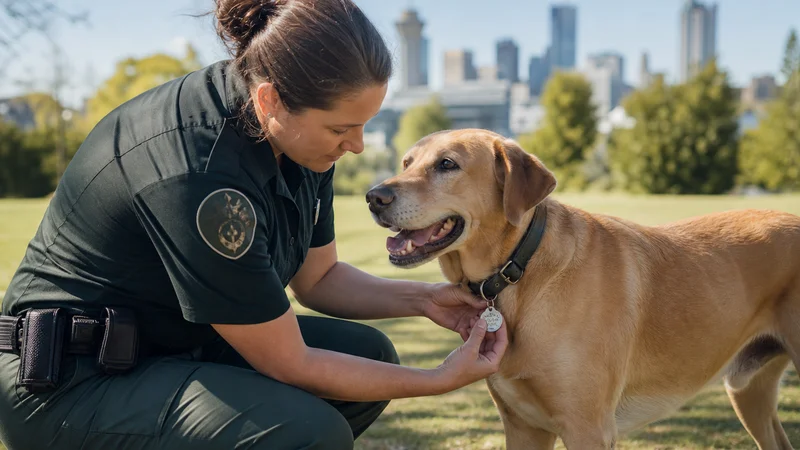
Montreal: the only city here that ties licensing to mandatory microchipping and spay/neuter
Montreal takes registration further than any other city covered in this article. The City of Montreal's own page states directly: "In Montréal, all dog owners must hold a dog license. Your dog must also be microchipped and spayed or neutered." That's a meaningfully stricter model than Toronto or Calgary, where spay/neuter status only affects which fee tier you pay — in Montreal, it's a precondition for getting licensed at all (applicable to dogs six months and older). Third-party sources put the licence fee at roughly CAD 31.80, with a late fee of about CAD 11.60 — again, not confirmed against Montreal's own live fee table this round. Dogs with certification from a recognized service-dog training organization can reportedly be licensed for free.
If your dog needs to be spayed/neutered to meet Montreal's registration requirement and cost is a concern, see our guide to free and subsidised pet desexing in Canada for programs that may apply.



Pet Health Map App
Turn every worry into your pet’s health record
Download the app to save AI Care reports, build your pet’s medical profile, and keep tracking symptoms and care notes.
Android version coming soon. The web version is available now.
Calgary: a fee structure tied to spay/neuter status, but the weakest sourcing in this article
Based on a search-result snippet from the City of Calgary's official "Pet licences and responsible pet ownership" page — not a full page scrape — Calgary's fees appear to run roughly CAD 70–71 for an unaltered dog and CAD 44–45 for a spayed/neutered dog. This is the single least-verified figure set in this draft; it should be reconfirmed directly against calgary.ca before being treated as reliable.
Vancouver: a single flat rate, but don't confuse it with West Vancouver's tiered fees
Third-party sources put the City of Vancouver's dog licence fee at roughly CAD 68, without a clear spay/neuter-based tier. That's a different structure — and a different local government — from the separate District/Municipality of West Vancouver, which some sources describe as charging around CAD 36 for a spayed/neutered dog and CAD 80 for an unaltered one. These are two different cities with two different fee schedules; don't apply one city's rate to the other.
What this means if you own a pet in Canada
- Check your specific city's bylaw, not a national or provincial rule — there generally isn't one to check, apart from Quebec's added provincial layer.
- If you're in Montreal, plan for spay/neuter and a microchip as part of getting licensed at all, not as optional extras.
- If you're moving cities or provinces with a pet, budget for the new city's licensing fee and requirements as part of the move — see our guide to renting with pets in Canada for how this can intersect with what a landlord may ask to see.
- Microchipping and spay/neuter surgery are procedures a veterinary clinic actually performs — you can find one through the PetHealthMap Canada clinic directory if your city's bylaw requires either.
- Treat every specific dollar figure in this article as a starting point, not a live price — municipal fee tables change, and several of the numbers here came from third-party aggregation rather than a scraped official source.
- Don't assume your previous city's rules travel with you. Licensing status, fees paid, and even whether spay/neuter was required elsewhere generally don't carry over automatically to a new municipality — you'll usually need to re-register locally.
This article summarises publicly available municipal licensing information for general planning purposes and is not legal advice. Bylaws and fees are set and changed by individual municipalities and can vary or update at any time — always confirm current requirements and costs directly with your own city before relying on this article. This article has not yet been reviewed by a Canadian-licensed veterinarian or municipal-bylaw professional — PetHealthMap is working on establishing local review for Canadian-market content.