
Shock Collar Laws Australia: State-by-State Guide
If you are researching shock collar laws in Australia, do not rely on a national answer. Victoria permits some electronic collars only under strict conditions, while New South Wales generally prohibits using, selling or possessing them, apart from a defined boundary-fence exception. Western Australia has no equivalent blanket statutory ban in the source reviewed. Rules elsewhere need checking before use.
That creates three practical problems for dog owners:
- identifying the law in your state;
- separating shock collars from pronged and choke collars;
- avoiding a purchase that you cannot legally use.

Shock collar laws in Australia depend on your state
The safest conclusion is simple: check the state or territory rule before buying or using an electronic collar. The legal position differs significantly between Victoria, New South Wales and Western Australia, while the available sources here do not establish a complete national comparison.
An electronic collar may also be called an e-collar, electric collar, containment collar or barking collar. However, the label does not decide whether its use is lawful. The device’s function, the way you use it and the wording of your state’s legislation all matter.
Here is the confirmed position from the official sources supplied for this guide:
| State | Confirmed position from the reviewed source |
|---|---|
| Victoria | Permitted only when strict veterinary, age, time-limit and device conditions apply |
| New South Wales | Using, selling or possessing an electrical device is an offence, with a boundary-containment exception |
| Western Australia | No blanket statutory ban comparable with NSW’s section 16 or Victoria’s permit-style conditions |
| Queensland and other jurisdictions | Check current state or territory requirements before relying on any general advice |
Therefore, do not assume that a collar sold online is legal to use at your address. Retail availability is not proof of lawful use. Keep the product page, instructions and model details so a veterinary practitioner or relevant regulator can identify the device accurately.
Victoria: veterinary approval and device conditions
In Victoria, an electronic or containment collar can only be used when every listed condition is met. Agriculture Victoria explains the requirements under the Prevention of Cruelty to Animals Regulations 2019 (Vic).
The dog must meet all of these conditions:
- a veterinary practitioner has examined the dog;
- the veterinary practitioner believes the dog is suitable for the collar;
- the dog is older than six months;
- the collar is not left on for more than 12 hours in any 24-hour period;
- the device matches specifications approved by the Minister and published in the Government Gazette.
These are not optional safety suggestions. They form the conditions described by Agriculture Victoria for lawful use. Consequently, an owner should not buy the collar and seek veterinary approval afterwards without checking whether the specific device meets the approved specifications. Misuse that causes unreasonable pain or distress can also expose an owner to a separate animal cruelty report under state law, regardless of whether the device itself is legal.
What to record before a Victorian vet visit
Prepare practical information rather than relying on memory. Take or record:
- the dog’s age and current weight;
- the collar’s brand, model and instructions;
- the reason you are considering it;
- previous training methods and their results;
- any skin, neck, fear or behaviour concerns.
A veterinary practitioner can then assess the individual dog and the proposed device. Agriculture Victoria also states that pronged collars are prohibited under regulation 11. That rule is separate from the electronic-collar conditions and should not be treated as permission for other aversive equipment.


Pet Health Map App
Turn every worry into your pet’s health record
Download the app to save AI Care reports, build your pet’s medical profile, and keep tracking symptoms and care notes.
Android version coming soon. The web version is available now.
NSW: electrical devices are generally prohibited
New South Wales has the clearest prohibition in the supplied material. Section 16 of the Prevention of Cruelty to Animals Act 1979 makes it an offence to use, sell or possess an electrical device, including a shock or barking collar, on an animal.
The wording matters because it extends beyond use. Possession and sale also appear within the offence described by NSW Legislation. Therefore, simply owning a device for possible future training may create a legal issue.
The source identifies one exception. An electric boundary or containment system may be used inside a fence when:
- the animal cannot pass through the fence; and
- the fence is at least 1.5 metres high.
This exception does not create a general allowance for handheld training collars or barking collars. In other words, a device designed to deliver an electrical stimulus during obedience training should not be treated like a fixed boundary system.
Check the whole containment setup
Before relying on the exception, record the physical arrangement:
- fence height at its lowest point;
- whether the dog can pass through, under or around it;
- whether the device forms part of a boundary system;
- whether the collar can be used away from that boundary.
If the setup does not clearly match the statutory exception, stop and obtain current advice. NSW Legislation identifies the legal rule, but it does not turn every electronic collar into a permitted product.
The source supplied is an in-force NSW legislative version dated 21 November 2024. Because laws can change, check the current legislation before acting in 2026.
Queensland and Western Australia need separate checks
The available source confirms that Western Australia has no blanket statutory ban on electronic training collars comparable with NSW section 16. It also distinguishes Western Australia from Victoria’s permit-based regime. However, that does not establish that every use, device or training method is lawful.
In practice, “no blanket ban” is not the same as unrestricted permission. Other animal-welfare provisions, local requirements, product conditions or future amendments may still affect a particular situation. Western Australian owners should therefore check the current rules and obtain advice before using an electronic collar.
The supplied material does not verify a complete Queensland rule. Accordingly, this guide does not claim that Queensland has no blanket ban. That point must be checked against the current Queensland legislation or an official animal-welfare authority.
Use this state-checking sequence
When researching any jurisdiction, work through this order:
- identify whether the collar is electronic, containment, barking, pronged or choke;
- find the current state or territory legislation;
- check whether the law covers use, sale and possession;
- identify exceptions and their exact conditions;
- save the official page and date checked;
- ask a veterinary practitioner about welfare and suitability.
This approach prevents a common mistake: transferring a rule from one state to another. The confirmed Victorian and NSW positions show why national summaries can mislead.
Pronged and choke collars have different rules
Do not group every training collar under one legal category. Electronic collars use an electrical stimulus, while pronged and choke collars rely on different physical mechanisms. A rule applying to one type may not answer the legal question for another.
Victoria provides a specific example. Agriculture Victoria states that pronged collars are prohibited under regulation 11. That prohibition sits alongside the separate conditions for electronic or containment collars. Therefore, Victorian owners cannot use the electronic-collar requirements as a workaround for a pronged collar.
The supplied sources do not establish a national rule for choke collars. Do not assume that a choke collar is lawful, unlawful or treated identically in every state. Instead, identify the exact product and check the relevant jurisdiction.
Compare the collar, not just the marketing name
Before purchase, write down:
| Question | Why it matters |
|---|---|
| Does it deliver an electrical stimulus? | It may fall within electronic-device rules |
| Does it operate only at a boundary? | A specific exception may apply in NSW |
| Does it have metal prongs? | Victoria has a stated prohibition |
| Can it tighten around the neck? | It may require separate legal and welfare checking |
| Is it marketed as a barking collar? | The product name does not settle the legal position |
Also, keep packaging photographs. Product descriptions often use terms such as “training”, “vibration”, “static” and “containment” inconsistently. The exact operating features provide a better starting point for legal and veterinary advice.
Check before buying or using a training collar
The safest action is to verify legality and welfare suitability before placing the collar on your dog. A quick online purchase can leave you with a product that does not fit your state’s conditions.
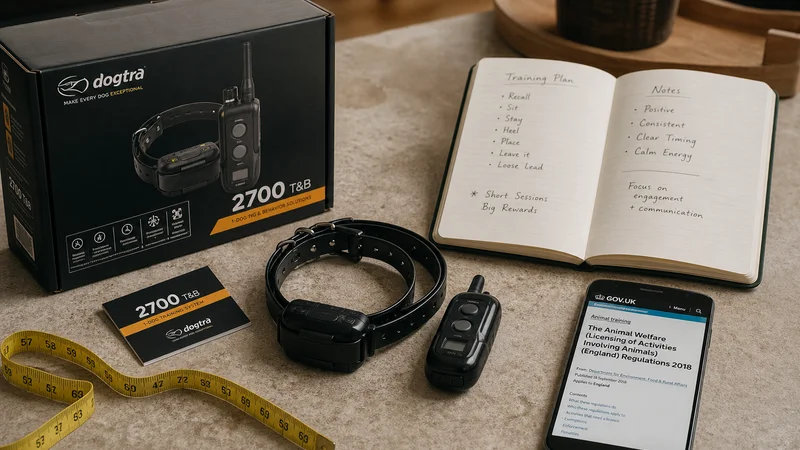
Use this TRACE check as a practical memory hook:
- T — Territory: identify the state or territory where the collar will be used.
- R — Read: check the current official legislation or regulator guidance.
- A — Assess: identify the collar’s mechanism and intended use.
- C — Confirm: ask a veterinary practitioner about the dog and device.
- E — Evidence: retain the model, instructions, approval details and date checked.
For Victoria, confirmation must cover the dog’s age, veterinary examination, suitability, 12-hour limit and approved device specifications. For NSW, confirm whether the arrangement genuinely fits the boundary-containment exception. For Western Australia, do not treat the absence of a blanket ban as a complete legal clearance.
If the answer remains unclear, do not use the collar while you investigate. Consider reward-based training and veterinary behavioural support for barking, recall, fear or reactivity. These options can address the underlying problem without asking you to interpret a complex device rule during a stressful incident. If the behaviour you are trying to manage involves lunging, biting or a prior incident, our dog attack law guide explains the council process and owner liability that a training device will not resolve on its own.
What to do if you already own one
Owning a collar does not automatically answer whether you may use it. The correct next step depends on your state, device type and intended use.
Follow this short checklist:
- stop using the device until you confirm the rule;
- photograph the collar, controls and packaging;
- save the model number and instruction manual;
- measure the relevant fence if you are relying on containment;
- record your dog’s age and any behaviour concerns;
- contact a veterinary practitioner where suitability is required;
- check the current official legislation before making a decision.
In NSW, take particular care because the supplied legislation covers use, sale and possession, subject to the stated boundary-system exception. In Victoria, check every condition rather than focusing only on veterinary approval. In Western Australia, seek current local confirmation because the source only establishes the absence of a comparable blanket statutory ban.
Get advice before the problem escalates
A collar often appears attractive when barking, chasing or escaping has become difficult to manage. However, the legal question is only one part of the decision. A veterinarian can help identify pain, fear, anxiety or another medical contributor, while a qualified behaviour professional can create a safer training plan. If a neighbour's complaint is part of the pressure to act quickly, read our barking dog complaint guide for the council process before choosing a device.
Conclusion: check the law before the collar
The confirmed shock collar laws in Australia are not uniform. Victoria permits certain electronic or containment collars only under strict conditions, including veterinary examination, suitability, age, time and device requirements. NSW prohibits using, selling or possessing electrical devices, apart from the defined boundary-containment exception. Western Australia has no comparable blanket statutory ban in the source reviewed, while Queensland requires a separate current check.
Before buying or using any collar, identify its mechanism, save its product details and verify the rule for your state. If you live in Victoria, speak with a veterinary practitioner before use. If you live in NSW, confirm that the complete fence arrangement meets the exception. For uncertain cases, pause and obtain current official or veterinary advice.