
If you are searching for an exotic animal licence Australia, start with the species and state, not the search term. Australian rules often distinguish between native wildlife, captive-bred animals and private wildlife collections. Requirements can include a keeper licence, minimum age, experience, approved species and detailed records.
The wording “exotic pet licence” can therefore lead you towards the wrong application. This guide helps you solve three practical problems:
- identify whether your animal falls under native wildlife rules;
- compare requirements in New South Wales, Queensland and Victoria;
- prepare the information you may need before contacting the relevant authority.
Why an exotic animal licence in Australia may mean native wildlife approval
The key distinction is whether the animal is a protected native species, rather than whether it feels “exotic” as a pet. In Australia, a reptile, bird, amphibian or other native animal may require specific permission even when it was bred in captivity.
However, the rules vary by state and species. Do not assume that a licence in one state transfers to another. Also, do not collect an animal from the wild because you believe a later application can make ownership lawful.
The NSW Government – Environment and Heritage states that most native animals kept as pets in NSW require a biodiversity conservation licence under Part 2 of the Biodiversity Conservation Act 2016. It also states that only captive-bred animals from eligible species may be kept, and that animals must not be taken from the wild (NSW Government – Environment and Heritage, accessed 2026).
The phrase “exotic” can hide the real question
Before searching for forms, write down:
- the animal’s common name;
- its scientific name, if known;
- whether it was captive-bred;
- the state where it will be kept;
- whether you already own it or plan to acquire it.
That information matters because similar-looking animals can fall into different categories. A bird, snake, lizard or amphibian may also have a different classification from another species in the same broad group.
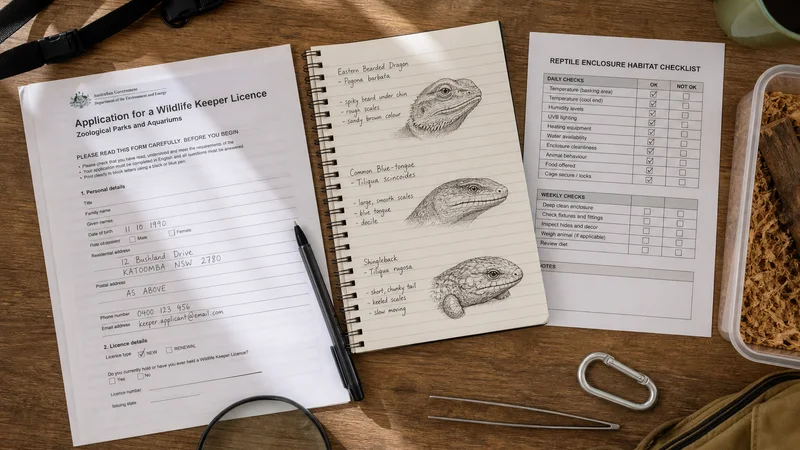
Do you need an exotic animal licence in Australia?
You may need a licence if you plan to keep a native animal, but the answer depends on the species, state and licence category. Check the current state requirements before buying, accepting or transporting the animal.
NSW provides a useful example of why assumptions cause problems. The state says a licence is generally required for most native animals kept as pets. However, it also notes that some native birds, including budgerigars, can be kept without a licence (NSW Government – Environment and Heritage, accessed 2026).
That does not mean every bird, reptile or amphibian is exempt. Instead, treat an exemption as species-specific and verify it against the current official list.
Use the three-part ABC check
A practical way to organise your research is the ABCD check:
- Animal — identify the exact species, including its scientific name.
- Birth — confirm whether it was captive-bred and retain supporting paperwork.
- Control — identify the state authority, licence class and record requirements.
- Destination — confirm where and how the animal will be housed.
The fourth step prevents a common beginner’s mistake: focusing on purchase approval while ignoring ongoing obligations. Keep copies of invoices, breeder details, transfers and other documents supplied with the animal. If an authority requires fauna records, organise them before the animal arrives.

Pet Health Map App
Turn every worry into your pet’s health record
Download the app to save AI Care reports, build your pet’s medical profile, and keep tracking symptoms and care notes.
Android version coming soon. The web version is available now.
New South Wales: biodiversity conservation licence
In NSW, plan around a biodiversity conservation licence for most native animals kept as pets. Your age, experience, species group and licence class can affect the application.
The NSW Government says a general applicant must be at least 16 years old. Its advanced-class guidance sets a higher threshold: applicants must be over 18 and need at least two years’ experience caring for and handling the relevant animal group under a lower licence class (NSW Government – Environment and Heritage, accessed 2026).
Advanced reptiles require relevant experience
Advanced applications need more than general confidence with animals. For an advanced reptile licence, the species must belong to the same taxonomic group or family as animals previously kept under the relevant lower class.
That requirement makes your records useful. Note the species you have handled, the period of care and the licence class involved. Do not describe experience vaguely if the application asks about a particular group.
Additional requirements apply to emu endorsements and venomous reptile categories. NSW also requires accurate fauna record-keeping. Therefore, applicants should prepare a simple log before applying rather than trying to reconstruct details later.
NSW preparation checklist
- Confirm the animal appears on the eligible species information.
- Confirm it was captive-bred.
- Check your age against the intended licence class.
- Record relevant handling and care experience.
- Prepare accurate fauna records.
- Check any endorsement requirements for emus or venomous reptiles.
Queensland: licence classes and fees
Queensland uses a five-year native animal keeping licence with different classes and fees. The correct class depends on the animal and the authority’s classification, so confirm the category before paying.
The Queensland Government’s Department of Environment, Tourism, Science and Innovation lists these application fees in its schedule:
| Licence type | Application fee |
|---|---|
| Standard | A$68.20 |
| Specialised | A$365.10 |
| Advanced | A$786.00 |
The schedule also lists other-animal fees separately. For example, spiders or scorpions may attract a fee of A$399.50 for one year or less (Queensland Government – Department of Environment, Tourism, Science and Innovation, accessed 2026).
Compare the class before comparing the price
The lowest fee may not match the animal you want to keep. Therefore, identify the species and proposed category before treating the fee table as a budget.
Fees can also change. Use the current Queensland schedule when preparing an application, and confirm the amount shown on the official form or payment page. If you plan to keep more than one animal, check whether the application treats each animal, species or licence class differently.
Victoria and the other states
Victoria uses a Private Wildlife Licence framework, with age rules that differ from NSW and Queensland. The Victorian Government Wildlife Licensing application states that applicants must be at least 10 years old on their last birthday.
Applicants aged 10 to 17 need a supporting declaration from a parent or legal guardian. A Dingo Licence has a stricter requirement: the applicant must be over 18 (Victorian Government – Wildlife Licensing, accessed 2026).
What about South Australia, Western Australia, Tasmania and territories?
The supplied official sources do not establish the current licence names, fees, age limits or exemptions for every other Australian state and territory. Therefore, do not rely on a NSW, Queensland or Victorian result for another location.
Check the current wildlife regulator for the state or territory where the animal will live. Ask specifically about:
- the exact species and scientific name;
- captive-bred status;
- private keeping or collection rules;
- licence class and application documents;
- transport or transfer requirements;
- enclosure and record-keeping obligations.
This careful approach is safer than assuming that “native animal keeper licence” has one national meaning.
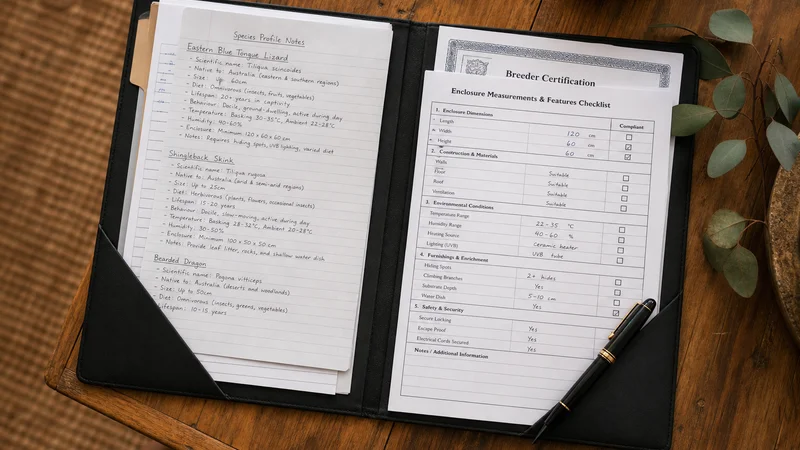
How to apply for an exotic animal licence in Australia
Prepare the species evidence and your keeper information before submitting an application. A complete file makes it easier to identify gaps and reduces the risk of buying an animal that you cannot lawfully keep.
Use this preparation sequence:
-
Identify the animal
Record the common and scientific names, sex if known, age and source. -
Confirm its origin
Ask the breeder or seller for written evidence that the animal was captive-bred where the state requires it. -
Check the state category
Match the animal to the relevant licence class, endorsement or exemption. -
Audit your experience
Write down the species groups you have handled, the dates and the licence class involved. -
Prepare housing details
Keep measurements, photographs and equipment details available if the application requests them. -
Create a records folder
Store the application, receipts, breeder documents, transfers and ongoing fauna records together.
Do not purchase first and investigate later. If the species, origin or licence category remains unclear, contact the relevant authority before committing to the animal. Fees also vary by jurisdiction and class, so confirm the current amount rather than relying on an old forum post.
Final checklist before keeping native wildlife
An exotic animal licence Australia search should end with a verified species decision, not merely a downloaded form. The practical test is whether you can show what the animal is, where it came from and which state rules apply.
Before proceeding, confirm:
- the exact species;
- captive-bred status;
- the applicable state or territory;
- licence or exemption requirements;
- your age and experience;
- any endorsement requirements;
- current fees;
- record-keeping duties.
For NSW, remember that most native pets require a biodiversity conservation licence, eligible animals must be captive-bred, and wild collection is not permitted under the guidance cited above. Queensland applicants should compare the five-year licence classes and current fees. Victoria applicants should check age and guardian declaration rules.
If any detail remains uncertain, pause the purchase and contact the relevant wildlife licensing authority with the species name and source. That simple step can prevent an expensive and stressful mistake.