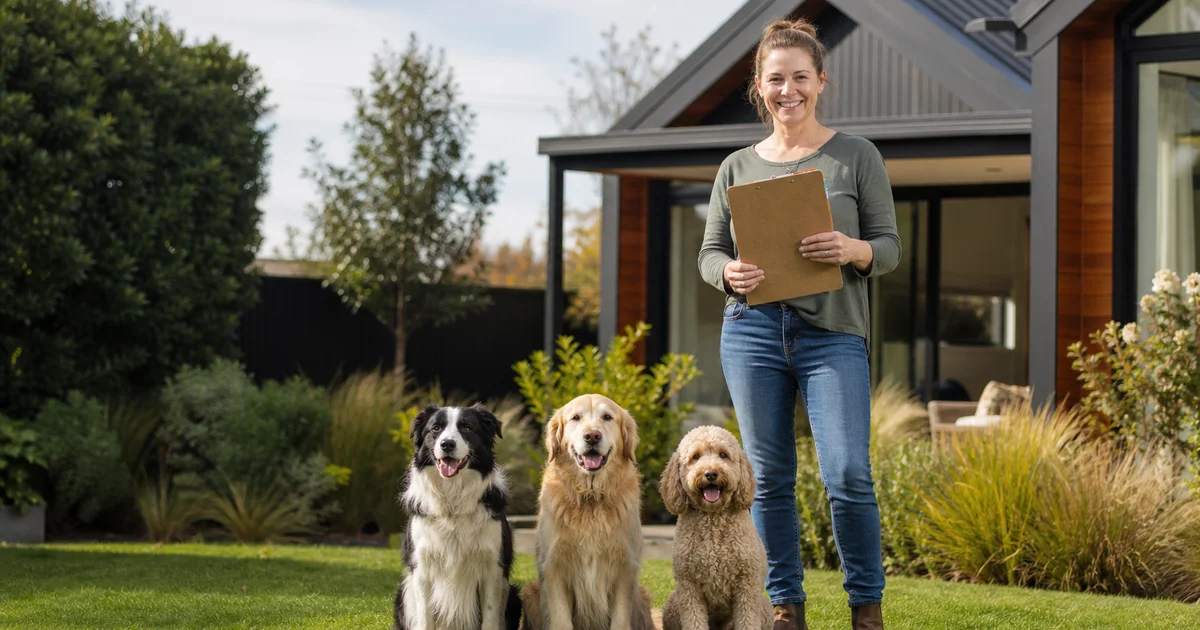
How Many Dogs in NZ? Limits and Permits
Rules about keeping several dogs can change when you move from one council area to another. A household that can keep two dogs without extra approval may need a permit or licence for a third. Before adopting another dog, check your territorial authority's current dog-control rules, property requirements and application process.
In New Zealand, two dogs is a common threshold in the council guidance reviewed here, but there is no single limit to rely on for every property. Wairoa requires a permit for more than two dogs over three months in urban areas, while Southland requires a multiple dog licence for more than two dogs.
That leaves three practical questions:
- Does your local council set a two-dog threshold?
- Does it call the approval a permit or a licence?
- Could working dogs or disability assist dogs fall under an exception?
How many dogs can you keep in New Zealand?
The safe starting point is to treat two dogs as the common threshold, not a nationwide guarantee. The exact rule depends on your local council and may also depend on whether your property sits in an urban area.
The two official examples supplied for this guide use different approval terms:
| Council | Threshold in the supplied guidance | Approval mentioned |
|---|---|---|
| Wairoa District Council | More than two dogs over three months in an urban situation | Council permit |
| Southland District Council | More than two dogs on a property | Multiple dog licence |
Wairoa District Council states that its Dog Control Bylaw prevents residents from keeping more than two dogs over three months in an urban situation unless they obtain a permit. Southland District Council says a property with more than two dogs needs a multiple dog licence.
Therefore, do not assume that a friend's local rule applies to your address. Before committing to another dog, identify the council responsible for your property and ask which rule applies to your situation.
Why local councils set dog limits
Your local council is the starting point for the answer because the supplied rules come from district-level dog-control requirements. Because rules are set locally, there is no standard national application fee, processing deadline, or universal inspection requirement.
Wairoa's guidance refers to Section 4 of its Dog Control Bylaw. Southland, by contrast, publishes a separate process for a multiple dog licence. These examples show why the wording matters. One council may refer to a permit, while another may use a licence.
The distinction also matters when you describe your household to council. Prepare these details:
- Your full property address.
- The number of dogs you already keep.
- Each dog's age.
- Whether the property is in an urban area.
- Whether any dog is a registered working dog.
- Whether any dog is a disability assist dog.
- Whether you are adding a puppy or an adult dog.
Ask your council for its current requirements instead of guessing.


Pet Health Map App
Turn every worry into your pet’s health record
Download the app to save AI Care reports, build your pet’s medical profile, and keep tracking symptoms and care notes.
Android version coming soon. The web version is available now.
How many dogs can you keep in New Zealand? Wairoa example
In Wairoa's urban areas, keeping more than two dogs over the age of three months requires a council permit unless a stated exception applies. This example gives owners a clear age threshold to check before adding a third dog.
Wairoa District Council's dog-owner guidance says residents cannot keep more than two dogs over three months in an urban situation without a permit. It also says residents who want to keep three or more dogs must apply using the district's application form.
That wording creates an important practical point: count the dogs that fall within the stated age rule. A puppy under the specified age may be treated differently under this particular guidance, but you should confirm how your council applies the rule to your household.
When contacting Wairoa District Council, ask:
- Whether your address counts as an urban situation.
- Whether the permit applies before the third dog arrives.
- Which application form you must use.
- What property information council needs.
- Whether an inspection or further assessment applies.
Do not treat Wairoa's rule as a nationwide standard. Use it as a worked example of how a council bylaw can define both the number of dogs and the age threshold.
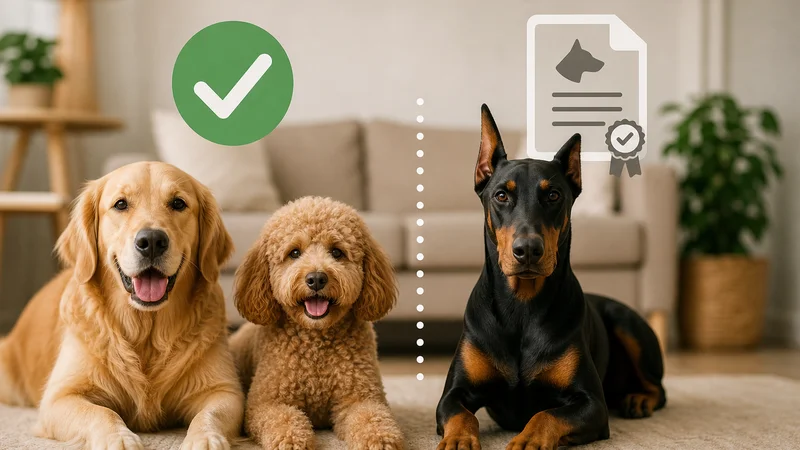
Southland multiple dog licences explained
In Southland District, more than two dogs on a property triggers the need for a multiple dog licence under the supplied council guidance. Council assesses applications against set criteria and may inspect the property before issuing the licence.
Southland's wording differs from Wairoa's. It does not use the same "over three months in an urban situation" phrasing in the supplied key facts. Instead, it refers to more than two dogs on a property.
That difference shows why owners should read the precise local wording. A council may consider the property, the location or the type of dog arrangement when deciding whether an approval is required.
Southland states that council assesses applications against set criteria. It may also inspect the property before issuing a licence. Therefore, prepare practical information before applying:
- Where the dogs sleep and exercise.
- How you contain them safely.
- How you manage access to neighbours and visitors.
- How you control barking and escape risks.
- The dogs' identifying details and ages.
The supplied source does not list every assessment criterion or provide a guaranteed outcome. Contact Southland District Council for the current form, evidence requirements and inspection process.
Working dogs and disability assist dogs
Some dogs may fall outside the standard threshold, but the exception depends on the relevant council's wording and the dog's status. Wairoa expressly lists working dogs and disability assist dogs as exceptions.
Wairoa District Council says its rule does not apply to dogs registered as Working Dogs and Disability Assist Dogs. Southland states that its multiple dog licence requirement does not apply to working dogs unless they are kept in an urban area.
These provisions are not identical. In particular, Southland's guidance includes an urban-area qualification for working dogs. Therefore, do not assume that every working dog automatically sits outside a local licence requirement.
Before relying on an exception, ask council to confirm:
- Whether the dog meets the council's definition.
- What registration or evidence council requires.
- Whether the property's urban or rural classification changes the outcome.
- Whether the exception covers all dogs or only qualifying dogs.
- Whether you still need to notify council or complete another process.
A disability assist dog should not simply be described as an ordinary pet when you apply. Provide the status information council requests, and keep written confirmation if the council tells you that an approval is unnecessary.
What if you exceed the local dog limit?
Do not bring home another dog and hope the council will overlook the number. If your household exceeds the local threshold, contact the council promptly and ask whether you need a permit or multiple dog licence.
The supplied sources do not state specific penalties, infringement amounts, removal powers or prosecution outcomes. Those consequences can be legally significant, so this guide does not guess at them.
Instead, take these steps:
- Count every dog at the property.
- Record each dog's age and status.
- Identify whether your address is urban or rural.
- Find your council's dog-control page.
- Ask whether approval is required before adding a dog.
- Submit the correct application or licence request.
- Keep council correspondence with your dog records.
If you already have more dogs than the guidance permits, be factual when speaking with council. Ask what temporary arrangements apply while your application is assessed. Do not rehome, transfer or conceal a dog without understanding your responsibilities and the animal's welfare needs.

How to check your council's dog limit
The most reliable answer comes from the council responsible for your address, not a generic New Zealand number. Search for the council's official dog-control, multiple-dog or animal-management page, then confirm the rule directly if anything remains unclear.
Use this "DOGS check" as a memory hook:
- D — District: identify your territorial authority.
- O — Occupancy: confirm whether the property is urban or rural.
- G — Give details: provide the number, ages and types of dogs.
- S — Seek approval: ask whether you need a permit or licence before adding another dog.
When reading the council page, look for these terms:
- Maximum number of dogs.
- Dogs over a stated age.
- Urban area or rural area.
- Multiple dog licence.
- Permit to keep additional dogs.
- Working dog exception.
- Disability assist dog exception.
- Property inspection.
The Wairoa and Southland examples show why this checklist helps. Wairoa refers to a permit and an age threshold. Southland refers to a multiple dog licence and possible property inspection. Your council may use different wording.
Prepare before adding another dog
Check approval before adoption, then assess whether your home can manage the extra dog safely and consistently. Council permission does not replace practical planning for exercise, containment, noise and veterinary care.
Before contacting council, create one simple household record:
| Information to record | Why it helps |
|---|---|
| Dog names, ages and breeds | Gives council a clear household profile |
| Registration or working status | Helps identify possible exceptions |
| Sleeping and exercise areas | Supports property and welfare discussions |
| Fencing and gates | Helps you identify escape risks |
| Feeding and supervision plan | Reduces conflict and missed care |
| Veterinary records and medication | Keeps health information organised |
The most common first-time mistake is asking only, "Can I have three dogs?" The better question is, "What approval applies to this address, these dogs and this property arrangement?"
Also call ahead if the council webpage does not explain fees, processing times, inspections or evidence. Those details are not supplied in the sources reviewed here, so the council should confirm the current position.
Conclusion: confirm the rule before adding a dog
How many dogs can you keep in New Zealand? In the council guidance reviewed here, two dogs is the common threshold, but the legal answer depends on your local authority. Wairoa requires a permit for more than two dogs over three months in an urban situation. Southland requires a multiple dog licence for more than two dogs on a property.
Working dogs and disability assist dogs may receive exceptions, but the wording differs between councils. Therefore, use the DOGS check: identify your district, confirm the property classification, give council accurate dog details and seek approval before adding another dog.
Contact your local council through its official website and request the current application requirements. Keep the written response with your household records.