
Bringing your dog or cat into Canada: CFIA import requirements
Travelling with a pet can become stressful when paperwork, vaccinations or border inspections do not go to plan. Canada's requirements depend on the animal and the purpose of travel, so preparation matters before you leave.
Bringing your dog or cat into Canada: CFIA import requirements depend on the animal, travel purpose and available documents. Check the Canadian Food Inspection Agency's current guidance, arrange required veterinary work in advance and carry original paperwork. Border officers can delay, detain or refuse animals not meeting the requirements.
This guide explains who controls the process, which documents may apply, what happens at the border and how to organise a practical travel checklist. It also highlights special rules for commercial dogs, assistance dogs and animals other than dogs, cats and ferrets.
Bringing your dog or cat into Canada: CFIA and CBSA roles
The bottom line is simple: the CFIA sets import requirements, while the Canada Border Services Agency enforces border requirements. Understanding this division helps you contact the right organisation before departure.
The Canadian Food Inspection Agency, or CFIA, establishes import requirements for animals entering Canada. Those rules exist to reduce the risk of introducing animal diseases and to protect people, animals and plants. The agency's pet-travel guidance covers dogs, cats and ferrets as pets.
The Canada Border Services Agency, or CBSA, handles inspection at the border. Its officers may assess the animal and the accompanying paperwork. If requirements are not met, CBSA may refuse entry, confiscate the animal or detain it.
| Organisation | Main responsibility |
|---|---|
| CFIA | Establishes import requirements for animals |
| CBSA | Enforces border requirements at the point of entry |
| Your veterinarian | Helps complete required health work and documentation |
| Pet owner or importer | Carries the correct paperwork and meets the requirements |
Therefore, do not assume that an airline's advice replaces Canadian import rules. Airline policies may affect carriage, but CFIA requirements determine whether the animal may enter Canada. Check the CFIA pet import guidance before booking or travelling.
These points reflect guidance from the Canadian Food Inspection Agency and CBSA, accessed in 2026.
Documents and health requirements before travel
The practical answer is to confirm the required paperwork before arranging transport, because some steps may need to happen at specific times. The CFIA says requirements could include a health certificate, updated vaccinations, testing or medication.
However, the exact requirement depends on the animal and travel circumstances. Do not treat a document used for one pet as automatically suitable for another. Instead, check the relevant CFIA instructions and ask your veterinarian which steps apply.
Before travel, create a document pack containing:
- The animal's identification details.
- Any required health certificate.
- Vaccination records, where applicable.
- Test or medication records, where applicable.
- Import or travel documents requested by the relevant authorities.
- Contact details for your veterinarian and transport provider.
Keep original documents with you rather than relying only on photographs stored on a phone. Also, place copies in a separate bag or secure digital folder. This does not replace the originals, but it can make information easier to retrieve.
Use the "TRACE" preparation check
A useful memory aid is TRACE:
- T — Travel purpose: personal pet travel or another purpose?
- R — Rules: which CFIA requirements apply?
- A — Appointments: when must the veterinarian complete each step?
- C — Copies: have you stored copies separately?
- E — Entry: will you present the documents at the border?
The most common planning mistake is leaving veterinary work until the week of departure. CFIA states that certain requirements may need completion at specific times. Consequently, late vaccinations, testing or medication may affect eligibility to travel.
Read the CFIA guidance for travelling with pets and confirm uncertainties before departure.


Pet Health Map App
Turn every worry into your pet’s health record
Download the app to save AI Care reports, build your pet’s medical profile, and keep tracking symptoms and care notes.
Android version coming soon. The web version is available now.
What happens at the Canadian border
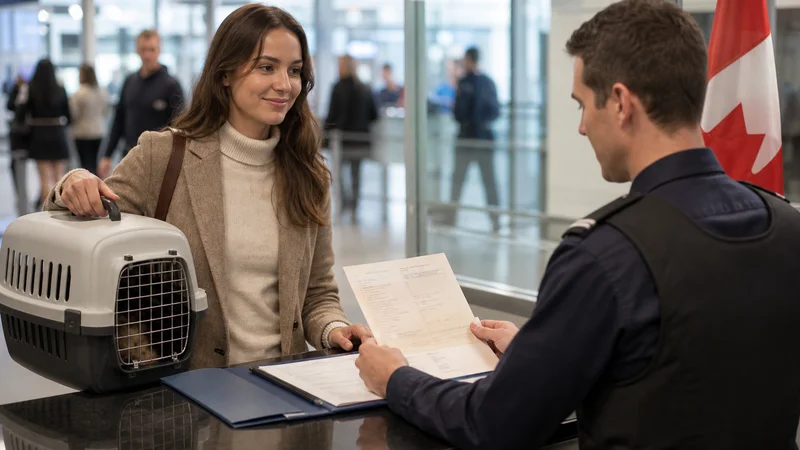
At the border, expect the animal and its paperwork to be inspected. CBSA officers enforce import requirements and can refuse entry, confiscate or detain an animal if those requirements are not met.
Present the animal calmly and keep its documents accessible. Avoid packing paperwork inside checked luggage or placing it beneath items you cannot quickly remove. If several people travel together, agree in advance on who will speak with the officer and carry the document pack.
A border conversation may involve:
- What animal you are bringing.
- Whether the animal is travelling as a pet.
- The documents you have brought.
- Whether required health steps have been completed.
- Any information needed to assess entry.
Do not describe the animal as a personal pet if the actual purpose differs. Commercial movement, breeding, resale or other purposes may involve different requirements. If the animal does not fit the ordinary pet category, clarify the category before travelling.
Border-day packing checklist
Use this short checklist before leaving for the port of entry:
- Original documents are in your hand luggage.
- Copies are stored separately.
- The animal's details match the paperwork.
- You know the animal's travel purpose.
- Your phone remains charged.
- You can explain the animal's documents clearly.
The CFIA warns that travellers need the right paperwork at the border or they risk delays and refusal. Therefore, reaching the border without the required documents is not a problem you can reliably solve after arrival.
Special cases for dogs, assistance animals and other pets
The correct approach is to identify the animal category early, because not every animal follows the same pet pathway. Under CFIA guidance, only dogs, cats and ferrets qualify as pets. Other animals must meet separate non-traditional pet requirements.
Commercial dogs
A dog travelling for a commercial purpose may not follow the same process as a privately owned companion animal. The purpose of travel matters, so contact the CFIA or check its current guidance before arranging transport.
Do not rely on the phrase "pet dog" alone if money, transfer of ownership or another commercial activity forms part of the journey. Record the true purpose and seek confirmation of the applicable requirements.
Assistance dogs
Assistance or service status does not remove the need to check Canadian import requirements. Keep the animal's relevant documents accessible and verify whether additional transport or entry information applies to your circumstances.
Because the supplied CFIA guidance does not provide a universal exemption, do not assume that an assistance animal can enter without ordinary import paperwork.
Non-traditional pets
Birds, rabbits, reptiles and other animals do not qualify as pets under the CFIA definition used in its travelling-pets guidance. They must meet separate requirements. Start with the CFIA's information for non-traditional pets rather than adapting a dog or cat checklist.
This distinction prevents a serious planning error: preparing the right documents for the wrong species.
A planning timeline for import compliance
The safest timeline starts before booking transport. Requirements may include health certificates, vaccinations, testing or medication, and CFIA says some steps must happen at specific times.
Several weeks before departure
Confirm the animal category and travel purpose. Then read the current CFIA instructions and list every document or veterinary step that may apply. Ask your veterinarian how long each appointment, test or document will take.
At this stage, check whether your transport provider has separate carriage conditions. Keep those conditions distinct from Canadian entry requirements.
Before leaving home
Complete the required veterinary work within the applicable timing rules. Assemble original paperwork and copies. Next, compare the animal's details across the documents, including name, description and identifying information where provided.
Use this preparation table:
| Task | What to record |
|---|---|
| CFIA review | Date checked and applicable animal category |
| Veterinary appointment | Date, completed work and documents received |
| Document audit | Missing items and corrections needed |
| Travel pack | Location of originals and copies |
| Border plan | Who carries documents and handles questions |
On travel day
Keep the animal's documents and contact details within reach. Do not wait until the border queue to discover that a certificate is buried in luggage. If a document is missing or unclear, contact the relevant authority before travelling where possible.
If plans change
A changed route, destination, animal purpose or travel date can affect preparation. Recheck the current CFIA guidance instead of assuming the original documents remain suitable. This is especially important when a requirement depends on timing.
What to do before booking your journey
The key action is to verify the category, requirements and paperwork in that order. Booking first can leave you with a fixed travel date but insufficient time for veterinary steps.
Use the following action plan:
- Identify whether you are travelling with a dog, cat, ferret or another animal.
- Confirm whether the journey is ordinary pet travel or has a commercial purpose.
- Read the current CFIA import and travelling-pets guidance.
- Ask your veterinarian which health documents or treatments apply.
- Record dates for vaccinations, tests, medication and certificates.
- Keep original documents accessible during travel.
- Prepare copies and emergency contact details.
- Recheck the requirements if your itinerary changes.
- Present the animal and paperwork to CBSA at the border.
- Do not travel until unresolved requirements are clarified.
The CFIA states that failing to meet import requirements can lead to delays or refusal. CBSA also states that officers can refuse entry, confiscate or detain an animal when requirements are not met. Therefore, the most useful preparation is not guessing what "should" be enough. It is checking the current official instructions and documenting each completed step.
Conclusion: bringing your dog or cat into Canada with confidence
Bringing your dog or cat into Canada: CFIA import requirements becomes easier to manage when you separate three tasks: identify the correct animal category, complete any time-sensitive veterinary work and carry the required paperwork to the border. CFIA sets the requirements, while CBSA inspects and enforces them.
Use the TRACE check to organise your preparation: travel purpose, rules, appointments, copies and entry. If you are travelling with a commercial dog, assistance animal or non-traditional pet, seek category-specific guidance rather than adapting an ordinary pet checklist.
Check the current CFIA requirements before booking travel, then ask your veterinarian to confirm the health steps that apply to your animal.