
Dog Breeding Licence Requirements in Australia by State
Breeding a litter for sale can trigger registration, identification and advertising duties that differ between Australian states. The safest approach is to check your state rule and local council requirements before mating a dog, then keep the relevant number visible in every advertisement.
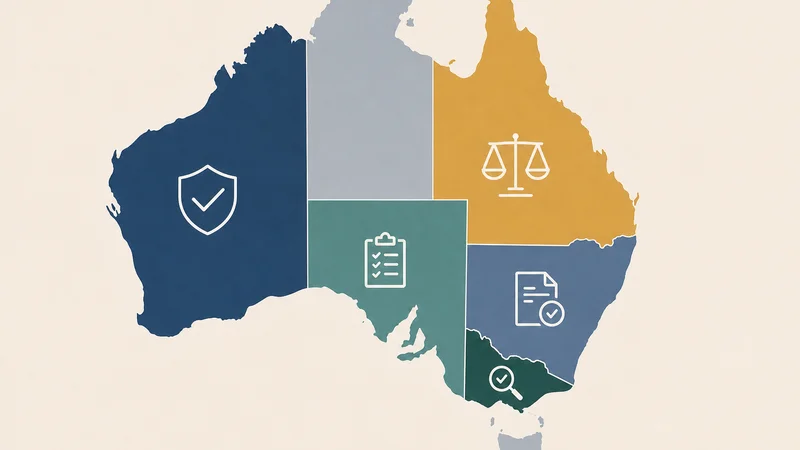
Dog Breeding Licence Requirements in Australia by State depend on where you live and how you supply dogs. NSW uses breeder identification numbers, Queensland requires registered supplier details, Victoria regulates breeding businesses, South Australia requires breeder registration and is phasing in stricter licensing, while Western Australian councils set local approval rules. Always confirm current requirements before advertising or taking a deposit.
This guide solves three common problems:
- identifying whether your state uses a licence, registration or identification number;
- understanding what must appear in a puppy advertisement; and
- checking a breeder’s details before money changes hands.
Do you need a licence to breed dogs in Australia?
There is no single state-wide process that applies to every Australian breeder. Instead, the relevant authority may require a breeder identification number, registered supplier number, Domestic Animal Business registration or local council approval.
Your obligations usually depend on several practical factors:
- the state or territory where the dogs are kept;
- whether you sell, give away or otherwise supply a dog;
- whether breeding is a business activity;
- the number of dogs kept at the property; and
- local planning or animal-management rules.
Therefore, do not rely on the word “licence” alone. A state may call its system registration or identification, while a council may require a separate approval.
A useful memory hook is the NUMBER–BUSINESS–COUNCIL check:
- Number: Do advertisements need a breeder or supplier number?
- Business: Does breeding require registration as a business?
- Council: Does your local council control premises, dog numbers or approvals?
| Location | Main requirement identified in the supplied sources |
|---|---|
| New South Wales | Breeder identification number |
| Queensland | Registered supplier and supplier identification number |
| Victoria | Domestic Animal Business registration |
| South Australia | Registered breeder, with stricter licensing being phased in |
| Western Australia | Local council approval rules may apply |
The rules can change, so check the current government or council position before you advertise.
New South Wales: breeder identification numbers
In NSW, a person who sells or gives away a dog they bred needs a breeder identification number. The number must appear in advertisements for the dog.
The NSW Government’s Companion Animals Regulation 2018 states that anyone selling or giving away a dog or cat they bred must hold a breeder identification number. The number must also appear in any advertisement. The NSW scheme tightened further through breeder identification changes effective from 1 December 2025 (NSW Government, 2018). For the buyer-side view of this same reform, see our guide to puppy farming laws in Australia.
That means a casual litter can still create compliance duties. You should not assume that selling only one litter removes the advertising requirement.
What to prepare before advertising
Keep a simple compliance record containing:
- your breeder identification number;
- the date each advertisement went live;
- screenshots showing the number in the advert;
- the puppy’s microchip information when available (see our guide to dog and cat registration and microchipping laws in Australia); and
- written records of enquiries and deposits.
This record helps you correct an advert quickly if the number is missing or displayed incorrectly. It also gives buyers a clearer way to verify who is offering the litter.
The practical NSW test is straightforward: if you bred the dog and plan to sell or give it away, check your breeder identification obligations before publishing the advert.

Pet Health Map App
Turn every worry into your pet’s health record
Download the app to save AI Care reports, build your pet’s medical profile, and keep tracking symptoms and care notes.
Android version coming soon. The web version is available now.
Queensland: registered supplier numbers
Queensland breeders who supply dogs must be registered suppliers and must include their supplier identification number in advertisements. This requirement comes from the Animal Management (Cats and Dogs) Act 2008, as shown in the Queensland Government legislation current to 4 July 2026 (Queensland Government, 2008).
The important distinction is between breeding and supplying. A person may think of themselves as a private owner, but advertising or transferring puppies can still place them within the registered-supplier rules.
A safer advertising workflow
Before posting an advert, check these three details:
- Confirm that you hold the required registered-supplier status.
- Locate the correct supplier identification number.
- Check that the number appears clearly in every relevant advertisement.
Also review adverts placed on more than one platform. A number included on a website may be missing from a social media post or marketplace listing.
Do not copy a number from another breeder’s advert. Instead, use the details connected to your own registration and keep a screenshot of the published version.
Queensland buyers can use the presence of a supplier identification number as an initial screening step. However, a number alone does not prove that a breeder provides good care. Ask additional questions about the parents, veterinary records, socialisation and the conditions in which the puppies are raised.
Victoria: Domestic Animal Business registration
In Victoria, a breeding and rearing business must register as a Domestic Animal Business with its local council and pass a council inspection. Registered businesses must also follow the mandatory Code of Practice for the Operation of Breeding and Rearing Businesses (Golden Plains Shire Council, 2026).
This creates a more business-focused pathway than simply adding an identification number to an advert. The premises and the way the operation functions matter.
What registration means in practice
A Victorian breeder should allow time for:
- contacting the relevant local council;
- understanding the application process;
- preparing the premises for inspection;
- checking the mandatory code; and
- confirming what information must appear in advertisements.
The council may need to assess housing, hygiene, exercise areas and other operating arrangements under the applicable requirements. Do not wait until puppies are ready for sale to begin this process.
Victoria also layers a second, advertising-specific duty on top of Domestic Animal Business registration: a Pet Exchange Source Number must appear in pet adverts. See our dedicated guide to the Pet Advertising Source Number in Victoria for the exact rules.
The word “business” can cause confusion. However, the supplied Victorian guidance specifically identifies breeding and rearing businesses as Domestic Animal Businesses. If your activity falls into that category, treat council registration as an early planning task rather than an administrative detail.
Keep copies of registration documents, inspection correspondence and code-related records. These documents also help you answer buyer questions accurately.
South Australia: breeder registration and the 2025 reforms
South Australian breeders must register before breeding dogs or cats for sale, and the state is moving towards a stricter licensing scheme. The transition makes checking the current phase especially important.
Under sections 68–70 of South Australia’s Dog and Cat Management Act 1995, anyone breeding dogs or cats for sale must register as a breeder with the Dog and Cat Management Board. The Legal Services Commission of South Australia states that selling an animal you bred without registration can attract a maximum fine of A$5,000, with an expiation fee of A$315 (Legal Services Commission of South Australia, 2026).
The same source states that breeders must microchip and desex animals before sale, subject to limited exceptions, including some sales between registered breeders.
What changed after 2025?
The Dog and Cat Management (Breeder Reforms) Amendment Act 2025 passed in June 2025. The South Australian Government reported in early 2026 that some reforms had already commenced, while stricter breeder-licensing requirements were still being phased in (South Australian Government, 2026).
Therefore, avoid relying on an old checklist or an advert from a previous year. Confirm which provisions apply now, especially if you plan to expand or sell animals under a new breeding arrangement.
Before advertising, record:
- your breeder registration details;
- the animal’s microchip information;
- desexing status or the relevant exception;
- the date you checked the current rules; and
- any written advice received from the responsible authority.
Western Australia: local council approval
In Western Australia, breeding establishments are regulated through local government Dogs Local Laws. Approval requirements and dog-number thresholds can vary between councils.
The Western Australian Government identifies Dogs Local Laws made under the Dog Act 1976 and Local Government Act 1995 as part of this framework. Breeders should check the specific local government law before establishing or expanding a breeding operation (Western Australian Government, 2026).
Why the council check matters
A property that works for one council area may not follow the same process in another. Therefore, do not use a neighbour’s approval, an online forum answer or an old breeder’s experience as your own legal guide.
Contact your local government before:
- purchasing breeding stock for a new operation;
- increasing the number of dogs;
- converting a household activity into a commercial venture; or
- advertising a larger-scale breeding service.
Ask the council to confirm the applicable Dogs Local Law, dog-number threshold and approval pathway. Record the officer’s name, the date of the enquiry and any reference number.
Penalties for breeding or advertising without registration
The consequences depend on the state rule and the conduct involved. South Australia has a specific maximum fine and expiation fee in the supplied source, while the other state sources confirm registration or identification duties without providing penalty figures.
In South Australia, selling a dog or cat you bred without being a registered breeder carries a maximum fine of A$5,000, and the stated expiation fee is A$315 (Legal Services Commission of South Australia, 2026). Do not assume those figures apply elsewhere.
For NSW, Queensland, Victoria and WA, the supplied sources establish duties but do not provide a complete penalty schedule. Consequently, this article does not guess the amount of any fine. Check the current legislation, council information or responsible authority before relying on a figure.
A practical compliance audit
Use this short audit before you publish:
- Have I identified the correct state or council authority?
- Does my activity involve selling, giving away or supplying dogs?
- Do I hold the required registration or identification?
- Does every advert show the required number?
- Have I kept evidence of my registration and published adverts?
- Have I checked current 2026 requirements?
This approach reduces a common mistake: treating registration as complete while forgetting the advertising requirement.
How buyers can check a breeder’s registration before paying a deposit
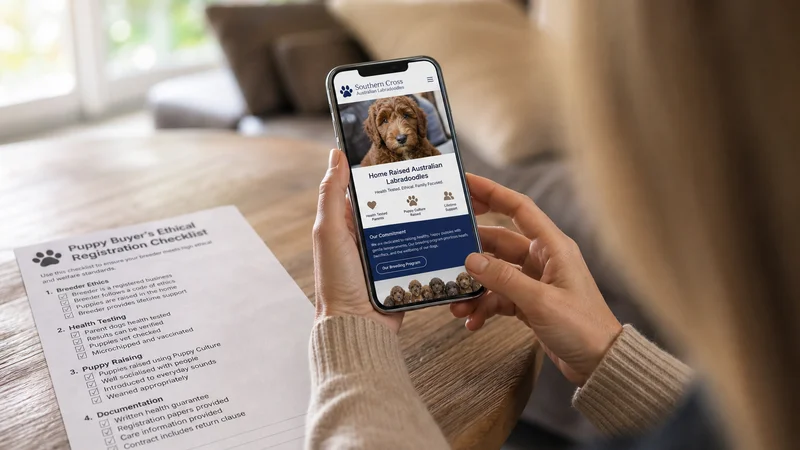
Buyers should verify the breeder’s claimed details before paying a deposit. A registration number is a starting point, not a substitute for assessing the breeder or the puppies’ welfare.
Ask the breeder to provide the relevant identification, supplier or registration details in writing. Then compare those details with the process used by the applicable state or local authority. If the breeder avoids the request, gives inconsistent numbers or pressures you to pay immediately, pause the transaction.
Buyer’s pre-deposit checklist
| Check | What to ask |
|---|---|
| Identity | Who is the registered breeder or supplier? |
| Number | Which breeder, supplier or business number applies? |
| Advert | Does the number appear in the listing? |
| Records | Can I see microchip and veterinary documentation? |
| Visit | Can I see where the puppies are raised? |
| Payment | Will I receive written terms before paying? |
Also ask to see the puppy with its mother, where appropriate, and observe cleanliness, behaviour and general condition. Record the breeder’s name, contact details, advert, promised documents and deposit terms.
If a breeder says “registration is not needed because this is a private litter”, ask which rule supports that conclusion. Requirements differ by state, so a confident answer without supporting details should not replace verification.
Conclusion: use a state-and-council checklist
Dog Breeding Licence Requirements in Australia by State are not interchangeable. NSW focuses on breeder identification, Queensland on registered suppliers, Victoria on Domestic Animal Business registration, South Australia on breeder registration and phased licensing reforms, and WA on local council rules.
Before breeding or advertising, complete the NUMBER–BUSINESS–COUNCIL check. Confirm the required number, establish whether the activity is a registered business, and contact the relevant council where local approval may apply. Keep screenshots, registration records and buyer paperwork together.
If you are planning a litter now, contact the responsible state authority or council before accepting deposits. That small step can prevent avoidable compliance problems and gives buyers more confidence in your operation.