Bringing Your Dog or Cat to Tasmania: 5 Key Rules
Moving or holidaying with a pet in Tasmania requires more planning than a standard domestic trip. The island’s sea barrier helps protect it from pests and diseases found on mainland Australia, so travellers must check animal-entry rules as well as ferry arrangements.
Bringing your dog or cat to Tasmania is straightforward when you prepare for the correct animal requirements and Spirit of Tasmania process. Dogs need hydatid tapeworm treatment within 14 days before arrival. Cats have no import restrictions, although they should be healthy and up to date with vaccinations. Both pets need suitable travel arrangements.
This guide solves three common problems:
- understanding why Tasmania applies separate biosecurity rules;
- knowing what dogs and cats need before departure; and
- arranging a safer, smoother Bass Strait crossing.
Why Bringing Your Dog or Cat to Tasmania Has Different Rules
Tasmania’s island location gives it a distinct biosecurity position, so pet owners must consider more than ordinary travel logistics. Biosecurity Tasmania states that the state is provisionally free of hydatid disease, which explains the specific treatment requirement for dogs arriving from the mainland.
Tasmania also places a General Biosecurity Duty on travellers. In practical terms, you should take reasonable care to avoid bringing pests, diseases or other biosecurity risks into the state. Therefore, checking official conditions before you book is part of responsible pet travel.
The rules sit within Tasmania’s current animal-biosecurity framework. Biosecurity Tasmania says the requirements were fully enacted under the Tasmanian Biosecurity Act 2019 on 17 May 2023. The Tasmanian Animal Biosecurity Manual is the authoritative reference for animal-import conditions. This is separate from the process for importing a dog to Australia from overseas, which involves federal biosecurity requirements rather than interstate ones.
That does not mean every pet faces the same process. Dogs have a specific hydatid-treatment condition, while cats have no import restrictions listed by Biosecurity Tasmania. However, the ferry operator still has its own check-in and boarding arrangements for passengers travelling with pets.
ABCD check before booking
| Check | What to confirm |
|---|---|
| A — Animal | Is your pet a dog or cat, and which entry condition applies? |
| B — Biosecurity | Have you checked the latest Biosecurity Tasmania guidance? |
| C — Crossing | Does your Spirit of Tasmania booking include the appropriate pet option? |
| D — Documents and details | Have you recorded treatment, vaccination and booking information? |
Biosecurity Tasmania (guidance checked 2026) advises travellers to seek guidance if they remain unsure. You can contact the agency on 03 6165 3777 or [email protected].
Bringing Your Dog or Cat to Tasmania: Dog Requirements
The key dog requirement is simple: your dog must receive hydatid tapeworm treatment within 14 days before arriving in Tasmania. Biosecurity Tasmania identifies this condition because Tasmania is provisionally free of hydatid disease.
Do not leave this treatment until an uncertain point in your itinerary. Instead, work backwards from your planned arrival date and arrange veterinary treatment inside the permitted 14-day window. If your sailing changes, contact Biosecurity Tasmania or your veterinarian before travelling, because the timing may need checking again.
What to record before departure
Keep a clear record of the treatment date and the product used. Ask your veterinary practice what evidence you should carry for the journey and whether the treatment record needs to identify your dog. The official source confirms the treatment window, but it does not specify a universal document format in the supplied guidance.
A practical preparation record can include:
- your dog’s full name and identifying details;
- the date and time of hydatid treatment;
- the treatment product recorded by the veterinary practice;
- your sailing date and expected arrival date; and
- Biosecurity Tasmania’s contact details.
This record helps you answer questions quickly at check-in or during biosecurity discussions. It also reduces the common mistake of remembering only the appointment date without confirming whether it falls within 14 days of arrival.
When to seek confirmation
Contact Biosecurity Tasmania before departure if your dog’s treatment date falls close to the boundary, your sailing changes, or you cannot confirm the treatment record. The agency’s published contact details are 03 6165 3777 and [email protected].
Biosecurity Tasmania (guidance checked 2026) remains the best source for interpreting current entry conditions. The Tasmanian Animal Biosecurity Manual also consolidates the requirements for importing animals, so check the current version rather than relying on an old forum post or previous trip.


Pet Health Map App
Turn every worry into your pet’s health record
Download the app to save AI Care reports, build your pet’s medical profile, and keep tracking symptoms and care notes.
Android version coming soon. The web version is available now.
Cat Requirements: Health, Vaccinations and Travel Readiness
Cats have no import restrictions for entry into Tasmania according to Biosecurity Tasmania. That makes the biosecurity preparation less complicated than it is for dogs. Nevertheless, your cat still needs a travel plan that supports its health and welfare.
Biosecurity Tasmania advises cat owners to ensure their cat is in good health for travel and that vaccinations are up to date. These are sensible veterinary checks, particularly if your cat becomes stressed during transport or has an existing medical condition.
What to check with your veterinarian
Arrange a health discussion before travel if your cat has a chronic illness, takes regular medicine or has previously struggled with transport. Your veterinarian can advise whether the planned journey suits your cat and how to manage prescribed medication.
Also check that vaccination records are current. The supplied Biosecurity Tasmania guidance does not state a particular vaccine schedule or certificate requirement for entering Tasmania, so avoid assuming that a special Tasmanian document applies to every cat.
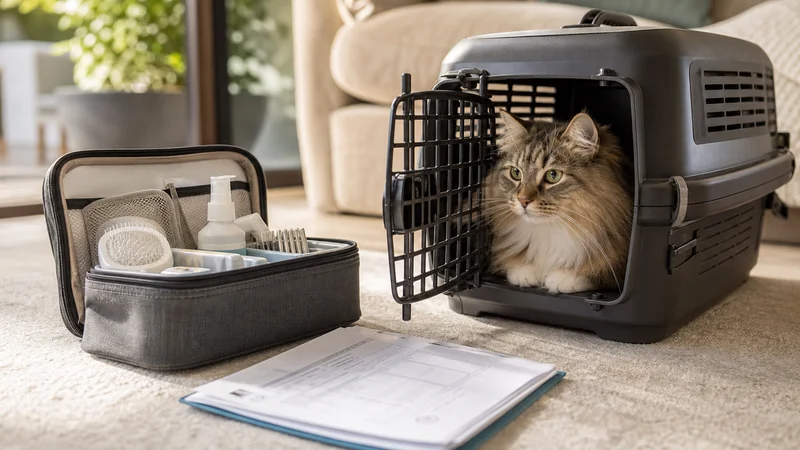
Prepare a cat travel pack
A small, organised pack can make the crossing easier. Include:
- current vaccination information;
- prescribed medicines and written instructions;
- familiar bedding or a safe-smelling item;
- food and water supplies suitable for the journey; and
- your booking information and emergency contact details.
Keep essential items accessible rather than packed deep inside luggage. In addition, ask Spirit of Tasmania about the arrangements that apply to your cat’s booking, because the operator provides specific check-in and boarding processes for passengers with pets. It is also worth confirming your pet's microchip and registration details are current — see our guide to dog and cat registration and microchipping laws in Australia — in case your pet is separated from you during travel.
The important distinction is this: Tasmania’s biosecurity rules do not impose import restrictions on cats, but the crossing still requires careful planning. A healthy cat, current vaccination information and a confirmed ferry arrangement create a more reliable travel plan.
Travelling with Pets on the Spirit of Tasmania
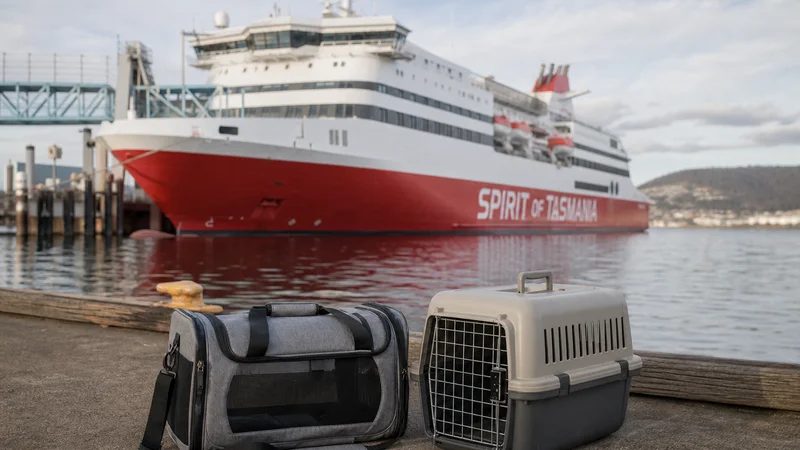
The Spirit of Tasmania provides onboard kennels and pet-friendly cabins for passengers crossing Bass Strait with pets. Your booking choice therefore matters, especially if your pet is anxious, elderly or needs closer observation during the journey.
Before booking, check Tasmania’s current biosecurity conditions. Spirit of Tasmania specifically directs pet owners to do this to avoid problems at check-in. Then review the operator’s pet information and confirm which accommodation option suits your animal and sailing.
Compare the main onboard options
| Option | Best suited to | What to confirm |
|---|---|---|
| Onboard kennel | Pets travelling in the operator’s designated pet area | Check access rules, check-in instructions and what your pet needs during the crossing |
| Pet-friendly cabin | Owners who want to stay with their pet where available | Confirm availability, cabin conditions and the operator’s current pet policy |
These options are not interchangeable, so confirm the arrangement before paying for the booking. Availability, conditions and boarding instructions can change, and only Spirit of Tasmania can confirm what applies to your sailing.
Use the ferry’s check-in instructions
Spirit of Tasmania has a specific check-in and boarding process for passengers travelling with pets. Read the current instructions carefully and allow enough time to complete the pet-related steps without rushing.
Prepare one folder or phone note containing your booking reference, treatment record if travelling with a dog, vaccination details for your cat and the relevant contact numbers. However, do not assume that having a booking replaces Tasmania’s biosecurity requirements. The ferry reservation and state entry conditions are separate parts of the journey.
Spirit of Tasmania (guidance checked 2026) provides the onboard pet options and process. Biosecurity Tasmania, NRE Tas (guidance checked 2026) provides the state’s entry conditions. Check both sources before departure.
What Happens If You Do Not Meet the Requirements?
If your preparation does not match Tasmania’s conditions, stop and seek official guidance before travelling rather than guessing at the port. The clearest risk applies to dogs: arriving without treatment within the required 14-day period creates a biosecurity problem that needs official clarification. Owners of a restricted or declared dangerous breed should also check whether any additional declarations apply before booking interstate travel.
The supplied guidance does not state a fixed penalty, fee or standard outcome for every breach. Therefore, do not rely on online claims about fines, refusal or quarantine unless Biosecurity Tasmania confirms the current position for your circumstances.
Take these steps if your plans change
- Pause the journey if possible. Do not assume a changed sailing still fits the original treatment window.
- Contact Biosecurity Tasmania. Use 03 6165 3777 or [email protected].
- Contact Spirit of Tasmania. Confirm how a booking change affects check-in and pet boarding.
- Speak with your veterinarian. Ask about the dog’s treatment record or your cat’s travel health.
- Keep written confirmation. Save emails, updated booking details and treatment information together.
The Tasmanian Animal Biosecurity Manual is the authoritative reference for animal-import requirements. It replaced reliance on the former Animal Health Act 1995 framework when the current requirements were fully enacted under the Tasmanian Biosecurity Act 2019 on 17 May 2023.
Above all, treat uncertainty as a reason to check, not improvise. Biosecurity Tasmania’s General Biosecurity Duty means travellers should take reasonable care to protect Tasmania from pests and diseases.
A Simple Departure Checklist for Pet Owners
The safest approach to bringing your dog or cat to Tasmania is to complete the biosecurity check before booking and the travel check before leaving home. This separates state entry requirements from ferry logistics, so one does not hide a problem with the other.
Use this final checklist:
- confirm whether you are travelling with a dog or cat;
- check the latest Biosecurity Tasmania conditions;
- arrange hydatid tapeworm treatment for a dog within 14 days before arrival;
- check that your cat is healthy to travel and vaccinations are up to date;
- choose and confirm the Spirit of Tasmania pet arrangement;
- save your booking, veterinary and treatment information;
- record Biosecurity Tasmania’s contact details; and
- recheck everything if the sailing date changes.
For dogs, timing is the detail most likely to cause trouble. For cats, health and travel readiness deserve the closest attention. For every pet, confirm the ferry’s current check-in process rather than relying on a previous crossing.
Conclusion: Bringing Your Dog or Cat to Tasmania Without Surprises
Bringing your dog or cat to Tasmania becomes manageable when you separate the state’s biosecurity rules from the ferry operator’s travel process. Dogs need hydatid tapeworm treatment within 14 days before arrival. Cats have no import restrictions, but they should be healthy and have up-to-date vaccinations.
Before booking, check Biosecurity Tasmania’s current guidance and the Spirit of Tasmania pet information. Then record your dog’s treatment details, organise your cat’s health information and confirm whether an onboard kennel or pet-friendly cabin suits your journey.
If anything changes, contact Biosecurity Tasmania and Spirit of Tasmania before departure. That small step can prevent avoidable confusion at check-in and help protect Tasmania’s biosecurity.