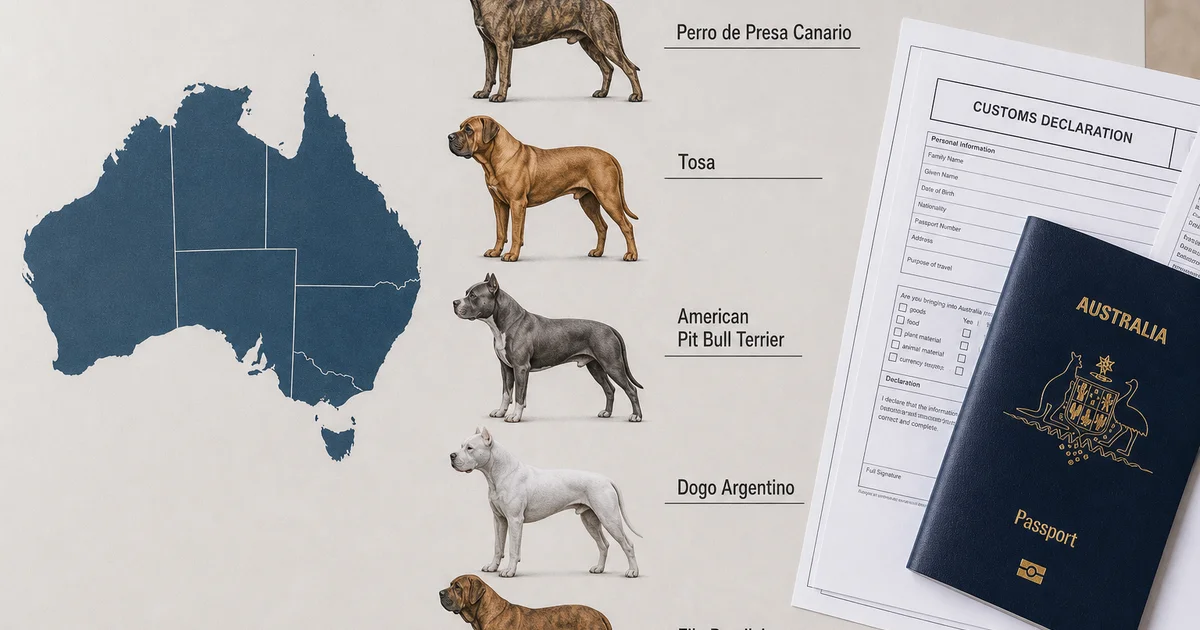
Restricted and Dangerous Dog Breeds in Australia
A dog's breed, appearance and behaviour can affect its legal status in Australia. Importantly, the Commonwealth bans five listed breeds from entering the country, while councils and states manage declarations, registration and ownership conditions. The rules differ by jurisdiction, so confirm the current position with the relevant council before buying, importing or transferring a dog.
Restricted and dangerous dog breeds in Australia: declarations and import bans depend on two separate questions: whether the dog belongs to a prohibited breed and whether a council has declared it because of its breed or conduct. Five breeds cannot be imported, but some restricted dogs already in Australia may remain registered under strict local requirements.
That distinction solves three common problems:
- identifying the five breeds covered by the federal import ban;
- understanding restricted, dangerous and menacing classifications; and
- knowing what to do after a council notice arrives.
Restricted and dangerous dog breeds in Australia: the five-breed import ban
The Commonwealth import ban applies to five named breeds. A dog's presence in Australia therefore does not automatically mean it could have been legally imported under current rules.
Baw Baw Shire Council identifies these breeds as prohibited imports under the Commonwealth Customs (Prohibited Importations) Regulations 1956:
| Prohibited breed | Also known as or commonly described as |
|---|---|
| Perro de Presa Canario | Presa Canario |
| Tosa | Japanese Tosa |
| American Pit Bull Terrier | Pit Bull Terrier |
| Dogo Argentino | Argentine Mastiff |
| Fila Brasileiro | Brazilian Mastiff |
The import restriction is a Commonwealth matter. By contrast, registration, housing and day-to-day ownership usually involve state or territory law and local council administration.
Therefore, do not assume that a dog's registration proves import eligibility. Similarly, a dog that resembles a listed breed may require careful assessment before transport, sale or registration. Ask the relevant authority to confirm the position in writing, particularly if the dog has uncertain ancestry or imported documentation.
The five names above come from Baw Baw Shire Council's current guidance. The council links the restriction to the Commonwealth regulations, rather than treating the list as a local council preference.
How a restricted breed differs from dangerous or menacing status
A restricted breed classification concerns the dog's breed or prescribed type. A dangerous or menacing classification generally concerns a council's assessment of the dog's behaviour or risk. However, the exact legal test depends on the state or territory involved.
Agriculture Victoria states that restricted breed dogs have not attacked a person or animal or displayed aggression, but authorities consider them a higher community safety risk. This makes the category distinct from a declaration based on an alleged attack or threatening conduct.
The labels can still overlap in everyday conversations. That creates a practical risk: owners may read "restricted" as meaning "dangerous", or assume that a calm dog cannot face breed-related requirements. Neither assumption is safe.
Use this comparison as a starting point, not as a substitute for the applicable legislation:
| Classification | Main question | What to check |
|---|---|---|
| Restricted breed | Does the dog fall within a listed breed or type? | State rules, council registration and housing requirements |
| Dangerous dog | Has the dog's conduct created a legally recognised safety concern? | The council notice and the relevant state process |
| Menacing dog | Does the dog meet a separate council or state behaviour threshold? | The declaration reasons and review rights |
Keep every document together, including adoption papers, microchip details, registration records and photographs. If the council relies on the dog's appearance, ask which evidence supports that view.


Pet Health Map App
Turn every worry into your pet’s health record
Download the app to save AI Care reports, build your pet’s medical profile, and keep tracking symptoms and care notes.
Android version coming soon. The web version is available now.
How councils declare a restricted, dangerous or menacing dog
A council declaration is a formal decision, not an informal warning. The procedure and terminology vary across Australia, so read the notice rather than relying on advice from another state.
In Victoria, Agriculture Victoria says authorised local council officers can declare a dog a restricted breed. The officer must serve written notice on the owner within seven days of the declaration. In New South Wales, the Office of Local Government says a council intending to declare a dog a restricted breed must issue a notice of intention.
Those processes have different features. For example, NSW provides 28 days from the notice of intention to lodge an objection. Victoria provides a right to apply to the Victorian Civil and Administrative Tribunal for a review after a restricted-breed declaration.
When a notice arrives, record these details immediately:
- the date and method of service;
- the exact classification;
- the alleged breed, conduct or evidence;
- any compliance deadline;
- the objection or review pathway; and
- the council officer's contact details.
Do not wait for a second letter. A missed deadline can limit your options, even if you believe the declaration is wrong. Instead, contact the council promptly and obtain advice from an Australian solicitor or community legal service familiar with animal law.
Ownership requirements after a restricted-breed declaration
A declaration can create ongoing ownership duties. The specific requirements depend on the jurisdiction, but they may include registration, approved housing and restrictions on transferring the dog.
Baw Baw Shire Council states that restricted breed dogs covered by Victoria's Domestic Animals Amendment (Restricted Breed Dogs) Act 2017 may be registered with council, subject to housing and ownership requirements. This does not mean every restricted dog has identical obligations across Australia.
In NSW, the Office of Local Government states that owners must register and pay the relevant annual permit fee through their local council if they own a restricted-breed dog. The same source also says it is an offence to sell, advertise for sale, give away or transfer ownership of a proposed or declared restricted dog.
Because requirements can change by location, ask your council for its current compliance checklist. Do not rely on a breeder, online advert or previous owner to explain the rules.
Prepare a practical compliance folder containing:
- the declaration and all council correspondence;
- registration and microchip information;
- photographs of the dog and its enclosure;
- proof of any required housing arrangements;
- veterinary records; and
- receipts or confirmations for council applications.
Never move, sell or rehome the dog until the council confirms what the law permits. A well-intentioned transfer can create a separate legal problem.
Objecting to a declaration: rights and timeframes
Your strongest response starts with the notice date and the correct review route. Do not treat an objection as a general complaint; submit it through the process named by the relevant authority.
In NSW, the Office of Local Government says an owner has 28 days from a notice of intention to lodge an objection to a proposed restricted-breed declaration. NSW also prohibits selling, advertising for sale, giving away or transferring a proposed or declared restricted dog.
Victoria uses a different route for a restricted-breed declaration. Agriculture Victoria says the owner can apply to VCAT for a review, while an authorised council officer must serve written notice within seven days of the declaration.
Your evidence should answer the council's actual reasons. Depending on the notice, that may include:
- purchase, adoption or import documents;
- registration and microchip records;
- dated photographs showing the dog's physical features;
- veterinary or behavioural evidence;
- witness statements; and
- records showing compliance with existing directions.
Ask the council to identify the applicable legislation, evidence and deadline if the notice is unclear. Keep proof of delivery for every submission. Also, obtain legal advice quickly if the notice concerns seizure, destruction, an alleged attack or an urgent housing requirement.
A practical ABCD check before you act
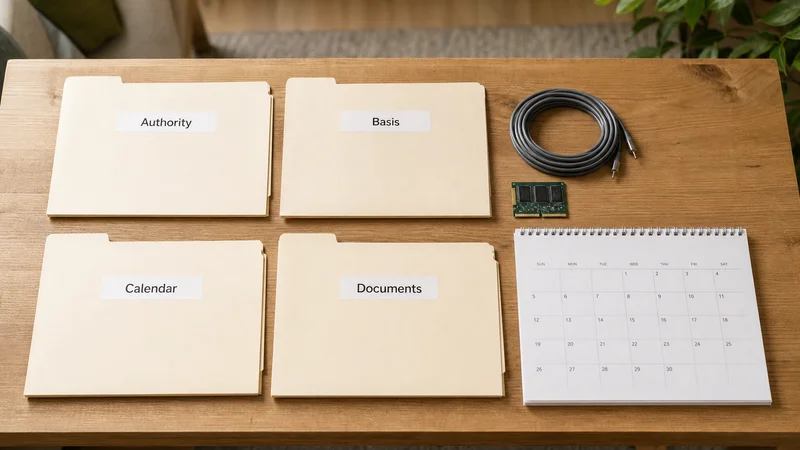
Use the ABCD check: Authority, Basis, Calendar and Documents. It helps prevent the most common first-time mistake: treating a national import rule and a local council declaration as the same issue.
Authority: Identify whether the issue comes from Commonwealth import rules, state legislation or your local council.
Basis: Find out whether the decision concerns a listed breed, physical characteristics, behaviour or an alleged incident.
Calendar: Write down every service date and deadline. In NSW, a restricted-breed objection period begins from the notice of intention. In Victoria, the declaration notice and VCAT review route require separate attention.
Documents: Gather registration, microchip, veterinary, ownership and enclosure records before contacting the authority.
This check also improves a veterinary or legal consultation. Take a timeline rather than a handful of screenshots. Record when you acquired the dog, where it has lived, any council contact and every step you have taken since receiving the notice.
If you are considering buying or importing a dog, complete the check before paying a deposit or arranging transport. Ask the council and relevant authority for written confirmation, because an online breed description may not answer the legal question.
Conclusion: understand the declaration before making a move
Restricted and dangerous dog breeds in Australia involve separate legal layers. The Commonwealth import ban covers Perro de Presa Canario, Tosa, American Pit Bull Terrier, Dogo Argentino and Fila Brasileiro. Meanwhile, state and council processes govern declarations, registration, housing and review rights.
Do not assume that a calm temperament removes breed-related duties, or that registration proves import eligibility. Instead, use the ABCD check, preserve every document and note the deadline on any notice. If your dog has received a proposed or final declaration, contact the issuing council promptly and obtain jurisdiction-specific legal advice. For a current answer, ask the relevant Australian authority to confirm the rules in writing before you import, buy, sell, transfer or relocate the dog.