
If you are asking, "What is the leash law bylaw in Canada?", the practical answer is local: dogs generally need a leash in public spaces unless a city has marked a designated off-leash area. Rules, leash lengths, fines and beach access vary, so check your municipality before letting your dog run free.
Your main decisions are straightforward:
- identify which authority sets the rule;
- confirm where your dog may legally go off-leash;
- understand what could happen if your dog runs loose elsewhere.
This guide compares Toronto, Vancouver and Calgary, then gives you a simple way to check local requirements. It also includes the MAP check—Marked area, Attachment, Permission—to help you assess a new park before unclipping the lead.
Leash law bylaw Canada: who sets the rule?
Your city usually determines the everyday leash requirements in public spaces. The rules covered here come from municipal bylaws and park authorities, rather than one uniform rule for every Canadian park.
Toronto's Animals By-law works alongside Ontario's Dog Owners' Liability Act. Meanwhile, Vancouver applies its Animal Control Bylaw and park rules. Calgary uses its Responsible Pet Ownership Bylaw to govern leashing, dog licences and off-leash areas citywide.
That difference matters because a rule that applies in one city may not apply in another. Even within one municipality, a park, beach or trail can have a different designation from a nearby public space.
| City | General public-space rule | Main exception |
|---|---|---|
| Toronto | Dogs must be on-leash in parks and beaches | Designated dogs off-leash areas |
| Vancouver | Dogs must be on-leash in parks | Designated off-leash areas and marked beach sections |
| Calgary | Dogs must be leashed in public spaces | Designated off-leash areas |
These summaries come from the City of Toronto and City of Vancouver webpages, and Calgary's Responsible Pet Ownership Bylaw information (all accessed 2026). For another municipality, use its official parks or bylaw website rather than relying on a neighbour's advice.
Toronto dog leash rules, fines and off-leash areas
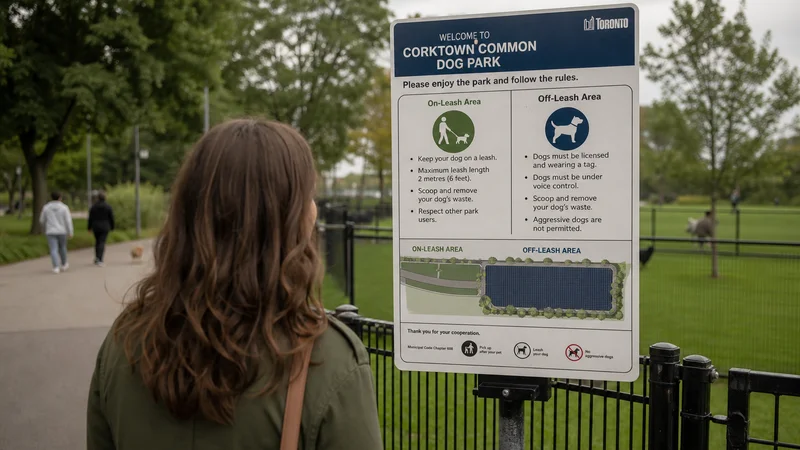
In Toronto, keep your dog on-leash in parks and beaches unless you are inside a designated dogs off-leash area. The City states that allowing a dog to run off-leash outside such an area can attract a fine of up to C$615.
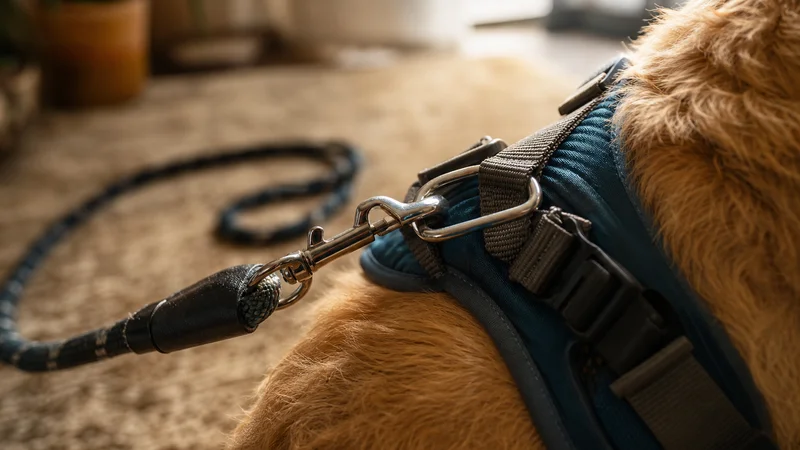
Toronto also specifies that a leash must be no more than two metres long and securely attached to a collar or harness. Therefore, using a retractable or long line could risk a fine if it extends beyond this permitted length.
The city provides a reporting route as well. Residents can contact 311 to report an off-leash dog outside a designated area. However, a report does not replace checking the boundaries yourself. Look for official signs or the city's current off-leash-area information before releasing your dog.
Toronto's practical lead check
Before entering a park, confirm:
- the area is marked as a designated off-leash location;
- your lead measures no more than two metres;
- the clip attaches securely to a collar or harness;
- your dog remains under control when you enter or leave the area.
The City of Toronto gives the fine and equipment requirements on its responsible dog ownership and off-leash dog pages (accessed 2026). Its off-leash rules also operate alongside Ontario's Dog Owners' Liability Act, so a municipal permission to remove the lead does not remove your responsibility for your dog's behaviour.


Pet Health Map App
Turn every worry into your pet’s health record
Download the app to save AI Care reports, build your pet’s medical profile, and keep tracking symptoms and care notes.
Android version coming soon. The web version is available now.
Vancouver leash rules, fines and beaches
Vancouver requires dogs to be on-leash in parks unless they are in a designated dog off-leash area. Beaches follow a similar approach: dogs may use only beach sections specifically designated for off-leash access.
The Vancouver Park Board maintains off-leash areas across downtown, the west side, east Vancouver and south Vancouver. Consequently, "this park is dog-friendly" does not automatically mean "dogs may run free here". A dog may be welcome on a lead while off-leash access remains restricted.
Vancouver's Animal Control Bylaw lists fines for non-compliance ranging from C$250 to C$10,000. The available figure is a range, not a promise that every incident receives the same penalty. Therefore, avoid assuming that a first encounter will have a predictable cost.
Check the beach boundary
Beach boundaries deserve particular care because off-leash sections may sit beside areas where a lead remains compulsory. Before unclipping:
- locate the current Vancouver Park Board listing or sign;
- confirm that the exact section permits off-leash dogs;
- check where the permitted boundary ends;
- clip the lead back on before leaving that section.
The City of Vancouver's dog off-leash information and Animal Control Bylaw details were checked in 2026. If signs and online information appear inconsistent, keep your dog leashed and contact the relevant city service for clarification.
Calgary's bylaw and off-leash etiquette
Calgary's Responsible Pet Ownership Bylaw requires dogs to be leashed in public spaces except in designated off-leash areas. The bylaw also covers dog licensing and other responsible ownership requirements across the city.
Calgary periodically reviews and updates the bylaw through Community Standards. Therefore, old social-media posts, saved maps or advice from another dog owner may not reflect the current position.
A designated off-leash area gives you permission to remove the lead in that specific place. It does not guarantee that every dog will welcome your dog, nor does it remove the need to supervise. Keep the lead ready, watch body language and leave if your dog becomes overwhelmed.
The three-part MAP check
Use this named check whenever you visit an unfamiliar Calgary space:
- Marked area: Is the exact location designated off-leash?
- Attachment: Can you quickly secure the lead to the collar or harness?
- Permission: Does the current city information confirm off-leash access?
This approach prevents a common mistake: treating a large green space as one single legal zone. Boundaries, paths and entrances can change the practical answer. Calgary's official Responsible Pet Ownership information was checked in 2026; consult the city's current page before relying on older bylaw summaries.
What counts as a designated off-leash area?
A designated off-leash area is a location that the relevant city or park authority has identified for dogs to run without a lead. It is not simply any quiet field, empty beach or dog-friendly park.
The designation may cover a whole area, a marked section or a specific city-managed site. Vancouver, for example, distinguishes designated park areas and designated beach sections. Toronto refers to designated dogs off-leash areas, while Calgary uses designated off-leash areas within its public-space rules.
How to verify the location
Use this short process before every unfamiliar visit:
- start with the municipality's official parks or bylaw webpage;
- search the exact park, beach or trail name;
- read the map and boundary notes;
- check signs at the entrance;
- look for temporary notices or local restrictions;
- keep the lead attached until the designation is clear.
However, never infer permission from the presence of other off-leash dogs. Their behaviour may breach the bylaw, or they may be inside a boundary that is not obvious from your position.
The safest habit is to treat uncertainty as an on-leash situation. You can then contact the city for confirmation before returning. This avoids relying on unofficial maps that may omit a boundary or remain online after a rule changes.
What happens if your dog is off-leash outside the area?
You may face enforcement action, a fine or a complaint if your dog runs off-leash where the local bylaw requires a lead. The exact outcome depends on the municipality and the circumstances, so do not assume one Canadian penalty applies everywhere.
Toronto states that the fine for allowing a dog to run off-leash outside a designated area can reach C$615. Vancouver lists non-compliance fines from C$250 to C$10,000. Calgary's supplied information confirms the leashing requirement but does not provide a fine figure, so check the current city information rather than guessing.
| Situation | Safer response |
|---|---|
| You cannot confirm the boundary | Attach the lead |
| A sign appears unclear | Photograph the sign and contact the city |
| Your dog leaves the designated area | Recall and leash immediately |
| Another owner disputes the rule | Avoid an argument and verify with the authority |
| Your dog causes a conflict | Remove the dog calmly and seek veterinary advice if injured |
Toronto allows residents to report an off-leash dog outside a designated area through 311. Nevertheless, prevention remains simpler than dealing with a complaint. Carry a properly fitted lead and practise recall, but remember that reliable recall does not replace a legal leash requirement.
Staying compliant on every dog walk
The easiest way to follow a leash law bylaw in Canada is to make verification part of your walking routine. Check the local rule, keep your equipment compliant and treat each boundary as specific.
Prepare these items before leaving:
- a lead that meets the local length requirement;
- a secure collar or harness;
- identification and any locally required documentation;
- a mobile phone for the official map or bylaw page;
- bags and water for the walk.
In Toronto, the city specifies a lead no longer than two metres and secure attachment to a collar or harness. In Vancouver and Calgary, the key decision is whether the exact public space has an official off-leash designation.
To make things easier, record the park name, the date you checked the rule, and any unclear boundaries on your phone. This small habit helps when you visit several municipalities or return after a bylaw update.
Do not rely on these common assumptions:
- "There is no one around, so off-leash must be acceptable."
- "Other dogs are loose, so this must be a dog park."
- "A dog-friendly beach allows off-leash access everywhere."
- "A long retractable lead is acceptable in every city."
If a rule, sign or boundary remains unclear, keep your dog leashed and contact the municipality. That is the most defensible choice until you receive current local guidance.
Conclusion: use the MAP check before unclipping
The leash law bylaw Canada question has no useful one-size-fits-all shortcut for daily walks. Toronto, Vancouver and Calgary each require dogs to remain leashed in ordinary public spaces, with exceptions for designated off-leash areas. Toronto also sets a two-metre lead limit, while Vancouver's published non-compliance fines range from C$250 to C$10,000.
Before you release your dog, use the MAP check: confirm the Marked area, inspect the Attachment, and verify Permission through the city's current information. If anything remains uncertain, keep the lead on. Check your municipality's official bylaw or parks webpage before your next walk.