
Flying With a Pet Canada: 6 Checks Before Take-off
Flying with a pet Canada-wide can feel confusing because airlines do not share one standard policy. Each carrier sets its own rules for cabin travel, the hold, carriers, fees, breed restrictions and documentation. Therefore, confirm your airline’s current tariff and reserve pet space before buying or finalising your ticket.
The three decisions that cause most problems are straightforward:
- Can your pet travel in the cabin?
- Does your carrier meet the airline’s dimensions and safety requirements?
- Do seasonal, breed or documentation rules affect the journey?
A useful memory aid is the Paw-CTA check: Policy, Aircraft space, Welfare, then the carrier’s CTA-filed tariff. This keeps your planning practical rather than relying on a generic pet-travel checklist.
Flying with a pet Canada: who sets the rules?
Your airline sets the practical pet-travel conditions through its tariff; the Canadian Transportation Agency (CTA) does not create one identical policy for every carrier.
Airlines publish tariffs covering their conditions of carriage. Those documents can include rules for pets, service animals, carrier requirements and acceptance conditions. A domestic tariff is filed with the CTA, as shown by Calm Air’s CTA-filed domestic tariff (Calm Air, 2026).
In practice, this explains why Air Canada, WestJet and regional airlines can take different approaches. One carrier may accept a small pet in a soft-sided carrier under the seat, while another may apply different dimensions, route restrictions or availability limits.
The CTA’s role does not mean that every airline must accept pets in the same way. Instead, the published tariff gives passengers a way to find the carrier’s conditions before travel. Therefore, do not treat another airline’s website, a previous flight or a social-media post as proof that your chosen carrier will accept your pet.
Use this order when checking the rules:
- Identify the operating airline, not only the company that sold the ticket.
- Read its current pet page and domestic tariff.
- Contact the airline if the website gives conflicting information.
- Ask the representative to confirm the booking reference for your pet.
The last step matters because pet capacity can be limited, even when seats remain available.
Flying with a pet Canada: cabin, checked baggage or cargo?
Small cats and dogs often travel in the cabin inside an approved carrier, while larger animals may need checked-baggage or cargo arrangements, subject to the airline’s conditions.
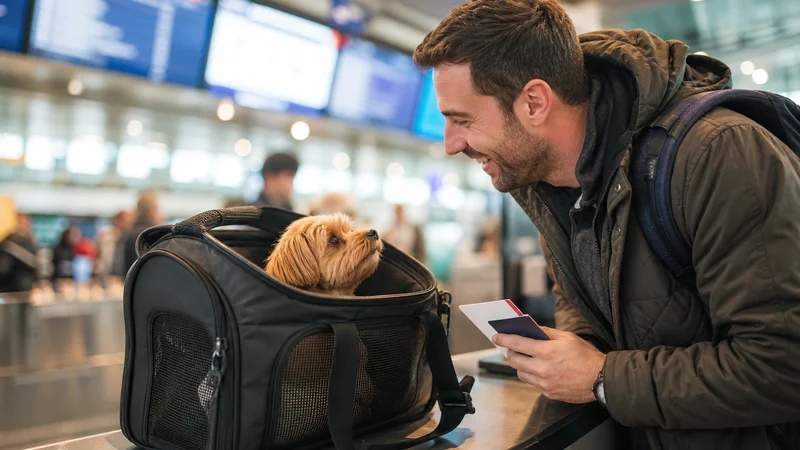
Cabin travel usually means your pet stays inside a carrier beneath the seat. The carrier must fit the airline’s approved dimensions, and your pet must remain inside it for the required parts of the journey. A carrier that works on one aircraft may not fit beneath the seat on another.
Air Canada states that, from 1 June 2025, all pets travelling in the cabin must use soft-sided carriers (Air Canada, 2025). Therefore, check the material requirement rather than assuming a rigid kennel will work.
WestJet states that a kennel fee applies to pets travelling in the cabin or as checked baggage. It also limits the number of pets permitted on each flight and recommends requesting space at least 48 hours before departure (WestJet, current published guidance).
| Travel option | What to confirm | Common planning issue |
|---|---|---|
| Cabin | Carrier type, dimensions, pet capacity and fee | The carrier may not fit beneath the assigned aircraft seat |
| Checked baggage | Kennel dimensions, weight, route and temperature rules | Seasonal restrictions may prevent acceptance |
| Cargo | Cargo booking process, documents and embargoes | Cargo conditions can differ from passenger pet rules |
Checked baggage and cargo are not interchangeable terms. Your airline may direct larger pets to a separate cargo service, or it may suspend hold travel on particular routes. Ask specifically where your pet will travel and who handles the booking.


Pet Health Map App
Turn every worry into your pet’s health record
Download the app to save AI Care reports, build your pet’s medical profile, and keep tracking symptoms and care notes.
Android version coming soon. The web version is available now.
Carrier size, animal welfare and documentation
Choose the carrier around your pet’s natural posture and the airline’s measurements, then prepare documents before reaching the airport.
The Government of Canada says a pet carrier must allow the animal to lie down comfortably, turn around and stand in its natural position. It also says animals must remain safe from harm and injury during travel by land, air or sea (Government of Canada, 2026).
Do not measure only your pet’s weight. Record the animal’s length, standing height and body width, then compare those measurements with the airline’s carrier limits. Measure the outside dimensions of the carrier, including handles, wheels or other protruding parts if the airline includes them.
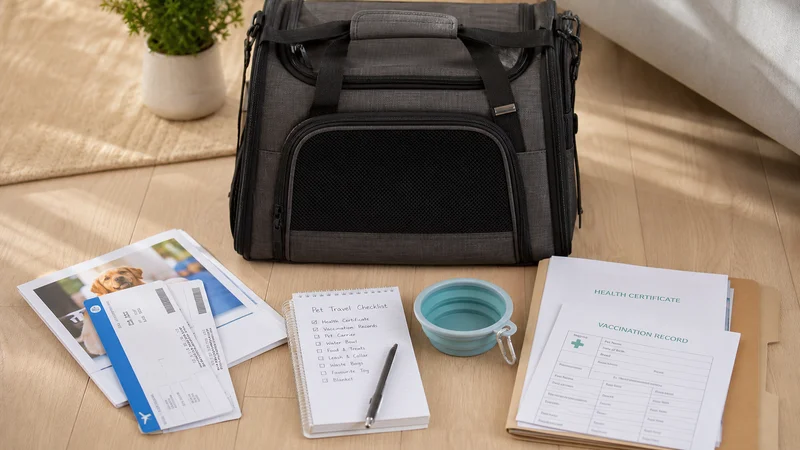
A practical preparation sheet should include:
- Pet’s name, species and current weight
- Carrier outside length, width and height
- Airline, flight number and operating carrier
- Pet booking confirmation or reference
- Veterinary contact details
- Any requested health certificate or other documentation
- A recent photograph of the pet
The Government of Canada also warns that airlines may require health certificates or other documents for air travel. Requirements can vary by carrier and route, so ask what applies to your itinerary rather than assuming a routine veterinary record will satisfy the airline.
Before departure, practise placing your pet calmly into the carrier. However, do not force a carrier that prevents the animal from standing or turning. A compliant-looking bag still fails the welfare requirement if it restricts natural movement.
Seasonal limits and breed restrictions
Temperature and breed rules can prevent hold travel even when the pet otherwise meets the airline’s size requirements.
Airlines may apply summer heat and winter cold restrictions to animals travelling in the hold. The restriction may depend on the route, airport, aircraft, time of day or forecast. Consequently, a flight available in one month may not remain suitable in another.
Air Canada publishes summer and winter restrictions, along with rules affecting brachycephalic, or short-nosed, breeds and certain “strong” breeds (Air Canada, 2025). These restrictions can apply to hold travel rather than cabin travel, but the exact outcome depends on the airline’s current policy and itinerary.
Do not leave this check until airport arrival. Instead, ask the airline:
- Is hold travel available on every sector?
- Does the route have a seasonal embargo?
- Does the pet’s breed or cross-breed affect acceptance?
- Will a connection create a temperature-related problem?
- Does the airline require a particular kennel design?
Short-nosed dogs and cats can face additional airline conditions because their anatomy may affect air travel risk. Avoid drawing your own conclusion from breed labels alone. Give the airline the pet’s accurate breed or cross-breed description and obtain written confirmation where possible.
If the airline refuses hold travel, do not quietly substitute a different carrier or book a connecting route without checking again. Each sector can have separate operational limits.
Airline fees, availability and booking timing
Treat pet transport as a separate, capacity-controlled service rather than part of your normal baggage allowance.
A pet fee can apply even when you have no other checked luggage. WestJet expressly states that a kennel fee applies to pets travelling in the cabin or as checked baggage. Its published guidance also says that the number of pets per flight is limited and recommends requesting space at least 48 hours before departure.
Fees vary by airline, route and travel method. Therefore, call ahead to confirm the current amount instead of relying on an old forum post or a fee remembered from a previous journey. Ask whether the charge applies per flight sector, per pet or per direction.
Keep these costs separate in your planning:
| Cost or requirement | Why it matters |
|---|---|
| Pet transport fee | It may sit outside your passenger baggage allowance |
| Approved carrier or kennel | The airline may reject a non-compliant container |
| Veterinary documentation | A certificate or other record may be requested |
| Additional travel sector | A connection may create another pet booking or fee |
| Airport transfer | A pet may need to remain in its carrier during transfers |
Book the pet space as soon as your travel dates are firm. A passenger seat confirmation does not necessarily confirm the animal. After booking, check that the pet appears on the reservation and retain the confirmation until the journey ends.
The Paw-CTA checklist before departure
Complete the policy, aircraft, welfare and tariff checks before paying for a non-refundable itinerary.
The following checklist brings the rules together:
- Policy: Read the operating airline’s current pet page and domestic tariff.
- Aircraft: Confirm the aircraft and whether your carrier fits beneath the seat.
- Welfare: Check that your pet can lie down, turn around and stand naturally.
- Capacity: Reserve the pet space early and obtain a booking reference.
- Season: Check heat and cold restrictions for every flight sector.
- Breed: Ask about brachycephalic or “strong” breed restrictions if relevant.
- Documents: Confirm whether a health certificate or other documentation is required.
- Fees: Confirm the pet charge separately from your baggage allowance.
- Airport: Ask where to check in and what carrier condition the airline expects.
- Contingency: Decide what you will do if the airline cannot accept the pet on the planned route.
Keep digital and printed copies of the confirmation, tariff details and veterinary documents. Furthermore, record the date and time of any telephone advice, along with the representative’s name if available. This creates a clear reference if instructions change before departure.
Do not sedate or medicate your pet for air travel without veterinary advice. The airline may also have its own position on medication, so check before the journey.
Conclusion: confirm your airline before flying
Flying with a pet Canada-wide depends on the operating airline’s tariff, not one universal pet policy. The CTA-filed tariff framework explains why carriers can set different cabin, hold, carrier, fee, breed and seasonal conditions.
Use the Paw-CTA check: confirm the Policy, Aircraft, Welfare requirements and the carrier’s CTA-filed tariff. Then reserve pet space early, verify documents and ask about every flight sector.
Before booking, contact your airline directly and request confirmation of the pet’s acceptance, carrier requirements, current fee and any seasonal restrictions. That short call can prevent a rejected carrier, an unavailable pet space or a stressful airport surprise.