Buying a Puppy in Canada: 6 Safety Checks
A new puppy should bring excitement, not uncertainty about its health, origins or breeder. However, buyer protection can vary depending on the province, territory, municipality and whether the dog comes from Canada or overseas.
Before buying a puppy in Canada, ask where the dog came from, request paperwork and health records, inspect its living conditions, and confirm transport arrangements. Ask what happens if health problems appear after purchase. Vague answers, pressure to pay, or refusal to show the mother and premises deserve caution.
This guide helps you solve three practical problems:
- identifying warning signs linked with puppy mills or poor breeding practices;
- understanding why breeder rules differ across Canada; and
- checking a puppy and breeder before paying a deposit.
Why buying a puppy in Canada requires careful checking
The safest approach is to assess the breeder yourself rather than rely on words such as “registered”, “licensed” or “family raised”. Canada does not have one simple national breeder-licensing system that applies identically everywhere. Instead, different federal, provincial, territorial and municipal rules may affect breeders and dog sales.
Therefore, a breeder’s claim that they follow “Canadian rules” does not answer the important welfare questions. You still need to establish where the puppy was born, how it has been raised and what support the breeder offers after sale.
The Canadian Food Inspection Agency (CFIA) recommends asking questions before buying or adopting a dog from a breeder, rescue organisation or shelter. Its guidance focuses on origins, paperwork, transport, housing and post-purchase health problems.
In practical terms, judge the evidence rather than the ad. A polished website cannot replace a visit, clear records and direct answers.

Buying a puppy in Canada: questions for every breeder
The right questions reveal whether the breeder understands the puppy’s history and accepts responsibility for its welfare. CFIA guidance recommends asking about the dog’s origin, documentation, transport, housing and what happens if health problems develop after you take the dog home.
Use this question set during a call and repeat it in writing:
| Area | Questions to ask |
|---|---|
| Origin | Where was the puppy born? Can I meet the mother? |
| Records | What paperwork and health records will you provide? |
| Housing | Can I visit where the dogs and puppies live? |
| Transport | Who will transport the puppy, and how? |
| After-sale care | What happens if the puppy develops a health problem? |
A responsible breeder should not object to sensible questions. Moreover, you should feel comfortable taking time to verify the answers. Ask for the puppy’s records before paying, and check that names, dates and identifying details match the dog.
Do not treat a rushed video call as the same as visiting the premises. If distance makes a visit difficult, request a live video tour that shows the dogs, their environment and the person handling them.


Pet Health Map App
Turn every worry into your pet’s health record
Download the app to save AI Care reports, build your pet’s medical profile, and keep tracking symptoms and care notes.
Android version coming soon. The web version is available now.
Puppy mill red flags and CFIA’s five-question framework
Vague or incomplete answers are the central warning sign in CFIA’s red-flag framework. The concern becomes stronger when the breeder avoids several questions at once, refuses access to the premises or pressures you to pay quickly.
Watch for patterns such as:
- unclear answers about where the puppy was born;
- missing or inconsistent paperwork;
- refusal to show the dogs’ housing;
- unexplained transport arrangements; and
- no clear response if the puppy becomes unwell after purchase.
The term “puppy mill” is commonly used for breeding operations associated with poor welfare, but buyers should focus on observable conditions rather than labels alone. Look at the number of dogs, cleanliness, space, behaviour and access to the mother.
A single online photograph cannot establish welfare. Instead, record the breeder’s answers, save the ad and keep copies of messages. This creates a practical reference if the details change later.
CFIA also provides a federal example involving imported commercial dogs. It prohibits entry of commercial dogs from countries at high risk for dog rabies. This rule concerns import controls, not a general licensing rule for domestic Canadian breeders. Consequently, do not use import guidance to assume that a local breeder meets provincial or municipal requirements.
Provincial and municipal breeder rules vary
You should check the rules in your own province, territory and municipality before assuming a breeder is licensed or compliant. Requirements can differ significantly, so a breeder’s legal position cannot be established from a national checklist alone.
Provincial animal-welfare legislation may apply, while municipalities may impose their own rules for keeping or breeding dogs. The exact requirements depend on location and can change. Therefore, check the current information published by your provincial government, local authority or a recognised provincial SPCA or humane society.
Use this verification sequence:
- Identify the breeder’s actual address, not only a postal box.
- Search the relevant provincial or territorial animal-welfare authority.
- Check municipal rules for the breeder’s address.
- Ask the breeder which requirements apply to their operation.
- Verify any claimed licence or registration directly with the issuing body.
Do not assume that a kennel club registration proves acceptable housing or responsible breeding. Likewise, do not assume that the absence of a public licence database proves wrongdoing. If the breeder will not provide an address or gives conflicting information, pause the purchase.
What a reputable breeder looks like
A reputable breeder should make verification easier, not harder. BC SPCA guidance describes signs of reputable breeders, explains what good breeders do and lists warning signs to watch for. It also encourages people to consider adoption before buying.
Good signs include a breeder who:
- answers questions openly;
- allows you to see where the dogs live;
- provides relevant paperwork and health information;
- discusses the puppy’s care and transport; and
- explains what support exists if health concerns arise.
However, a friendly manner does not prove responsible breeding. Compare the breeder’s claims with what you see. The mother should be identifiable, the living conditions should match the description and the puppy’s records should make sense.
Be cautious when the breeder offers many unrelated breeds, always has puppies available or insists on meeting in a parking lot. These situations need further investigation rather than an automatic conclusion. BC SPCA’s advice is useful, but it is published for British Columbia and should not be treated as a universal rulebook for every Canadian location.
A practical deposit checklist for Canadian puppy buyers
Do not pay a deposit until you can explain the puppy’s origin, documentation, housing and after-sale arrangements. This simple “TRACE” check creates a memorable final review:
- T — Trace the origin: confirm where the puppy was born and meet the mother where possible.
- R — Review records: inspect the paperwork and health information before payment.
- A — Assess the premises: visit or arrange a credible live view of the housing.
- C — Clarify transport: establish who transports the dog and how.
- E — Establish aftercare: ask what happens if health problems appear.
Keep these records together:
- the breeder’s full name and address;
- the ad and photographs;
- messages and payment details;
- health records and other paperwork; and
- notes from your visit or video call.
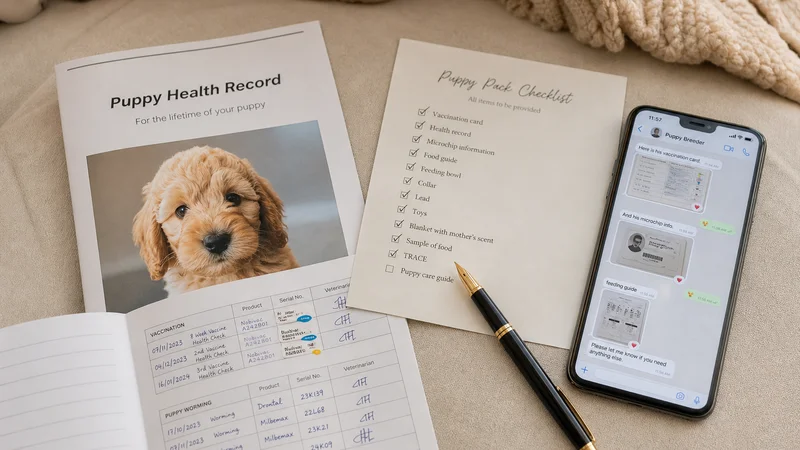
Also arrange a veterinary appointment soon after bringing the puppy home. Ask the practice what records to bring and what signs require prompt attention. Do not wait until collection day to discover that you cannot explain the puppy’s history.
If the breeder creates urgency, refuses reasonable checks or changes the agreement, walk away. Losing a deposit is frustrating, but buying a sick or poorly socialized puppy can create greater welfare, emotional and financial difficulties.
Conclusion: make verification your first purchase
Buying a puppy in Canada requires more than choosing a breed and comparing photographs. Because rules may vary between provinces, territories and municipalities, your strongest protection is careful verification before payment.
Use the TRACE check: trace the origin, review records, assess the premises, clarify transport and establish aftercare. CFIA guidance supports asking these questions, while BC SPCA guidance helps buyers recognise responsible breeder practices and warning signs.
Consider adoption before buying, as BC SPCA recommends. If you proceed with a breeder, save every record and check local requirements rather than accepting claims at face value. Take time, ask direct questions and leave when the answers remain vague.