If you are searching for a cat curfew Australia rule, the answer depends on your state and council area. The ACT requires containment for cats born after 1 July 2022, while Victorian councils can introduce local containment orders. Other jurisdictions are changing, so check your council before allowing a cat to roam.
The practical problems are straightforward:
- knowing whether your address sits inside a containment area;
- understanding the difference between a curfew and 24-hour containment; and
- preparing a safe home or enclosure if roaming is restricted.
Cat curfew Australia: is there one national law?
Australia does not operate one single cat-curfew rule in the supplied official guidance. Instead, the applicable requirement can depend on your territory, state legislation and local council orders. Therefore, your postcode matters as much as your state when you decide whether your cat can go outdoors.
The ACT provides the clearest territory-wide requirement in the available sources. The ACT Government says cats born after 1 July 2022 must be contained on their owner's property. It also identifies declared cat-containment areas where additional conservation concerns apply. (ACT Government, City Services, 2026)
Victoria takes a more council-led approach. Agriculture Victoria confirms that local registration applies to cats aged three months and older, but local containment requirements may come from a council order. Swan Hill, for example, began a 24-hour containment order on 1 January 2025. (Agriculture Victoria, Animal Welfare Victoria, 2026; Swan Hill Rural City Council, 2026)
For a reliable answer, use this postcode test:
- Identify your state or territory.
- Search your local council's current cat rules.
- Check whether a containment order or declared area covers your address.
- Confirm whether the rule applies to every cat or only cats meeting a specified condition, such as birth date.
ACT cat containment: when does 24/7 control apply?
In the ACT, cats born after 1 July 2022 must remain contained on the owner's property. In addition, some suburbs have been declared cat-containment areas for nature conservation. This means an owner should check both the cat's birth date and the property's location.
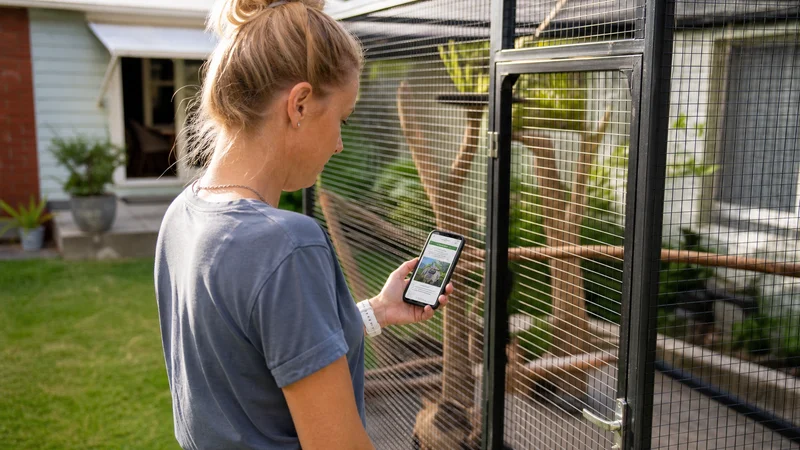
Containment does not simply mean keeping a cat indoors overnight. For an affected cat, the requirement applies continuously. A secure indoor environment, cat-proof courtyard or properly designed enclosure may help an owner meet that practical challenge, although the specific property arrangement remains the owner's responsibility.
ACT cat owners must also:
- microchip their cat;
- register the cat;
- desex the cat; and
- follow the ACT's containment requirements.
These obligations come from the ACT Government's cat guidance. (ACT Government, City Services, 2026)
The birth-date test is particularly important for households with more than one cat. Do not assume that one older cat's previous outdoor routine applies to a younger cat. Record each cat's microchip details, registration information and date of birth, then check the current ACT guidance if you are uncertain.


Pet Health Map App
Turn every worry into your pet’s health record
Download the app to save AI Care reports, build your pet’s medical profile, and keep tracking symptoms and care notes.
Android version coming soon. The web version is available now.
Victorian cat curfew rules: what do local councils control?
Victoria combines state-wide registration requirements with council-level containment decisions. Consequently, Victorian owners should not rely on a general assumption that every council has the same outdoor-cat rule.
Agriculture Victoria states that all cats aged three months and older must be registered with their local council. Cats must have a microchip before they can be registered for the first time. Registration must then be renewed by 10 April each year. (Agriculture Victoria, Animal Welfare Victoria, 2026)
Containment is a separate question. A council may introduce an order that affects cats in its area. Swan Hill Rural City Council provides a real example: a 24-hour cat-containment order commenced across the council area on 1 January 2025. The council explains that the order aims to keep domestic cats safe and reduce their impact on wildlife. (Swan Hill Rural City Council, 2026)
Therefore, Victorian owners should check two different compliance tracks:
| Question | Where to check |
|---|---|
| Does my cat need registration and a microchip? | Agriculture Victoria and your local council |
| Must my cat stay contained? | Your local council's current orders and notices |
| When is registration renewed? | Agriculture Victoria guidance says by 10 April each year |
| Does an order affect my property? | The council named on your rates notice or local address |
Registration does not, by itself, answer whether outdoor roaming is permitted.
How local containment orders work: the postcode test
A local order can change the answer for an entire council area, so checking your council is the safest practical step. Swan Hill demonstrates why a state-level search alone may not give you enough information.
When you investigate a possible order, save the page showing:
- the council name;
- the order's commencement date;
- whether it applies for 24 hours;
- the geographic area covered;
- any stated purpose; and
- contact details for further questions.
This creates a useful record if the council updates its website later. It also prevents a common mistake: confusing a proposed change, consultation page or news report with a rule already in force.
For example, Swan Hill's published information states that its 24-hour order commenced on 1 January 2025. That is a current reference point, but owners should still check the council's latest notice before acting. (Swan Hill Rural City Council, 2026)
The same method works outside Victoria. Search your council's official website for "cat containment", "cat curfew", "roaming cats" and "cat order". Then confirm the result with the council if the wording is unclear.
Other states: what is changing for roaming cats?
Rules outside the ACT and Victoria should be checked directly with the relevant council because the available sources show policy change rather than a settled national position. In Western Australia, the direction of travel is especially relevant for owners who currently allow cats to roam.
ABC News Australia reported in February 2026 that Western Australia's Local Government Minister had announced plans to change the law. The proposed change would allow local councils to introduce their own cat-containment laws. (ABC News Australia, 2026)
That report describes a plan, not a universal rule for every WA council. Therefore, do not treat the announcement as proof that your local council already has a containment order. Check your council's current official information and ask whether any local rule has commenced.
The supplied sources do not establish a current, statewide cat-curfew requirement for New South Wales, Queensland, South Australia, Tasmania or the Northern Territory. Avoid relying on social-media posts or rules from another state, because local powers and commencement dates can differ.
Use this check whenever you move house:
- record the new council area;
- search its official animal-management pages;
- check current orders and commencement dates;
- ask whether the rule applies to your cat's age or location; and
- keep written confirmation if the answer affects your enclosure plans.
Why containment matters and what owners should do
Containment rules can serve both cat-safety and wildlife-conservation goals, but your immediate task is practical compliance. Swan Hill describes its order as protecting domestic cats and reducing their impact on wildlife. The ACT also identifies nature conservation as a reason for declaring some containment areas. (Swan Hill Rural City Council, 2026; ACT Government, City Services, 2026)
Do not wait until an order affects your household before changing a roaming routine. A sudden transition can create escape risks, especially if doors, windows and fencing remain arranged for an outdoor cat.
Prepare with this three-part "SAFE" check:
- S — Search: confirm the current state and council rule.
- A — Audit: inspect doors, windows, gates and enclosure gaps.
- F — File: keep registration, microchip and council records together.
- E — Enrich: provide climbing, hiding, scratching and play opportunities indoors.
The available sources do not provide a universal breach penalty or one Australia-wide enforcement process. Therefore, do not assume a fine, warning or exemption applies. If you think you may have breached a local order, contact the relevant council promptly and ask what action it expects.
Also speak with your veterinarian if a sudden change creates stress, escape attempts or toileting problems. A vet can help address the health and behaviour effects without guessing about legal requirements.
Conclusion: check your council before your cat goes outside
The safest answer to cat curfew Australia searches is not a single national timetable. The ACT requires containment for cats born after 1 July 2022, Victoria combines registration rules with council-level orders, and Western Australia may give councils greater containment powers. Local details can therefore change the result for your address.
Use the SAFE check: search the official rule, audit your property, file your records and enrich the indoor environment. Before allowing a cat to roam, contact your local council and confirm the current requirement in writing. That small step can prevent confusion and help you plan a secure, welfare-focused routine.