
Backyard Chickens Laws Australia: Permit Guide
Keeping hens can provide fresh eggs and enjoyable companionship, but backyard chickens laws Australia vary heavily depending on where you live. A few quiet hens may be allowed without approval, while roosters, larger flocks, egg sales and property size can trigger extra requirements.
Most Australian councils let you keep a small number of hens without a permit, but the exact number, rooster rules and permit thresholds differ by council and state. Check your local law before buying chicks, because a rule that applies in one suburb may not apply in the next.
This guide explains how to check the rules, compares NSW, Brisbane and Whitehorse examples, and gives you a practical pre-purchase checklist. It also covers flock size, space, noise, biosecurity and what to record before contacting your council.
Why backyard chickens laws Australia depend on your council
The safest assumption is that your local council decides the day-to-day requirements. Australian rules for backyard poultry vary by area, according to RSPCA Australia, so a state-wide search may not answer the question for your property.
Council rules can cover:
- The number of hens, ducks or geese you may keep
- Whether you need an animal or livestock permit
- Whether roosters are allowed
- Coop location, cleanliness and enclosure standards
- Noise, odour and neighbour nuisance
- Extra requirements for larger flocks
Therefore, search your council’s official website using terms such as “poultry permit”, “backyard chickens”, “local law animals” and “livestock permit”. Read the current local law or permit page rather than relying on a social-media post or an old forum answer. The same council-first approach applies to other animals too — see our guide on how many pets you can keep in Australia for how permit numbers are set for dogs and cats.
RSPCA Australia estimates that Australia has about 2 million non-commercial backyard and fancy-breed domestic fowl. Its guidance also notes that legal restrictions vary by area. That combination makes local checking essential, even if your intended flock seems small. (RSPCA Australia, current guidance accessed 2026.)
The most useful memory hook is the FLOCK check:
- Find your council’s current rule
- Look at property size
- Observe permit and rooster conditions
- Check sales and flock-size triggers
- Keep the confirmation before buying birds
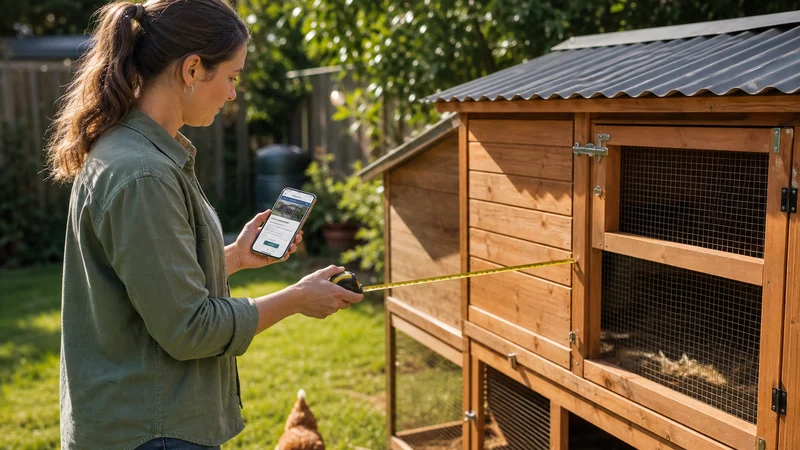
Backyard chickens laws Australia: NSW’s 100-bird threshold
In NSW, fewer than 100 poultry may not require a licence if you do not sell eggs or meat from the flock. NSW Department of Primary Industries and Regional Development states that both conditions apply: the flock must contain fewer than 100 poultry, and you must not sell eggs or meat.
That guidance helps with the state-level licensing question, but it does not replace local council checks. You still need to ask your council about nuisance rules, enclosure standards, permitted locations and any local animal controls.
The NSW threshold also shows why your purpose matters. A household keeping hens for personal use may sit in a different regulatory position from a household selling produce. Do not assume that a small flock automatically remains exempt once commercial activity begins.
Before contacting the relevant authority, write down:
- The number and type of poultry you plan to keep
- Whether you will sell eggs or meat
- Your suburb and council area
- The proposed coop and run location
- Whether neighbours could hear or smell the flock
NSW DPIRD’s wording is conditional, so avoid treating “under 100” as a universal permit exemption. If you plan to sell eggs or meat, ask for the current licensing position before purchasing birds. (NSW Department of Primary Industries and Regional Development, current guidance accessed 2026.)


Pet Health Map App
Turn every worry into your pet’s health record
Download the app to save AI Care reports, build your pet’s medical profile, and keep tracking symptoms and care notes.
Android version coming soon. The web version is available now.
Backyard chickens laws Australia: Brisbane property-size rules
Brisbane uses property size and exempt flock numbers to determine when a permit is needed. Brisbane City Council says households with a total area below 800 square metres can keep up to six chickens, while households above 800 square metres can have up to 20 chickens.
The council also states that a livestock permit is required to keep chickens, ducks or other poultry in a residential area beyond the exempt numbers. Consequently, you should measure the total property area before deciding how many birds to buy.
| Brisbane situation | Council guidance |
|---|---|
| Property below 800 m² | Up to six chickens |
| Property above 800 m² | Up to 20 chickens |
| Beyond the exempt number | Livestock permit required |
The source wording does not resolve every possible property measurement, including an exact 800-square-metre block. If your property sits close to that figure, contact Brisbane City Council rather than guessing which category applies.
Also, do not use Brisbane’s limits as a rule for Queensland generally. They are Brisbane City Council requirements. A neighbouring council may set a different number, permit process or enclosure condition. (Brisbane City Council, current guidance accessed 2026.)
Victoria: Whitehorse permits and the 50-bird trigger
Whitehorse residents may keep up to six hens, ducks and geese in total without a permit under the 2024 local law. The limit applies in combination, so six hens plus ducks would exceed the stated exempt total.
Whitehorse City Council says roosters require a permit because their crowing could disturb neighbours. This illustrates an important distinction: a council may allow a small number of female birds while treating male birds separately.
Whitehorse also identifies a larger-flock biosecurity requirement. If Council approves 50 or more poultry, the owner must register with Agriculture Victoria for a Property Identification Code. Treat this as a Whitehorse-specific example of how a permit decision can create an additional obligation.
Use this preparation table before applying:
| Detail to prepare | Why it matters |
|---|---|
| Species and total number | The six-bird limit combines hens, ducks and geese |
| Sex of each bird | Roosters have separate permit conditions |
| Coop and run plan | Helps explain containment and neighbour impact |
| Expected flock size | 50 or more approved poultry creates a PIC requirement |
| Council correspondence | Provides a record of the advice you received |
Do not apply Whitehorse’s six-bird limit to every Victorian council. Check the local law for your own municipality. (Whitehorse City Council, current guidance accessed 2026.)

Why roosters receive different treatment
Roosters often face tighter controls because crowing can disturb nearby residents. Whitehorse City Council specifically requires a permit for roosters because of potential neighbour disturbance. The practical lesson is simple: never assume that a rule allowing hens also allows a rooster.
A rooster may also change your planning needs. You must consider where the coop sits, how sound travels across the property and whether the bird will crow early in the morning. Council staff may ask different questions about noise when reviewing a rooster request.
Before choosing chicks, ask the breeder or supplier whether the birds are sexed. If you want eggs only, purchasing female birds avoids the uncertainty of an accidental rooster. However, sexing is not a substitute for checking local requirements.
Record these details before making a decision:
- Whether the birds are hens, roosters or unsexed chicks
- The likely number of mature birds
- The distance between the coop and neighbouring homes
- How you will manage noise complaints
- Whether your council requires a rooster permit
Councils can also assess odour, cleanliness and containment. A quiet flock still needs a well-maintained enclosure, and a compliant number does not excuse nuisance conditions. Use your council’s written guidance as the final reference for your property.
Space, welfare and biosecurity before you buy
A legal flock limit is not the same as a comfortable flock size. RSPCA NSW says each chicken legally requires around 3–4 square feet of space to move around, while it recommends 4–5 square feet for comfort. Convert the guidance carefully if you work in metric measurements, and allow additional room where possible.
Measure the usable coop and run area, not just the whole backyard. Then record the result before buying birds. Overcrowding can make cleaning harder and may increase odour, dampness and conflict within the flock.
A practical welfare check includes:
- Dry shelter protected from weather
- Secure fencing against escapes and predators
- Enough room for movement and normal behaviour
- Regular removal of wet bedding and accumulated waste
- Clean food and water areas
- A plan for isolating an unwell bird
RSPCA Australia’s estimate of about 2 million non-commercial backyard and fancy-breed domestic fowl shows that small-scale poultry keeping is widespread. However, popularity does not remove local restrictions or welfare responsibilities. (RSPCA Australia, current guidance accessed 2026.) If you ever witness poultry or other animals being mistreated, our guide on reporting animal cruelty in Australia explains which authority to contact in each state.
Keep a simple flock record with purchase dates, bird numbers, sex, illness observations and any council advice. This helps you notice changes and gives you accurate information if you need veterinary or council guidance.
The pre-purchase checklist for Australian owners
Do not buy chicks until you can answer five practical questions in writing. This approach reduces the risk of discovering a permit or property problem after the flock arrives.
| Check | Action |
|---|---|
| Council | Save the current poultry or animal-law page |
| Property | Measure the block if size affects the rule |
| Birds | Confirm number, species and sex |
| Purpose | Record whether eggs or meat may be sold |
| Housing | Sketch the coop, run and waste-management plan |
Then contact the council if any point remains unclear. Ask for the answer in writing, especially if you are near a flock-size threshold or want to keep a rooster. Include your address, proposed bird numbers and a short description of the enclosure. If you live in a strata or body corporate property, check the scheme's own by-laws as well — see our guide on body corporate pet rules in Australia for how those rules interact with council permits.
Use this final decision sequence:
- Identify your council.
- Read its current poultry and nuisance rules.
- Check whether a permit applies.
- Confirm rooster conditions separately.
- Check whether selling eggs or meat changes your obligations.
- Measure the coop and run.
- Keep the council response with your flock records.
For NSW, check the state licensing condition before selling eggs or meat. For Brisbane, compare your property size with the council’s 800-square-metre categories. For Whitehorse, check the six-bird combined limit and the 50-poultry PIC trigger. These examples are useful starting points, not substitutes for your own council’s current requirements.
Conclusion: check before buying backyard chickens
Backyard chickens laws Australia does not have one simple national answer. The number of hens you may keep, whether a permit applies and how councils treat roosters can change between local government areas. NSW also links its licensing exemption to flock size and whether you sell eggs or meat.
Use the FLOCK check: find the council rule, look at property size, observe permit conditions, check sales and flock-size triggers, and keep written confirmation. Measure your proposed housing and decide whether you want hens only before buying chicks.
Check your council’s current poultry page today, then contact the council if your property, flock size or intended egg sales fall near a threshold.