
Lost Pet in Australia: Pounds, Chips and Fees
When a dog or cat disappears, the most useful first step is a fast, organised search. Council pounds, microchip registries and local shelters may each hold different information, so delays can make reunification harder and increase reclaim costs.
If your pet is missing in Australia, check your local council pound, report the microchip as lost through the relevant registry, and contact nearby councils. Reclaim fees vary widely: Brisbane publishes daily dog and cat charges, while Bayside City Council lists a flat A$700 release fee for cats and dogs. Confirm current fees before travelling.
This guide solves three practical problems: where to look first, how pound fees can accumulate, and how to update the right registry. It also gives you a simple memory hook: the SCAN check — Search councils, Confirm the chip, Ask about fees, Notify contacts.
Lost pet in Australia: what happens at a council pound
A council pound normally records an animal when authorised officers collect it, but the exact process depends on the local council. Dogs found wandering off-lead are a common reason animals end up impounded — see our Dog Leash Laws Australia guide if you want to understand effective control rules. Therefore, contact the council serving the area where your pet disappeared, as well as councils in neighbouring areas.
Brisbane City Council publishes different holding periods for registered or microchipped animals and animals without those details. Its published information states that registered or microchipped pets have a five-day holding period, while unregistered or unmicrochipped pets have three days (Brisbane City Council, accessed 2026).
That difference makes prompt action important. A longer search window does not remove the need to contact the pound immediately, because your pet may still be waiting for identification or owner contact.
When you call, prepare:
- Your pet’s microchip number, if available
- Species, breed, sex, age and distinctive markings
- The date, time and location of disappearance
- A recent photograph
- Your council registration or permit details, where relevant
- Your preferred phone number and email address
Ask whether the council has recorded a matching animal, which identification details it can see, and what documents you need for release. Also ask whether the pound requires proof of ownership, current registration or identification before collection.
Lost pet in Australia: how reclaim fees work
Reclaim fees depend on the council, animal type, identification status and time held. Consequently, never rely on a fee quoted by another council or in an old social-media post.
Brisbane City Council provides a useful example of a time-based structure. For a microchipped dog, the published release fee is A$46.10 for the first day plus A$30.60 for each additional day. For a dog without a microchip, the first-day fee is A$68.85. For cats, Brisbane lists A$35.10 for the first day plus A$17.55 per additional day when microchipped, and A$53.30 for the first day without a microchip (Brisbane City Council, accessed 2026).
By contrast, Bayside City Council in Victoria lists a flat A$700 release fee for an impounded cat or dog. It lists A$299 for other animals (Bayside City Council, accessed 2026).
| Council example | Microchipped animal | Animal without a microchip |
|---|---|---|
| Brisbane dog | A$46.10 first day, then A$30.60 daily | A$68.85 first day |
| Brisbane cat | A$35.10 first day, then A$17.55 daily | A$53.30 first day |
| Bayside cat or dog | A$700 flat release fee | Check directly with council |
These examples are not a national fee schedule. Councils can change charges, and additional requirements may apply. Before visiting, ask for the current release fee, daily boarding charge, microchipping charge, payment methods and documents required.


Pet Health Map App
Turn every worry into your pet’s health record
Download the app to save AI Care reports, build your pet’s medical profile, and keep tracking symptoms and care notes.
Android version coming soon. The web version is available now.
Microchip registries and lost-pet alerts
A microchip helps a council or veterinary practice connect an animal with recorded contact details. However, the chip itself does not replace an up-to-date registry record. You must report the animal missing and check that your phone number remains current.
Central Animal Records describes itself as Australia’s largest national pet microchip database, with 5.9 million pets listed and a 24-hour recovery service (Central Animal Records, accessed 2026). If your pet’s chip is recorded there, use its recovery process and confirm that your lost-pet alert contains accurate details.
Registry arrangements differ between states — see our Dog & Cat Registration and Microchipping Laws in Australia guide for a full state-by-state comparison. In New South Wales, the NSW Pet Registry is mandatory for all cats and dogs and operates through the MyServiceNSW online portal (NSW Office of Local Government, accessed 2026). The NSW Office of Local Government also lists a support helpline, available Monday to Friday from 9am to 4.30pm.
Use this practical registry checklist:
- Search your paperwork for the microchip number.
- Contact the registry that holds the record.
- Mark the pet as missing or report the disappearance.
- Confirm your mobile number, email and address.
- Ask the council or vet to scan the chip if your pet is found.
- Remove the missing alert only after your pet returns safely.
Do not assume that updating one database automatically updates every other record. Instead, check each registry or council record connected with your pet.
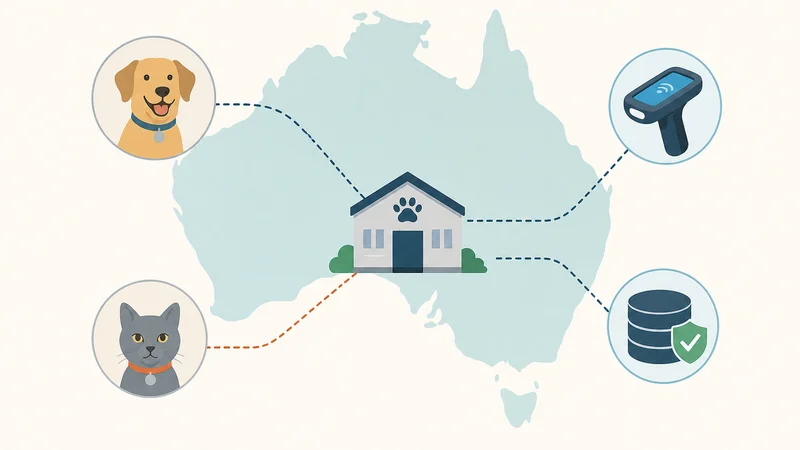
State-by-state lost-pet reporting guide
The safest approach is to combine your local council’s pound search with the registry that holds your pet’s microchip record. Because council processes and registry requirements vary, check the current official instructions for your state.
| Location | Action supported by the available official information |
|---|---|
| New South Wales | Use the NSW Pet Registry through MyServiceNSW, and contact the listed support helpline if needed. |
| Queensland | Contact the relevant council pound and check its published impound and release process. Brisbane’s published fees illustrate how charges can differ by species and identification status. |
| Victoria | Contact the relevant council pound directly. Bayside City Council’s A$700 cat-and-dog release fee shows why local confirmation matters. |
| South Australia | Dog and Cat Management Board information says cats and dogs must be microchipped before 12 weeks of age or within 28 days of taking possession. |
| Other states and territories | Check the relevant local council and the registry connected to your pet’s microchip. Confirm current requirements directly. |
The South Australian rule above comes from the Dog and Cat Management Board (accessed 2026). Its information also mentions occasional Chip Blitz community events offering A$10 microchipping, although availability can change.
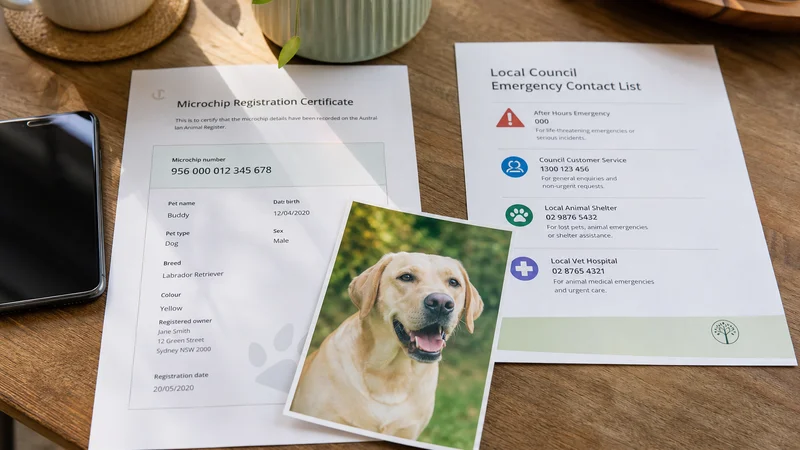
For a missing pet, avoid treating a state summary as a substitute for a council call. The pound may hold the animal, while the registry may hold the owner’s contact information. You need both channels working together.
How to prevent another disappearance and reduce costs
The best way to reduce future pound costs is to make identification easy before your pet goes missing. A microchip is useful only when the recorded details remain accurate, so review them after moving house, changing your phone number or transferring ownership.
Create a small “pet recovery file” containing the chip number, registry name, council details, vaccination records, adoption documents and recent photographs. If you are also considering adding another dog or cat to the household, check our How Many Pets Can You Keep in Australia guide first, since some councils require a permit. Keep one digital copy and one accessible printed copy. A clear photograph should show your pet’s face, body markings and any unusual feature.
Use the SCAN check every few months:
- Search councils: save the local pound’s phone number.
- Confirm the chip: check the number and registry record.
- Ask about fees: know where to find current release information.
- Notify contacts: tell your household, neighbours and trusted carers what to do.
Also check gates, balcony access, collar fit and escape points. When a pet sitter or boarding facility takes responsibility, provide written identification details instead of relying on memory.
If your pet is found, contact the council and registry promptly. Then update the record, remove any lost alert and review how the escape happened. This final step can prevent a repeat incident and may help you act faster next time.
What to do in the next 30 minutes
Speed and accurate information matter more than a broad, unstructured search. Start with the council pound, then work through the registry and nearby contacts.
Follow this short action plan:
- Search the council website for “impounded animals” or call the council.
- Contact neighbouring councils if your pet could have crossed a boundary.
- Find the microchip number in your records.
- Report the pet missing on the relevant registry.
- Send a clear photograph to local shelters, veterinary practices and trusted community contacts.
- Ask the council for the current release fee and required documents.
- Keep a written log of every call, time and reference number.
Fees vary significantly between councils. Brisbane and Bayside demonstrate that difference, so call ahead rather than assuming a national price. If you cannot find the registry record, ask a veterinary practice or council officer to scan the microchip when the animal is located.
Conclusion
When you have a lost pet in Australia, use the SCAN check: search council pounds, confirm the microchip registry, ask about current fees and notify the people who can help. Brisbane City Council publishes species-specific daily charges, while Bayside City Council lists a A$700 release fee for cats and dogs. These examples show why prompt contact and local confirmation matter.
Start now by calling your local council, reporting the microchip as missing and preparing proof of ownership. Then review your pet’s registry details, photographs and escape risks once your companion is home. If your pet is missing today, do not wait for an online post to appear — contact the relevant council and registry directly.